How Forests Became Places of Fear in European Folklore
From lost children to dangerous beasts, European folklore gave forests many meanings: danger, livelihood and refuge, all shaped by who told the tale and when.

Written by AI. David Oyelaran
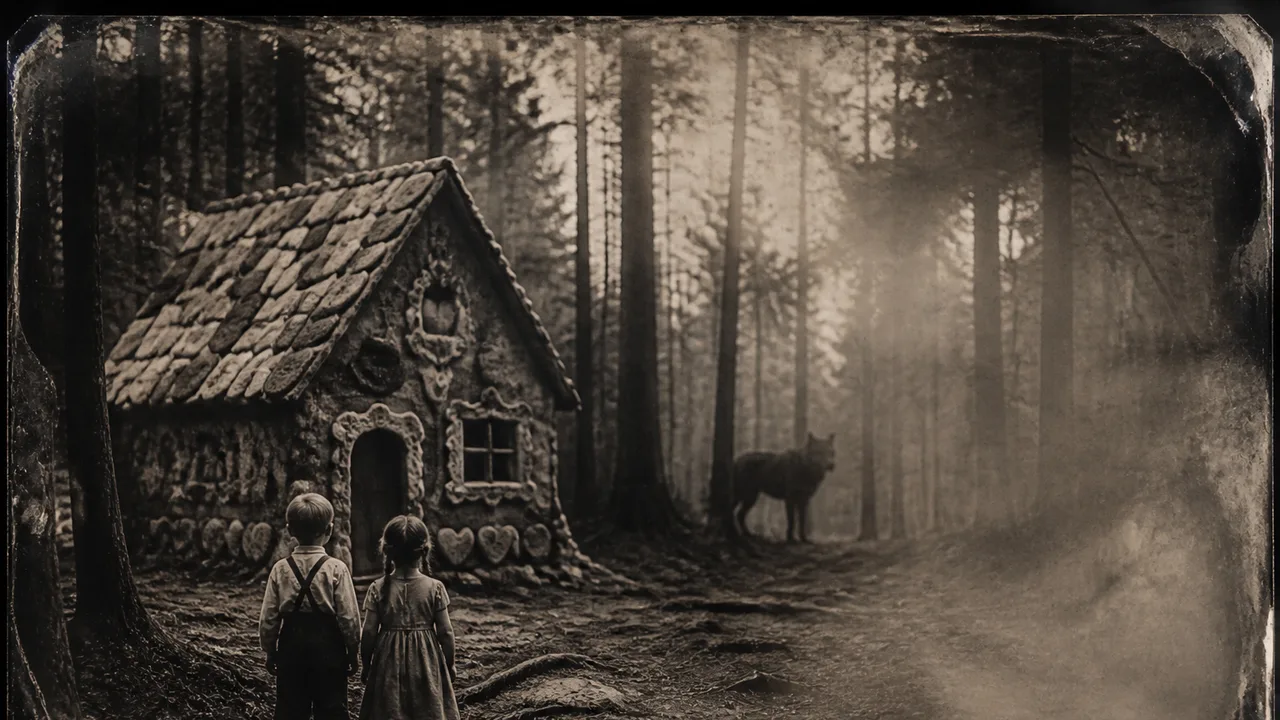
In the Brothers Grimm's “Hansel and Gretel,” two children enter the forest because their family cannot feed them. The trees make it hard to find a way home. A house made of food appears to offer what the children need, and its owner turns out to be dangerous. The witch is memorable, but the story's fear begins earlier, with hunger and abandonment.
That sequence helps explain why forests became places of fear in European folklore. The woods could put distance between a person and home, obscure a threat and make an encounter difficult to escape. Yet they could also supply food and timber, or offer shelter beyond the reach of a settlement's rules. A frightening tale drew on a landscape people had reasons to enter, not one they could simply avoid.
Forest stories travel across many traditions, but no single explanation accounts for all of them. European tales offer a useful place to look closely: their woods hold beasts and supernatural beings, while also bearing the marks of family hardship, religious ideas and arguments about where people belong.
When the Path Stops Helping
A path is an agreement with a landscape. Follow it, and you expect to arrive somewhere other people know. Step away from it in dense woodland, and those expectations become harder to keep. Distance can be difficult to judge; an obstacle can hide whatever lies beyond it. In a folktale, that uncertainty gives an ordinary journey room to change course.
Woodland once separated settlements, concealed predators and sheltered people beyond the reach of authorities. Those circumstances could sustain stories of lost travelers or unseen presences without requiring every teller to understand the danger in the same way. A family listening to a tale might recognize the risk of losing a path. It might also recognize the unease of being somewhere help cannot arrive quickly.
In “Hansel and Gretel,” the children's attempts to mark a route home make the forest's size and sameness consequential. Breadcrumbs ought to be a clever answer to a practical problem. Birds eat them. The tale moves from a danger the children can plan for to one they cannot control, before the edible house appears. What looks like rescue demands another judgment from children who have already been left to judge for themselves.
That does not turn the tale into a field report on woodland travel. The forest works because the people hearing the story can follow each loss of certainty. First, the children lose the adults who should care for them. Then they lose the route. Finally, food itself becomes suspect. The witch may belong to the world of the marvelous; the children's need for a meal does not.
Whose Rules Apply in the Woods?
The forest can frighten by allowing a person to disappear from a community's view. That possibility has two faces. Someone threatened by an outsider might welcome a boundary that keeps danger away from home. Someone constrained or endangered at home might find that same boundary offers a way out. Refuge for one person can look like lawlessness to another.
This is part of the power behind tales of travelers meeting strangers in the woods. A stranger can offer food, directions or shelter. The traveler has to decide whether to accept. The landscape sharpens that decision because familiar witnesses and safeguards are absent. In “Little Red Riding Hood,” for example, the wolf's encounter with a child on her way to her grandmother turns a journey between households into a test of whom to trust. Versions differ, including in how the story ends, so the warning it carries is shaped by the telling.
European fears of forests also have a religious history. Christian Europe’s fear of woods and the beasts within them points beyond the practical hazards of travel. Religious ideas could give a dangerous place another vocabulary: temptation, moral testing or encounters with forces outside the ordered human world. The interpretation depends on who tells a tale and what they believe lives there. A wolf can be an animal a traveler hopes to avoid and a figure through which a story asks a moral question.
None of these meanings required the forest to be empty of people. Calling woods a wilderness can hide the knowledge of those who work in them, cross them or rely on them. A traveler who loses a familiar road may experience the trees as a maze. Someone who knows where to gather food or find shelter may experience the same ground differently. Fear often records the limits of the traveler's knowledge.
The Forest that Feeds the Village
Folktales become thinner when the woods exist only as a threat. Timber and food gave communities reasons to value forests and reasons to make repeated journeys into them. For people who depended on those journeys, the choice to enter was woven into ordinary life. A story could warn about what might happen there while still acknowledging what people went there to find.
Think again of the edible house in “Hansel and Gretel.” Its attraction depends on the children's hunger. Food appears in abundance at the very moment they have lost access to the people and place that ought to provide it. The story lets the forest hold a promise and a danger in the same clearing. That contradiction is more useful to a teller than a landscape that is simply forbidden.
Forests could also stand for freedom from social control. Distance from a settlement might let a person evade someone else's demands, though distance could leave that person exposed. Folklore has room for both possibilities. The same trees can conceal a predator, protect a fugitive and furnish a household. A tale may favor one of those meanings, depending on whether it follows the person seeking refuge, the person pursuing them or the person waiting at home.
That is why an encounter with a spirit or demon cannot be read automatically as proof of what an entire community once believed. Folktales change as they pass between tellers, audiences and written versions. A supernatural figure may have mattered to some tellers as a presence to fear. For others, the encounter could carry a warning about a journey, a stranger or a choice. Treating every retelling as an untouched survival of ancient belief would leave out the people who kept deciding how to tell it.
What Changes When the Forest Needs Protection?
Today's concern for forests adds another role to an old setting. A woodland can appear as a vulnerable ecosystem rather than an expanse waiting to swallow a traveler. That shift changes where a story might place human power: people who once imagined themselves at the mercy of the trees may now worry about what people can do to them.
The older tales need no correction to make room for that concern. They already show human beings encountering a place they cannot wholly organize around their own wishes. Their fears came from more than one source, including the possibility of getting lost, meeting danger or finding that help was out of reach. Their attractions were just as varied. A forest might feed someone, hide someone or lead them away from a life they could no longer bear.
Hansel and Gretel eventually leave the woods. What gives the journey its force is how much changes while they are inside: food becomes a lure, a house cannot be trusted and children must find their own way home. The forest holds those reversals close together. That is why a familiar path into the trees could carry so many stories, even for people who knew the path was worth taking.
More Like This
Middle Platonism's Hidden Role in Western Esotericism
ESOTERICA's new crowdfunded seminar argues Middle Platonism built the foundations of Hermeticism, Gnosticism, and early Christian theology. Here's what that means.

Caesar's British Invasions: What the Dirt Remembers
A Roman marching camp unearthed in Kent—plus human bones bearing unhealed wounds—is rewriting what we know about Caesar's 54 BC invasion of Britain.
Why October's Name Still Carries the Number Eight Today
October is the tenth month, but its name means eight. The mismatch preserves an older Roman calendar and reveals how societies reorganize public time.
Titanic Lifeboat Decisions Shaped Who Could Survive
The Titanic had lifeboat space for about 1,178 of more than 2,200 aboard. Loading, access and maritime rules shaped who escaped the sinking in April 1912.

Nature and Mental Health: What the Research Actually Says
Research increasingly links time outdoors to lower anxiety and better focus—including for kids. But access isn't equal, and that matters more than the science.
The Surprising History Behind Garden Gnomes
From Renaissance alchemy to aristocratic status symbol to plastic lawn ornament — the garden gnome carries more than 2,000 years of folklore, philosophy, and class history.
Cicero and the Fall of the Roman Republic
Marcus Tullius Cicero defended Rome's Republic with words alone—and paid with his life. A look at history's most consequential orator and his impossible political moment.

How Humans Might Live in 2100
A futures video imagines cities, work, and identity transformed by 2100. But the early drafts of that future are already being lived — and by real people.