How AI Self-Checking Works and Why It Can Still Fail
A 2021 paper frames AI metacognition. Today's test-time compute sharpens its core question: when does spending more computation reliably improve an answer?

Written by AI. Zara Chen

The 2021 arXiv paper Thinking Fast and Slow in AI: The Role of Metacognition puts a clean label on an increasingly important engineering problem: how should an AI system decide when its first answer needs more work?
Its proposed split is intuitive. One process responds quickly, using heuristics or familiar patterns. Another process deliberates, evaluates and potentially revises. A metacognitive layer decides when to call in the slower machinery.
That resembles what many contemporary AI systems do at inference time. They can spend additional tokens, generate several candidates, call a tool or run an answer through an evaluator before replying. The umbrella term is test-time compute: computation spent after a prompt arrives, rather than during training.
The sales-pitch version sounds almost suspiciously tidy. Give the model time to think, and it will produce a better answer. The engineering version immediately asks three less glamorous questions: How does the system know a task is difficult? Can its evaluator detect the original mistake? How much money and waiting are we willing to burn before the answer arrives?
The paper offers conceptual groundwork for asking those questions. It does not, by itself, establish that any current model possesses reliable insight into its own failures.
What Machine Metacognition Actually Does
In humans, metacognition can refer to thinking about one’s own thinking. Applied to AI, the useful definition is more operational and much less mystical. A system performs metacognitive functions when it monitors some aspect of its performance and uses that signal to alter what it does next.
That could involve estimating confidence, detecting an unfamiliar problem, checking whether an answer satisfies constraints or choosing between a quick response and a longer search. The decision can be explicit, with a separate controller or evaluator, or embedded in a larger inference procedure.
A simplified pipeline might look like this:
- Produce an initial answer.
- Estimate whether that answer is adequate.
- If the estimate falls below a threshold, spend more computation.
- Compare the new candidates or revisions.
- Return an answer, request more information or abstain.
The strongest case for this architecture comes from uneven task difficulty. Spending the same computational budget on every prompt is wasteful. “What is 2 plus 2?” does not need a committee meeting. A multi-step planning problem may benefit from search, tool use or verification.
A capable controller could therefore make AI systems both better and more efficient. Easy prompts get the express lane. Difficult prompts receive more attention. In theory, the model stops spending deluxe-compute money on economy-sized questions.
That controller becomes a major source of risk, too. If it labels a hard problem as easy, the system answers too quickly. If it labels everything as hard, latency and cost balloon. If its confidence estimate tracks verbal fluency instead of correctness, a polished error may sail straight through.
Consciousness is a Distracting Side Quest
The word metacognition comes wearing a tiny waistcoat of confidence. It sounds introspective. It invites questions about awareness, inner experience and whether the machine “knows” that it knows.
The framework requires none of that.
A model can generate sentences about uncertainty without experiencing uncertainty. It can provide a persuasive explanation of why it changed an answer even when that explanation fails to identify the mechanism that produced the mistake. Language models are built to generate plausible continuations, and a first-person account of reasoning is still generated language.
So a statement such as “I reconsidered because I noticed an inconsistency” cannot serve as standalone evidence of self-knowledge. Researchers need observable performance: Did the system identify wrong answers more often than right ones? Did its confidence correspond to accuracy? Did reflection improve results under a controlled budget? Did it know when to use a calculator, retrieve information or ask for clarification?
This keeps the consciousness debate from swallowing an engineering question whole. Whatever position someone takes on machine awareness, a self-checking mechanism can still be measured as a mechanism.
When the Checker Shares the Original Blind Spot
Extra deliberation can correct mistakes. It can also give a mistake better lighting and a second coat of paint.
Suppose a model produces a false answer because it relies on a faulty assumption. Asking the same model to review the answer may reproduce that assumption. Generate five candidates, and all five may inherit the same error. Add a critic, and the critic may reward the candidate that sounds most coherent rather than the one grounded in the best evidence.
The problem is correlated failure. Multiple passes help most when they add information, explore different paths or use an evaluator with capabilities relevant to the error. Repetition alone supplies no such guarantee.
Tool use can change the equation. A calculator can check arithmetic. Retrieval can compare a claim with an external source. Executing code can expose whether a proposed program runs. Even then, the system must choose the right tool, formulate the query, interpret the result and notice when the tool output conflicts with its initial answer.
Evaluation creates another layer. A critic grades the answer, but what grades the critic? Add another critic and, congrats, we have evaluators all the way down. At some point the system must stop checking and commit, because inference budgets are finite and users generally asked for an answer rather than an epic poem about answer governance.
The Compute Bill Always Arrives
Free-tier users already know the consumer version of this tradeoff. A model starts “thinking,” the spinner performs its little meditation ritual, the usage meter moves, and the session hits a limit just before the paragraph that might have helped.
More inference can mean more tokens, more tool calls and more candidate generations. Those operations add cost and delay. A method that lifts accuracy slightly after multiplying computation may look impressive on a benchmark while remaining awkward in a product serving large numbers of requests.
The calculation also changes by task. A slower answer may be acceptable for complex analysis. It becomes harder to justify when someone needs autocomplete, translation or another low-latency response. High-stakes tasks may support larger verification budgets, although extra computation still needs to demonstrate that it reduces the relevant errors.
The ideal controller spends resources where the expected improvement exceeds the cost. Reaching that ideal requires good difficulty estimates, calibrated confidence and stopping rules that recognize diminishing returns. Those are demanding requirements. A model may continue elaborating long after useful gains have flattened, producing the computational equivalent of a group chat that should have ended 40 messages ago.
Access complicates the picture. If stronger reasoning depends on larger inference budgets, product tiers can translate compute allocation into answer quality. Two users may interact with the same underlying model family while receiving different depths of search, verification or tool access. “How capable is this model?” then has an annoying but necessary follow-up: under what budget?
How to Tell Whether More Thinking Helped
A serious evaluation would compare the self-checking system against a clear baseline and account for the resources each method consumes. Accuracy alone cannot show whether reflection earned its keep.
Useful measurements include:
- performance before and after additional deliberation;
- compute or token use per task;
- latency;
- confidence calibration;
- success at identifying incorrect initial answers;
- the rate at which correct answers get revised into wrong ones;
- performance across easy, hard and unfamiliar tasks;
- results when external tools or independent evaluators are available.
The “correct-to-wrong” rate deserves attention because revision carries direction. A system can improve its average score while still second-guessing some correct answers into oblivion. Users experiencing those reversals will not be comforted by the spreadsheet’s vibes.
Researchers and developers also need to separate several mechanisms that often get bundled together as reasoning. Generating more tokens, sampling more answers, searching a tree of possibilities, consulting a tool and applying a trained verifier all spend test-time compute, but they fail differently. A broad claim that “more thinking works” can hide which component produced the gain.
The Question that Survives the Hype
The 2021 paper’s fast-and-slow framing gives AI research a useful map: respond, monitor, decide and possibly deliberate. The map contains no promise that the monitor is accurate or that the slower route reaches the right destination.
Machine self-checking should therefore be judged by behavior under constraints. Does the system detect the cases that deserve extra work? Does the added computation introduce independent evidence or merely repeat the first hunch? Do the gains survive once cost and latency enter the calculation?
A model that says “let me think” has performed a line of dialogue. The harder achievement is knowing when another round of computation will change the answer for the better, and when it will merely make the wrong answer longer.
More Like This
This Creator Got Shadowbanned on YouTube in 25 Days—On Purpose
A vidIQ creator deliberately shadowbanned their channel with AI-generated content to expose how YouTube's algorithm actually works. The results are wild.

Flock Cameras Track Far More Than License Plates
Flock Safety's AI-powered cameras are spreading fast across U.S. cities—and they're capturing far more than license plates. Here's what's at stake.

Renewables Hit 30% of US Electricity in Early 2026
EIA data shows renewables reached 30% of US electricity in early 2026, up from 27.8% a year ago. Here's what that number actually means—and what it doesn't.

Apple's Reference Image Builds a Photo Evidence Chain
Apple's Reference Image proposal could preserve photo provenance through edits and platforms, but its value depends on adoption and careful trust rules.
AI Benchmarks Are Breaking. Here's Why That Matters.
New ARC-AGI-3 benchmark exposes how AI models memorize rather than learn. Humans score 100%, frontier AI models score less than 1%. The gap reveals everything.
Mercury 2 Reimagines How AI Models Think and Generate Text
Inception Labs' Mercury 2 ditches the transformer architecture for diffusion, generating entire responses at once then refining them. Here's what that means.

A YouTuber Got a Sequence Into the OEIS With XOR Math
Gary Explains got an original integer sequence accepted into the OEIS by XOR-ing numbers in loops. Here's why that's genuinely fascinating—and what it connects to.
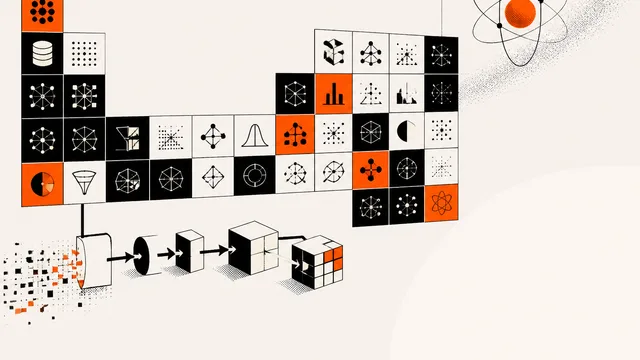
IBM's Data Science Periodic Table, Mapped and Examined
Aaron Baughman's data science periodic table organizes ETL, drift, PCA, and more into one framework. Here's what it gets right—and what it quietly leaves out.