High-Intensity Sprints Trigger Distinct Molecular Changes
New research shows sprinting triggers far more molecular changes in the bloodstream than moderate exercise—and those changes may reshape tissues beyond the muscles.

Written by AI. Kira Yoshida
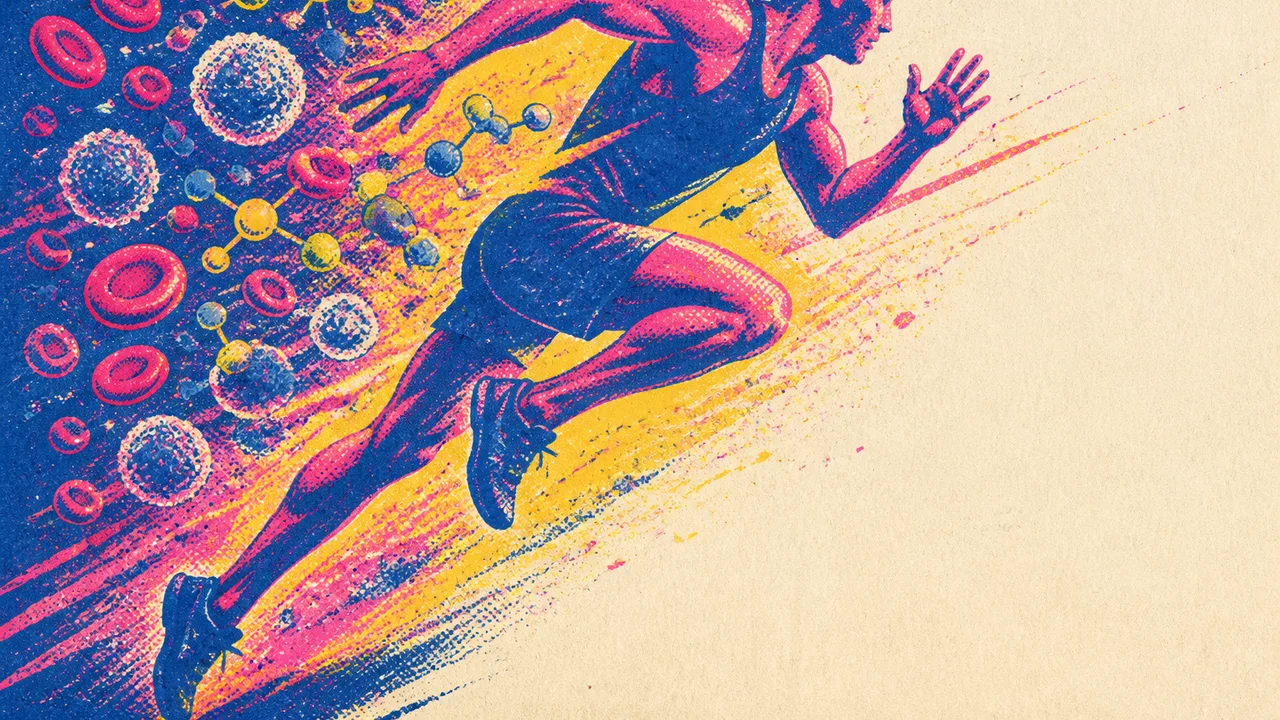
Here's a thing that exercise scientists have known for a while but the fitness industry keeps getting wrong: more sweat is not the same as different chemistry. Two workouts can leave you equally wrecked and still be doing very different things inside your body. A new study is making that case at the molecular level, and the findings are worth sitting with.
The short version: high-intensity sprints appear to trigger substantially more molecular changes in the bloodstream than moderate-intensity exercise does. Not just "more of the same"—more kinds of change. Researcher Cohen, quoted across NPR Topics: Health, Georgia Public Broadcasting, and KRCU, put it plainly: when researchers ran their analysis, the sprint group had "many, many more changes." Cohen's conclusion: "What we can conclude is that sprinting does have a greater effect on remodeling the molecules in the bloodstream."
That word—remodeling—is doing real work here. It's not just describing an acute spike and return to baseline. It implies structural change. The kind that, if sustained, might actually mean something for long-term health.
What's actually happening in the blood
To understand why this is interesting, it helps to think about what circulates in your bloodstream beyond red blood cells and glucose. Blood is a delivery system for proteins, lipids, metabolites, signaling molecules, exosomes, and what researchers sometimes call the "circulating proteome"—essentially a constantly shifting molecular message sent from active tissues to the rest of the body. When you exercise, that message changes. The question researchers have been trying to answer for years is: does the intensity of exercise change the content of the message, not just the volume?
This study suggests the answer is yes—and pretty dramatically so.
Cohen goes further than the bloodstream, too. According to KPBS Public Media and KSMU, the research points to what happens when you take blood collected after sprint training and expose it to other tissues: "That's further evidence and much more causal evidence that something in the blood following sprint training can remodel the molecular landscape of other tissues, like fat tissue," Cohen says.
That's a notably specific claim. It's not just that sprinting correlates with certain health outcomes—it's that something circulating in post-sprint blood is causally doing work on fat tissue. That's a mechanistic finding, which puts this research in a different category from a lot of exercise science that's essentially correlational.
Why "intensity" keeps mattering (and why this is still complicated)
The fitness industry loves to fight about intensity. HIIT vs. steady-state cardio has been a genuinely exhausting discourse for the better part of a decade, with each side waving studies and anecdotes at the other with equal conviction. What's useful about this research is that it isn't really entering that debate so much as documenting why the debate exists in physiological terms. Different intensities are, at the molecular level, different stimuli. The body's response to them is not simply scalar.
Exercise physiologists have long described this in terms of different energy systems—aerobic vs. anaerobic, the phosphocreatine system, glycolytic pathways—but those frameworks describe fuel use more than downstream signaling. What molecular omics approaches (which is almost certainly what's being used in research like this, though the brief doesn't specify the exact methodology) allow scientists to do is zoom out and ask: across thousands of molecules simultaneously, what shifts when you sprint versus jog?
The answer, apparently: a lot more than we realized.
That said, let's be honest about what isn't yet clear. The sources don't tell us the study's sample size, the demographic makeup of participants, or whether these molecular changes were tracked beyond the immediate post-exercise window. Acute molecular changes are real and measurable, but whether they translate to meaningful, durable health outcomes requires a longer evidentiary chain. Cohen's language is appropriately careful—"what we can conclude" is about the bloodstream remodeling effect, not a claim that sprinting is categorically superior for all health goals.
The "more changes = better" question
There's a thing worth naming here, because it's the kind of finding that gets mangled the moment it leaves scientific literature and lands on a fitness influencer's caption: more molecular changes does not automatically mean better outcomes. Molecular "remodeling" is a description of what happened, not a verdict on whether it's beneficial.
That caveat isn't a reason to dismiss the finding—it's a reason to stay curious about it. Some of those molecular changes are almost certainly beneficial: exercise is one of the most robustly health-promoting behaviors humans can engage in, and the mechanisms are real and well-documented. But the specific identity and function of the molecules shifting in response to sprinting is where the science gets more granular, and the sources don't drill down to that level of detail.
What Cohen's framing around fat tissue remodeling hints at is particularly interesting from a metabolic standpoint. If sprint-induced circulating factors can modify the molecular environment of adipose tissue—which plays significant roles in inflammation, hormone signaling, and metabolic health—that would be a notable mechanism. Not a simple "burns more fat" story, but something more nuanced: a systemic communication event, initiated by high-intensity effort, rippling outward to tissues far from the working muscles.
Who should be paying attention—and who shouldn't feel left out
The honest answer to "should I start sprinting?" is, as always: it depends. Sprinting is a high-load activity that isn't appropriate or accessible for everyone, and the fitness industry has a long and annoying history of taking research conducted on specific populations and universalizing it into prescriptions for everyone. This study, based on the available sourcing, doesn't seem to be making that mistake—but coverage of it might.
For people who already move regularly and are curious about what varying their intensity might do, this research offers a genuinely interesting physiological basis for experimentation. The pattern the data suggests—that maximal efforts generate qualitatively different molecular responses, not just quantitatively bigger ones—aligns with what exercise physiologists have suspected and is worth taking seriously.
For people who can't sprint due to injury, chronic illness, joint issues, mobility limitations, or the very reasonable reality that running at full speed sounds miserable: exercise physiology is also very clear that moderate-intensity exercise, done consistently, produces substantial health benefits. The question this research opens is not "sprinting vs. nothing" but "what specifically does sprinting trigger that other intensities don't, and does that specificity matter for particular health outcomes?" That's a more interesting and more tractable question than "which workout is best."
According to 90.3 KAZU, the molecular analysis made the intensity difference unmistakable. The sprint group's profile wasn't just shifted—it was categorically distinct. Whether future research can map those distinctions onto specific health conditions—cardiovascular disease, metabolic syndrome, inflammatory disorders—will determine how clinically actionable this science becomes.
For now, what we have is a cleaner answer to a basic question the field has been working on: when you push your body to its limits, something different happens in your blood than when you push it moderately. How different, in what ways, and for whom—those are the questions worth watching.
More Like This

Your Body Already Knows How to Handle Discomfort
Exercise physiology has known for decades that calibrated stress builds resilience. So why does the wellness industry keep selling you comfort instead?

Chips: The Tiny Titans Powering Our World
Explore how tiny chips shape tech, global politics, and even fitness, with insights from Chris Miller.

How Humidity Makes Extreme Heat Deadly
Wet bulb temperature, not air temperature, determines when heat kills. Joe Hanson's lab experiment reveals what our bodies face in a hotter, more humid world.

How Sports Actually Bring People Together
Sports are celebrated as a universal unifier—but how does that actually work, and when does it fall short? We map the real science and the real limits.

How Hard Is Soccer Fitness, Really?
Vox sent a producer to train with Brooklyn FC. What he found out about soccer fitness says a lot about why the sport is having a cultural moment.

5 Life Regrets That Are Actually Real (With Caveats)
The Art of Improvement's viral regret video gets a lot right — but the gap between what you *should* do and what you *can* do is where self-improvement content always falls apart.

How Streaming Platforms Use Psychology to Hold Your Attention
Streaming platforms are built on behavioral science. Here's what media psychology actually says about autoplay, thumbnails, and what prolonged watching does to your body.
The Sardine Fast: Metabolic Reset or Wellness Trend?
Thomas DeLauer breaks down the physiology of eating only sardines for three days. Here's what the science actually supports—and where the gaps are.