HandyGames Rebrands as THQ Nordic Mobile
HandyGames is now THQ Nordic Mobile, pivoting to PC and console ports for iOS and Android. Here's what the rebrand means—and what it could get wrong.

Written by AI. Derek "D-Block" Washington
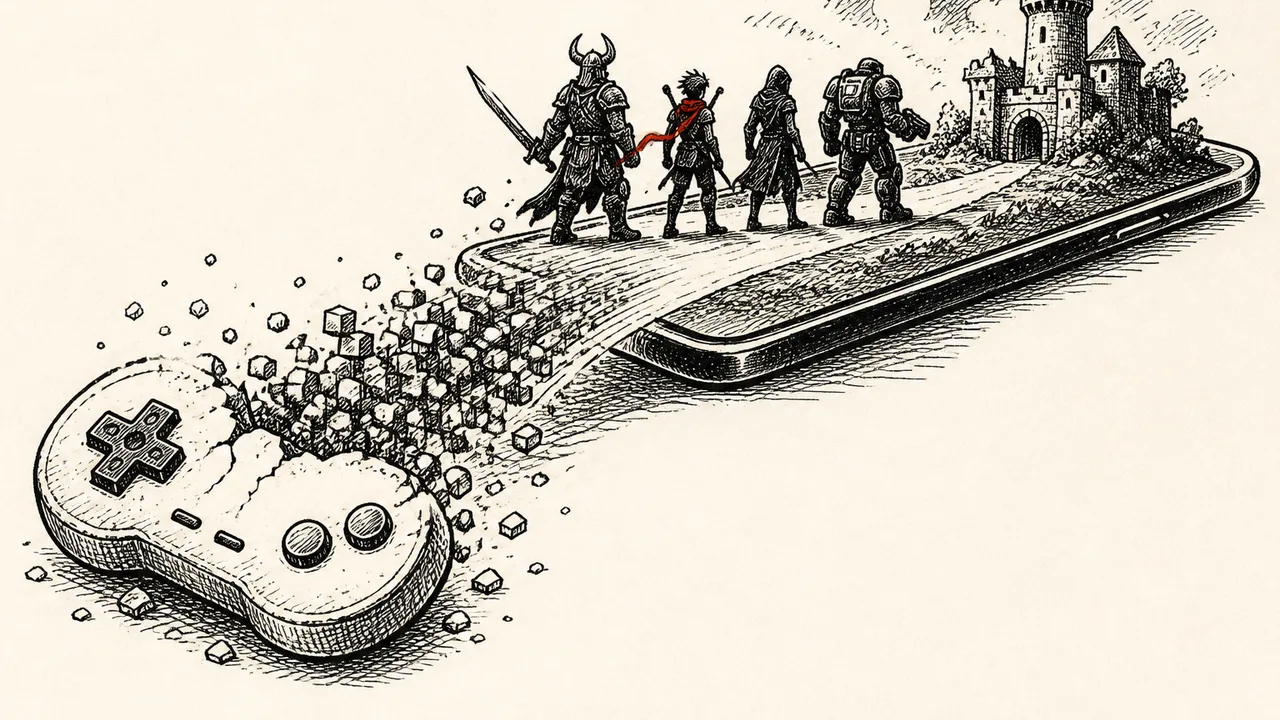
The name HandyGames meant something. Eighteen years operating out of Giebelstadt, Germany — a town so small it would lose a population contest to most college dormitories — building a reputation as the little studio that would port anything to mobile and somehow make it work. That identity is officially gone now.
On August 7, 2026, HandyGames announced its transition to THQ Nordic Mobile, folding the company into the parent brand it's operated under since THQ Nordic's acquisition. According to Gematsu, this is framed as a "strategic realignment" — corporate speak that could mean anything from "exciting new direction" to "we're absorbed now, goodbye logo." PocketGamer.biz confirms the German developer and publisher will now operate under the THQ Nordic brand umbrella going forward.
The question worth sitting with isn't whether this happened. It's what it's actually designed to do — and where it could go sideways.
The Pitch: Bringing Premium Console Catalog to Your Phone
Strip away the rebrand theater and there's a real strategic logic here. Noisy Pixel reports that THQ Nordic Mobile is specifically positioned around bringing established PC and console games to iOS, Android, and future mobile platforms. Games Press puts it more bluntly in the official language: "spearhead premium PC and console ports on mobile devices."
That framing matters. "Premium ports" is doing a lot of work in that sentence. It's a deliberate signal that THQ Nordic Mobile isn't trying to build free-to-play slot machines dressed in recognizable IP clothing. The pitch is: you already love these games on console, here they are on your phone, properly done.
And THQ Nordic has the raw material to make this genuinely interesting. The parent company's catalog — Darksiders, Destroy All Humans!, SpongeBob games, de Blob, Wreckfest — includes titles that actually have mobile-friendly DNA if handled right. Imagine whoever grabbed Darksiders in a deep-discount Steam sale and stayed up until 2am to beat the Twilight Cathedral finally being able to continue that playthrough during a lunch break. The catalog depth is real.
There's also a structural piece worth noting: ValoSettings.com reports that while the HandyGames publisher label transitions to THQ Nordic Mobile, HandyGames Studios continues as a separate entity focused on original game development. So the original creative work that HandyGames was known for doesn't evaporate — it just operates under a different banner with the porting business carved out into its own brand identity. That's a cleaner division of labor than a lot of these corporate reorgs produce.
Why Now, and Why Does the Name Change Matter
Rebrands are never just about names. They're about where resources flow, what gets greenlit, and what story a company tells investors, developers, and players.
THQ Nordic absorbing HandyGames into its own brand rather than keeping it as an indie-adjacent sub-label signals something about priorities. The HandyGames name carried indie credibility — smaller games, experimental ports, a certain scrappiness. THQ Nordic Mobile is a corporate-facing identity. It says: we are a mobile publishing operation that belongs to a major European games group, and we want the contracts and partnerships that come with that positioning.
VGChartz notes the publisher will focus on bringing established games to mobile platforms, which aligns with how the broader industry has been moving. Mobile is no longer the afterthought market it was in 2012. It's where the numbers live. Global mobile gaming revenue consistently outpaces console and PC combined when you measure by raw dollars. THQ Nordic is, through this rebrand, loudly announcing it wants a larger seat at that table.
The timing relative to Embracer Group's ongoing restructuring is also not nothing. Embracer — THQ Nordic's parent group — spent 2023 and 2024 in a painful contraction phase, selling off studios, canceling projects, and reorganizing its labyrinthine corporate structure. A mobile-forward rebrand in 2026 reads partly as a growth signal: the contraction phase is over, here's where we're investing. Whether that reading holds will depend on execution, not press releases.
The Failure Modes Are Pretty Obvious
Let's be honest about the ways this goes wrong, because the history of "premium console IP on mobile" is a graveyard of good intentions.
The first failure mode is the monetization flip. A studio announces a premium port experience, players get excited, the game ships, and three months later there's an energy system or a battle pass retrofit that turns the whole thing into something unrecognizable. This has happened enough times across enough publishers that skepticism isn't cynicism — it's the appropriate prior.
The second failure mode is the control problem. Touch controls for action games and open-world titles remain genuinely hard to get right. HandyGames had years of mobile-specific experience navigating this. THQ Nordic Mobile, operating with more corporate weight and potentially different development timelines, faces pressure to ship on schedule. Control compromises are where ports die.
The third failure mode is catalog mismatch. Not everything in THQ Nordic's library makes sense on mobile. Some of it is going to get ported anyway — because it has brand recognition — and the result will be a mediocre experience that taints the IP for no good reason. The "premium ports" promise requires genuine curation, and curation requires saying no to some things, which corporate structures are notoriously bad at.
What the Old HandyGames Identity Actually Was
It's worth pausing to acknowledge what's being retired here, even if the work continues. HandyGames was known in mobile circles for taking chances on mid-tier ports that bigger publishers wouldn't touch — Townsmen, the Harvest Moon successor games, titles that didn't have franchise megaton power but found audiences anyway. There was a scrappiness to that catalog.
THQ Nordic Mobile is a different proposition. It's anchored to the parent company's IP library, which is extensive but curated by a corporate logic that HandyGames as an indie label wasn't bound by. PocketGamer.biz frames the transition as HandyGames operating "under the THQ Nordic brand to bring" established games to mobile — and that phrase "established games" is the tell. The original creative mandate gets narrower even as the resources get bigger.
Whether that trade-off is worth it depends on what you valued about HandyGames in the first place. If you were there for the scrappy originals, HandyGames Studios still exists — just separated from the publishing apparatus. If you want to see Darksiders playable on a plane, THQ Nordic Mobile is the entity trying to deliver that.
The honest answer is that both can be true at once: this is a logical corporate move with real upside potential, and something genuinely distinct about the HandyGames identity is getting absorbed into a brand that means something different. Those things aren't in contradiction. They're just the texture of how consolidation works in this industry.
The brand is gone. The catalog ambition is real. The execution is entirely unproven.
More Like This
Alpha Dog Games Re-emerges as Independent Studio
Alpha Dog Games, the Mighty Doom developer shut by Microsoft in 2024, has quietly re-emerged as an independent studio—the latest in a string of Xbox departures.
Peter Molyneux's Final Game: Masters of Albion
Peter Molyneux calls Masters of Albion his last game. The Fable creator reflects on legacy, AI in gaming, and why the UK industry needs more respect.
ESO's Leadership Purge Is a Preservation Crisis
Xbox layoffs gutted ZeniMax Online's leadership after 200+ cuts. For ESO's 11-year history, the real loss may be institutional knowledge no one wrote down.
Double Fine Lays Off 23 After Leaving Xbox Game Studios
Double Fine cut 23 staff just weeks after Xbox divested the studio. What the layoffs reveal about independence, infrastructure costs, and Xbox's shrinking empire.
WoW Gold Farming Strategies From ElonCS's Midnight Stream
ElonCS breaks down lumber farming, cross-realm flipping, and abundance runs in a recent WoW Midnight stream. Here's what actually holds up under scrutiny.
Dune: Awakening Adds Single-Player Mode for Console Launch
Funcom is adding a full single-player mode to Dune: Awakening alongside its September 22nd console launch. Here's what that actually means for the community.
Arm's Next Mali GPU Will Carry Neural Accelerators
Arm's Neural Dawn demo signals dedicated neural accelerators in the next Mali GPU generation, bringing desktop-style upscaling and dynamic lighting to Android.
The Cherno Is Building a 3D Game Engine With AI
The Cherno announced a new AI-assisted 3D game engine series. Here's what it means for gamedev education and the junior dev debate.