Gran Turismo 7 Spec IV Returns Autumn Ring After 13 Years
Gran Turismo 7's Spec IV update arrives in two parts in late 2026, restoring the Autumn Ring circuit after 13 years alongside Sportsland Sugo and new cars.

Written by AI. Lily Tsai
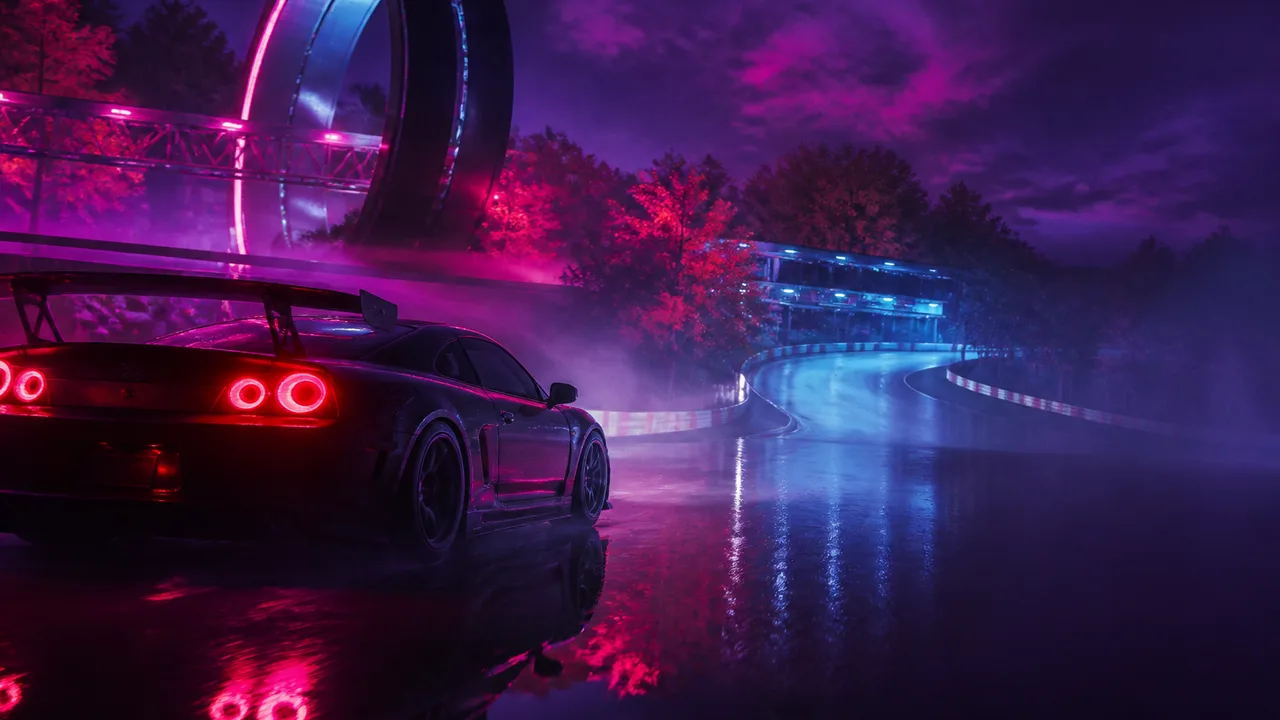
Polyphony Digital announced Gran Turismo 7's Spec IV update on September 3, splitting it into two releases scheduled for October and December 2026, according to the PlayStation Blog. The headliner is Autumn Ring, a fictional circuit absent from the series for 13 years, per IGN. Sportsland Sugo, a real circuit in Miyagi Prefecture with a history in Super Formula competition, and approximately a dozen new cars complete the package, as reported by Push Square.
Thirteen years is a long time to want something back. In game development terms, it spans multiple console generations, multiple series entries, and the entire lifespan of studios that launched and folded while Gran Turismo kept publishing. So when Polyphony restores a classic circuit after that kind of gap, the first question is not "why now?" It is who kept the memory alive long enough to make now possible.
The community that would not let it go
GTPlanet, the long-running Gran Turismo fan community and forum, has functioned as institutional memory for the series since the late 1990s. For years, threads cataloguing absent tracks and removed content circulated there with the persistence of people who know the developers are not ignoring them but want the gap on record. Autumn Ring appeared in those lists. So did other circuits that remain missing.
I cover small studios mostly, teams where the relationship between developer and community is more direct because the studio cannot afford not to listen. The Gran Turismo community's mode of organizing is less social media campaign, more sustained documentation: the kind of pressure that does not spike and fade but accumulates over years of forum posts and community wikis. Spec IV's announcement did not land in a vacuum; it landed in a conversation that had been running for a decade.
The Cafe, and why Polyphony builds museums
GT7's Cafe mechanic is, on paper, a progression system: complete themed car collections, unlock more content. But Polyphony built something stranger into it: automotive history lessons, manufacturer oral histories, the cars you are collecting contextualized as artifacts with lineages and stories. It is a racing game that also functions as an archive.
That design philosophy is the reason Autumn Ring's return registers differently from routine fan service. Polyphony's approach to GT7 treats the series' own history as curateable, something to be restored and displayed alongside real-world racing heritage. Bringing back a fictional circuit from the franchise's early years fits that logic directly: Autumn Ring is evidence of what Polyphony was imagining when they built the original games, and the Cafe's curatorial model treats that as something to preserve.
A developer at a small studio making their second or third game would recognize this instinct. When you have enough history to look back at, you start making decisions about what to keep in print. Polyphony has enough history to run a museum. Spec IV suggests they are treating it like one.
What Spec IV signals about the competitive field
GT7 launched in March 2022. Four and a half years later, Polyphony is announcing a named, versioned, two-part update that Gematsu and Operation Sports both covered as significant news. That longevity has a context.
The racing sim genre has contracted around GT7. Project CARS went dormant after the acquisition chain from Slightly Mad Studios to Codemasters to EA stalled the series. Driveclub is gone. Several smaller studios that tried to compete on simulation fidelity between 2018 and 2024 are no longer shipping content updates. GT7 persists, and Spec IV represents Sony and Polyphony continuing to invest in a game that launched during a PS5 supply shortage and outlasted most of its contemporaries.
For smaller studios watching from outside, the lesson is complicated. Polyphony's model works partly because Sony backs it, which removes the funding pressure that ends small racing projects after one or two content drops. The path GT7 is on is not reproducible without platform-level support. But the design decisions (sustained historical investment, community-attentive content recovery, deliberate pacing of major versioned updates) are choices, and choices can be studied.
Sportsland Sugo alongside Autumn Ring
The pairing of Autumn Ring and Sportsland Sugo in the same update is a curation decision I would flag if I saw it in an indie game's release notes. Autumn Ring is fictional, original to the series, living entirely in Gran Turismo's own mythos. Sportsland Sugo is a real circuit in Miyagi Prefecture with decades of Japanese domestic motorsport history, including Super Formula rounds. Placing them together creates a specific contrast: the imagined past of a franchise sitting alongside a real piece of Japanese racing infrastructure.
The roughly dozen new cars, per IGN, will serve both communities: simulation purists who want real-world circuit accuracy and long-time fans who have been asking for the series' fictional originals. The pairing, deliberate or logistical, produces a release that speaks to the breadth of what GT7 has become four years into its lifecycle.
What none of the current sources address is whether Polyphony is working from a documented list of absent content or restoring tracks through more localized team decisions. The Cafe's logic implies the former: a studio that builds historical pedagogy into its progression system probably has a structured view of its own archive. If Autumn Ring came back after 13 years, the circuits still missing are missing for a reason.
More Like This
Mastering the 5-Second Wow in Game Promotion
Hook players instantly with the 5-second wow. Discover strategies for game promotion.

Lollipop Chainsaw's New Game Debuts at TGS 2026
Dragami Games brings a new Lollipop Chainsaw title to Tokyo Game Show 2026, complete with a world premiere demo and a self-described DEI-free stance.
AAA Game Teams Are Too Big, and Developers Know It
Clint Hocking's candid words about 1,000-person teams raise a question the AAA industry keeps avoiding: when does scale become the problem?
Dragon's Dogma 2: Dark Arisen Is Getting a Hard Mode
Capcom is adding a Hard Mode to Dragon's Dogma 2: Dark Arisen, built for level-capped players. Here's what it means for the game and the franchise.
Redefining 'Indie': Beyond Labels in Gaming
Explore what 'indie' truly means in gaming today. Is it a genre, a spirit, or something else entirely?
GTA 6 Leaks, 2XKO Ends, and a Rough Week for the Industry
GTA 6 gameplay leaked again, Riot kills 2XKO, Saber's AI scandal blows up, and Sony's live service pivot keeps costing developers their jobs.
War for Westeros Delayed to 2027: A Smart Call or a Risk?
PlaySide Studios has pushed War for Westeros to early 2027. Here's why that delay might be the smartest move a small studio could make with this IP.
Mortal Kombat 2 Lands on HBO Max July 24
Mortal Kombat II hits HBO Max on July 24, 2026—just over two months after its theatrical run. Here's what the numbers and timing tell us about WB's strategy.