GPS Spoofing Puts Data Center Freight at Risk of Theft
More than $100 million in data center cargo has reportedly been stolen since June. GPS deception and forged driver IDs expose weak handoffs in freight security.

Written by AI. Mike Sullivan
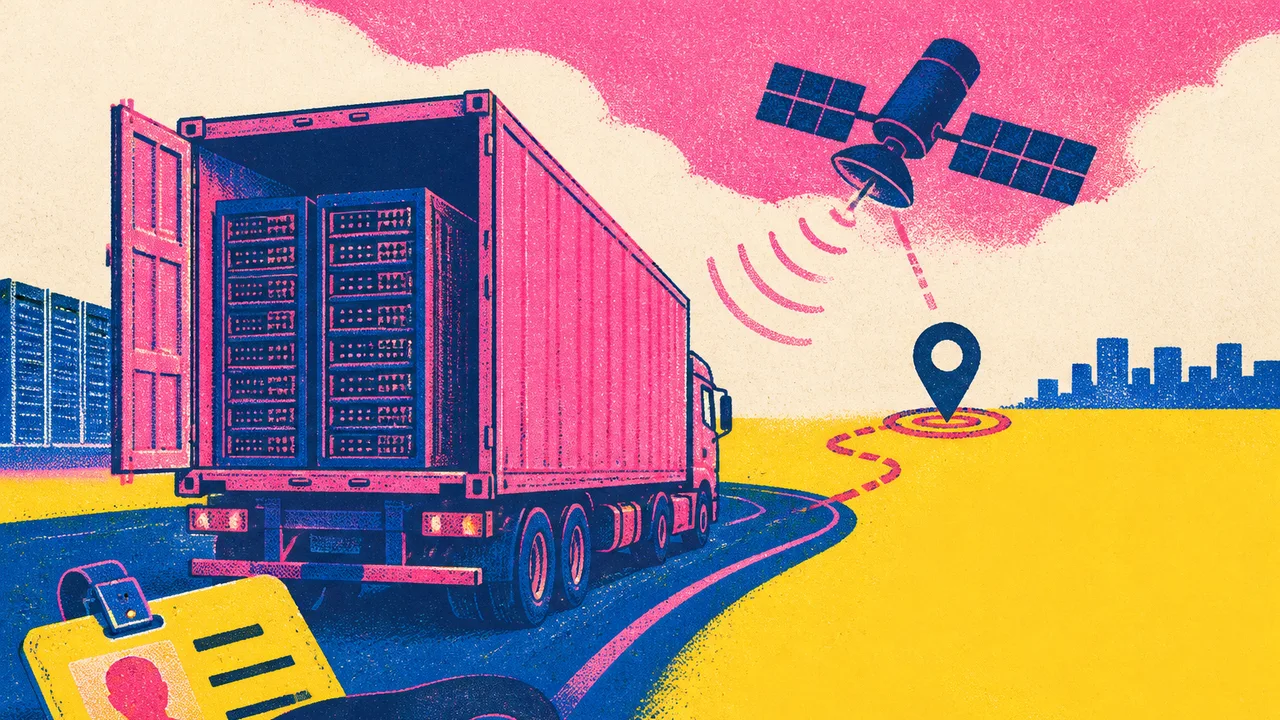
More than $100 million in data-center-bound cargo has reportedly been stolen since June, a theft estimate that puts an expensive complication on the road to new computing capacity. The reported tactics include forged driver identities and spoofed GPS signals. A shipment can look properly assigned and apparently on course while the equipment heads somewhere else.
The $100 million figure lacks a public shipment-by-shipment accounting, and the precise method used to falsify locations is unclear. Still, the combination of identity fraud and deceptive tracking points to a vulnerability that does not require breaking into a data center. Servers and infrastructure components have to travel there first. Between the seller’s loading dock and the buyer’s receiving bay, a screen full of reassuring dots can give people more confidence than control.
The Pickup is a Security Checkpoint
Freight changes hands through a sequence of assignments, documents, messages and physical pickups. Someone has to know which carrier has the job, which driver will arrive, what vehicle to expect and whether a late change is legitimate. Each answer may live in a different company’s system. The person at the gate has to make a decision anyway, often with a truck waiting.
A forged driver identity attacks that decision. If a criminal can present convincing credentials or paperwork, the load may leave with someone who has no right to collect it. GPS deception attacks a later decision: whether anyone should intervene when a tracking display appears to show normal progress. The first gets the cargo moving; the second can buy time before someone notices it is gone.
Those tactics do not have to occur together on every shipment. A fraudulent pickup, a diversion after a legitimate pickup and falsified location data are different failures, with different opportunities to stop them. Treating all three as a single “GPS hack” makes for a tidy headline and a lousy security plan. Checking a map cannot authenticate a driver. Checking a driver at departure cannot, by itself, confirm where the trailer goes next.
The word spoofing also deserves some care. A misleading location on a logistics dashboard might originate with a device receiving false positioning signals, a compromised device reporting fabricated coordinates, or data altered before it reaches the customer. These possibilities call for different technical defenses. In each case, the operational problem is the same: people may act on a location claim they have not checked independently.
Why These Loads Appeal to Thieves
Data center equipment concentrates value in shipments bound for projects with tight schedules. Servers and related infrastructure can be costly to replace quickly, particularly when a buyer needs a particular configuration or enough matching components to complete a deployment. A stolen load can therefore create two problems: the value of the missing goods and the time needed to source replacements.
That second cost is easy to miss when a theft gets reduced to a dollar figure. A project waiting on equipment cannot install the equipment it expected to arrive. Whether a particular loss delays a data center depends on what was stolen, what substitutes the buyer can obtain and how much slack remains in the schedule. The reported total should not be translated into a claim about megawatts delayed or customers left waiting.
The incentives are familiar. Valuable, movable goods attract theft; rushed delivery networks have to make fast decisions; and digital systems make those decisions look orderly. In the 1990s, businesses learned to put more of the supply chain on a screen. That was useful. It also left a persistent temptation to confuse a timely status update with proof that the physical world matches it. The loading dock has yet to be replaced by a dashboard, however much the dashboard would prefer the promotion.
The economics can cut both ways for defenders. An extra identity check may be cheap beside the loss of a server shipment. Applied badly, the same check can leave legitimate drivers waiting, create exceptions that staff learn to wave through, and add delay to equipment deliveries already under pressure. A procedure that works only when nobody is in a hurry will have a short life in freight.
Make the Handoff Harder to Fake
The most direct response is to give the people releasing a load a way to confirm the pickup through a channel the arriving driver does not control. That could mean checking a driver and vehicle against an assignment confirmed with the carrier using a previously established contact, then requiring fresh authorization for a substitution.
There is a catch: driver and equipment changes are normal parts of hauling freight. Trucks break down, schedules shift and dispatchers reassign work. A rigid rule that treats every change as evidence of fraud could slow legitimate deliveries. A workable process needs a fast, documented path for exceptions, with the buyer, carrier and pickup location clear about who can approve them. Otherwise the exception becomes the routine, and the routine becomes theater.
Location checks need a similarly practical design. Comparing a vehicle’s reported position with independently generated information, such as a verified check-in at a scheduled stop or confirmation from the receiving facility, can make a false route harder to sustain. Requiring confirmation when a load deviates, stops unexpectedly or changes destination gives staff a reason to investigate before the expected delivery window closes. None of that turns GPS into a lock on the trailer. It makes a dubious location update less likely to settle the question on its own.
Buyers also have a role beyond asking carriers to add more tracking. They can specify who may authorize changes, how a pickup is confirmed and when a missing or inconsistent signal triggers a call. Carriers need procedures their drivers and dispatchers can actually follow. The pickup site needs access to the current assignment, rather than a printout that was accurate when someone sent it yesterday. If those parties use separate records, a thief only needs to find the moment when one record has changed and another has not.
That is the awkward lesson for an industry selling vast amounts of computing infrastructure: the physical chain has its own identity problem. Software can record that a truck is assigned, that a driver checked in and that a dot moved down a highway. Someone still has to verify that the right person took the right load, and that the load reached the right door.
More Like This

Do You Really Need an $80 HDMI Cable? Maybe Not
Tech reviewer Adam tests a premium HDMI 2.1 cable. We examine what you're actually paying for and whether most users need it.

Atlas Can Lift a Fridge. Now What?
Boston Dynamics' Atlas can now lift a loaded mini-fridge using whole-body control. Here's what the demo actually tells us—and what it doesn't.
AMD EPYC 8005 Sorano: A Genuine Generational Leap
AMD's EPYC 8005 Sorano upgrades SP6 with Zen 5 cores, 84-core density, and 96 PCIe Gen 5 lanes—but the ecosystem remains niche and memory costs sting.

CircuitPython Turbo Speeds Python Code on Tiny Boards
Adafruit's CircuitPython Turbo compiles selected Python functions into native code, promising faster microcontrollers while preserving an accessible workflow.

3D DRAM: The Memory Scaling Challenge Explained
DRAM scaling is hitting a wall around 2029. Here's what true 3D DRAM actually involves—and why it's harder than 3D NAND made it look.

AI Coding's Modular Mirage: Real Pattern or Hype?
A pattern called 'Modular Mirage' is circulating in AI coding circles. The research behind it reveals something more unsettling than any name suggests.