Eric Ries: Good Governance Is a Builder's Job
Eric Ries argues that without structural governance, every mission statement is a lie. His new book Incorruptible makes the case for building corruption-resistant companies.

Written by AI. Samira Barnes

Photo: AI. Lila Bencher
You know you have a diagnosis problem when the clearest sign of a company's capital structure is the food on your plate. That is where Eric Ries opens his recent talk at Product School — two dinners, two restaurants recommended by friends who hadn't visited in a few years, two different private equity firms, and one indistinguishable taste of hollowed-out product. It's a good opener because it converts an abstraction — financialization of the American economy — into something sensory and immediate. Most people in the audience had felt that exact thing and never had a word for it.
Ries wants to give them the word. That word is corruption.
Fifteen years after The Lean Startup made rapid experimentation a corporate religion, Ries is now making a different argument in his new book, Incorruptible. The speed and the iteration methodology — all of it — means nothing if the governance structure of your company can be turned against the mission you originally built it for. Ries describes watching founders he knows personally lose control of the companies they created after delivering extraordinary returns to investors. The investors wanted more, which is what investors do, and the founders were shown the door. He describes attending what he calls "a wake" for one such founder — a thousand-person event, people flying across the country — where nobody could quite articulate what they were mourning. The founder was fine. The company was fine, technically. What was gone was the promise.
"If you don't get the governance of your product right, no other decision you make will matter for the long term, because you won't be the one making it."
That's the core tension Ries is navigating in Incorruptible, and it's a genuine one. The builder mythology — the scrappy founder, the iterative product, the mission-driven team — runs directly into the structural reality of how most companies are capitalized and governed. Investors expect returns. Boards represent shareholders. And most corporate charters, as Ries pointedly notes, say something close to "any lawful act or activity" as their stated purpose. Maximum optionality, the lawyers call it. The gap between that language and whatever the company's mission statement says on the website is, in his framing, a lie told to customers, employees, and the founders themselves.
This is where the argument gets interesting — and also where it invites scrutiny.
Ries resurrects the story of Saul Price, the largely forgotten father of modern American retail. Price built FedMart in the 1950s with an unusual animating principle: as a trained lawyer, he asked himself who his client was. The answer he landed on was the customer, and he then applied a lawyer's fiduciary standard to that relationship. His hierarchy ran customers first, employees second, shareholders last — a formulation that Peter Drucker reportedly disputed only in the ordering of the first two, not in the placement of shareholders at the bottom. FedMart grew. Price made his shareholders wealthy. In 1975, they fired him anyway, changed the locks on his office door, and ran the company into bankruptcy within seven years in pursuit of faster growth and what Ries acidly calls "best practices."
The story of what happened next has the quality of a business parable: a group of employees quit FedMart in protest of Price's ouster, one of them being Jim Sinegal. Sinegal eventually founded his own company, which merged with Price's subsequent venture, Price Club, to form what we now call Costco. A $400 billion public company that has, for four decades, maintained a reputation as the exception to every rule about how publicly traded retailers behave. Costco raises its minimum wage before it's required to. It keeps membership prices low longer than Wall Street wants. It does not appear to be maximizing shareholder value in the short term — and yet it keeps delivering it in the long term.
Ries's explanation for why Costco works when similar companies don't is a two-part formula he describes as ethos plus structural integrity. The ethos is Price's fiduciary commitment to the customer, which Costco inherited through Sinegal and has institutionalized culturally. The structural integrity is what Ries calls a "governance fortress" — specific legal and organizational mechanisms that make it difficult for internal temptation or external pressure to override the mission. He mentions that some of these mechanisms are as old as 1885 (the German optics company Zeiss has operated under an alternative ownership structure since then) and that some require nothing more than a two-page filing in Delaware.
Here is where a reader paying attention might want more specifics than a 21-minute talk can provide. The concept of governance structures designed to resist shareholder primacy is not new territory. Benefit corporations — legal entities with a stated public mission baked into their charter — exist in most U.S. states. Steward ownership models, employee stock ownership plans, and dual-class share structures all represent different attempts at the same problem Ries is describing. What precisely goes into his "governance fortress," and how does it differ from these existing instruments, is the question the book presumably answers in detail that the talk cannot.
What the talk does well is name the problem at the level of culture rather than just mechanics. Ries observes that Silicon Valley absorbed the vocabulary of Lean Startup so fast that many practitioners went directly from dismissal to backlash without passing through the intermediate stage of actually learning to use the method correctly. He worries the same thing happens to everything: the language gets adopted, the practice does not. A mission statement without a mission. A pivot without a hypothesis. A fiduciary commitment without any legal or structural mechanism to enforce it when the board decides otherwise.
"If you have a mission statement but not a mission, then you are lying to your customers. You are lying to your employees. You are lying to yourself."
The argument Ries is making is not anti-market. He is not arguing that companies shouldn't be profitable, that investors shouldn't expect returns, or that founders have some mystical right to run companies indefinitely regardless of performance. He is making the narrower claim that shareholder primacy, as currently practiced, is a self-defeating doctrine — that treating shareholder value as the primary goal rather than as an output of a healthy product and customer relationship produces worse outcomes for everyone, including shareholders. He uses the metaphor of exhaust: shareholder returns are what comes out of the engine when everything else is working. Running the exhaust back into the air intake chokes the engine.
That framing has real intellectual support. The academic literature on stakeholder capitalism versus shareholder primacy has been contested for decades, with Milton Friedman's 1970 New York Times essay ("the social responsibility of business is to increase its profits") representing the canonical statement of one position and thinkers from Peter Drucker to Lynn Stout representing the dissent. What Ries adds to that debate is less theoretical and more architectural: whatever you believe philosophically, you need structures that can survive the moment when the belief is tested. Good intentions, as one unnamed AI startup founder in the talk discovers, do not survive investor due diligence or top scientist recruitment as a governance strategy.
He mentions, in passing, that he played a role in setting up this kind of structure at Anthropic — a detail that will attract attention given Anthropic's current position at the center of AI safety debates and its Public Benefit Corporation status. Anthropic is not family-run, it is not tiny, and it operates in one of the most capital-intensive sectors in the economy. Whether its structure actually holds under the pressure of the compute arms race is a question that remains open.
That openness is, in some ways, the honest place to leave it. The case for building governance structures that outlast the founder's tenure and resist the gravitational pull of short-term returns is historically well-supported. The mechanics of doing it at scale, in a world where growth rounds require investor concessions and exits are often the only way founders and early employees see liquidity, remains genuinely hard. Ries frames corruption as a choice, not an inevitability. Whether it is a choice that most founders are actually free to make — given the terms on which capital currently moves — is a different kind of question than the one he came to answer.
More Like This
The Hidden Danger in Jack Dorsey's AI Management Dream
Dorsey's 'world model' AI got 5M views. But three architectural approaches all fail the same way—confusing information flow with judgment.

GameStop's $56B eBay Bid: What the Math Actually Says
GameStop bid $56B for eBay despite a $12B market cap. We broke down the financing—shares that don't exist, a non-binding bank letter, and a CEO incentive worth examining.
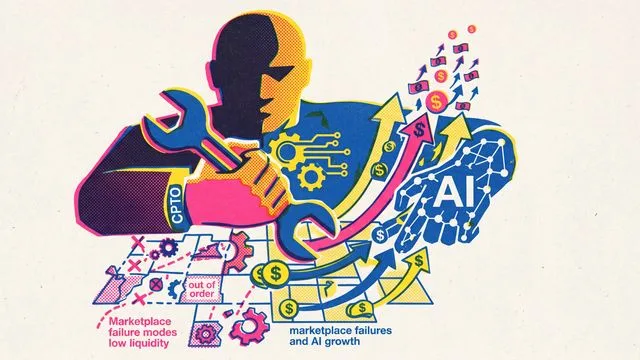
GoFundMe's CPTO on Marketplace Failure & AI Growth
GoFundMe's CPTO Arnie Katz breaks down 3 marketplace failure modes and how AI agents are driving real revenue—not just dev productivity.

Wall Street Knew the Crash Was Coming. Saying So Got You Fired.
Jeremy Grantham's famous poll revealed 398 analysts knew the dot-com crash was guaranteed. A 2003 study shows why none of them said so publicly: accuracy cost careers.

Malcolm Gladwell's Success Rules, Audited
Malcolm Gladwell's pond theory, mentor myth, and coddling critique — stress-tested against the actual startup ecosystem that either proves or buries his claims.

How APL Turned an NBA Ban Into a Brand Identity
APL's NJ Falk breaks down the six storytelling threads behind one of e-commerce's most unlikely brand-building moves—starting with an NBA ban.

AI Chip Smuggling and the US-China Tech Divide
FT's Eleanor Olcott investigates the black market for Nvidia AI chips reaching China despite US export controls — and what it reveals about the tech race.

Promptware: When AI Agents Become Attack Vectors
Prompt injection attacks on AI agents follow a structured kill chain — and existing legal frameworks have almost nothing to say about who's liable when it works.