Did Life on Earth Actually Begin Twice?
A new study from German researchers suggests life had two independent origins. Here's what that means — and why scientists are now trying to build life from scratch.

Written by AI. Mei Zhang
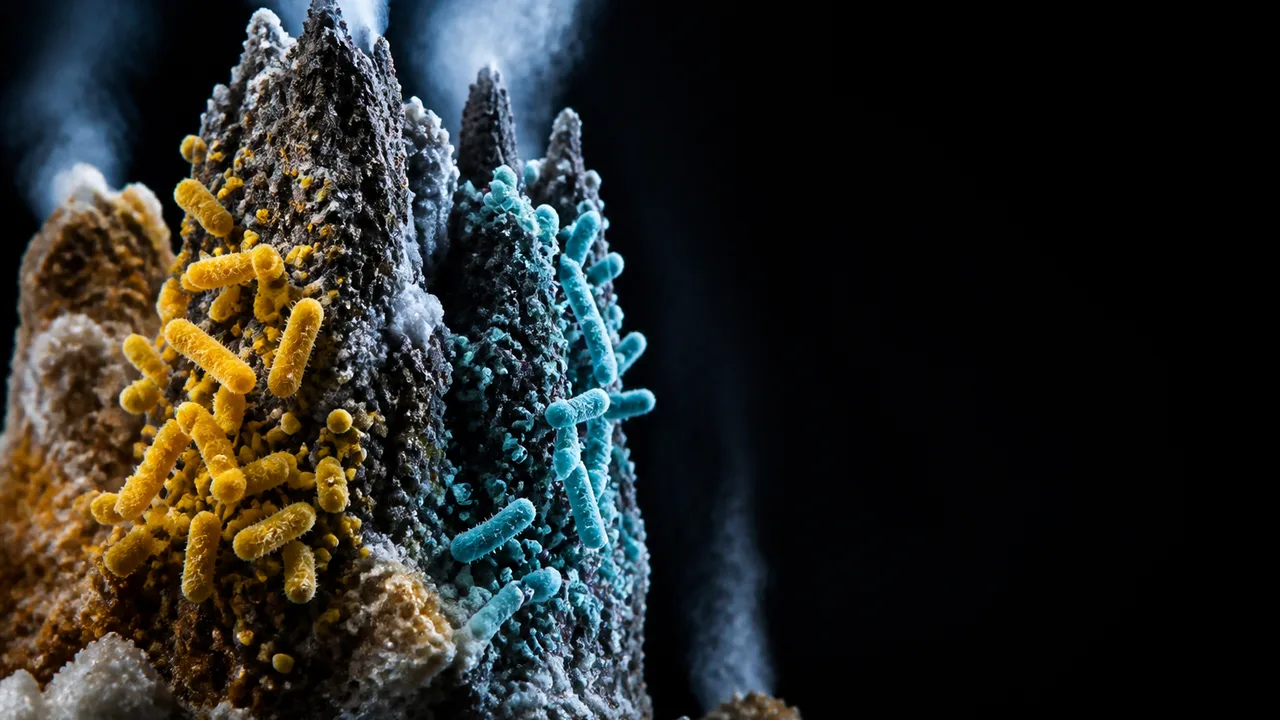
Photo: AI. Pippa Whitfield
Everything you learned about life starting once, in one place, from one common ancestor? Still mostly true. Just... more complicated. 🧬
A new paper from a group of researchers in Germany, published in Science Advances, proposes that life didn't just have one origin — it had two. Not two separate alien chemistries. Two separate moments of becoming independent. The difference matters, and the distinction is worth sitting with for a minute.
Start at the vents
The leading theory for how life began places the action at hydrothermal vents — cracks in the deep seafloor where superheated, mineral-rich water meets the cold ocean. The idea is that the chemical gradients at these vents provided the energy and raw materials needed to kick off biology before biology existed. Our last universal common ancestor, often called LUCA, is thought to have lived there, entirely dependent on what the vents provided.
The German research team's new contribution: they argue LUCA eventually split into two branches — bacteria and archaea — and that each branch had to independently evolve the ability to leave the vents behind. To build a fully self-sufficient metabolism. To survive on their own terms.
That's the "two origins" in the headline. Not two separate soups, two separate lightning bolts, two unrelated chemical accidents. Two separate moments when a vent-dependent microorganism figured out how to go it alone.
Much later, a descendant of the archaea absorbed a bacterium — which then became the mitochondria, the energy-producing machinery in every complex cell that followed, including the ones in plants, animals, and, yes, YouTubers.
How do you even research this?
The team inferred this history by comparing proteins across nearly 1,000 modern microorganisms. The logic is that if both bacteria and archaea carry the genes for metabolic self-sufficiency, you might expect those genes to trace back to a single common ancestor — LUCA — who already had them. But the researchers argue the molecular evidence points elsewhere: those genes look like they evolved separately in each branch, after the split.
Physicist and science communicator Sabine Hossenfelder, who covered the study, puts it plainly: "It's the development of an entirely self-sufficient metabolism that they call the origin of life."
Which reframes the whole question. If "origin of life" means the moment biology becomes untethered from geology — when chemistry graduates into genuine living — then yes, it happened twice.
Okay but how confident should we actually be?
Hossenfelder gives the paper a measured "seven out of ten," and flags the real vulnerability: the study can't rule out the possibility that the self-sufficiency genes did have a shared origin in LUCA, and then diverged through mutation in one of the branches later. Two similar-looking solutions to the same problem don't automatically mean two independent inventions. Evolution is full of convergence — eyes evolved separately in dozens of lineages, flight evolved at least four times in vertebrates alone.
So the proteins-across-a-thousand-organisms approach is genuinely powerful. The conclusion it's being asked to support is genuinely contested. Both things are true, and the paper is doing real work even if the headline claim doesn't survive every challenge thrown at it.
The shift nobody's fully processed
What I find more interesting than the specific paper is the broader move Hossenfelder is tracking: origin-of-life research is no longer mostly archaeology. It's becoming experimental.
For most of scientific history, asking "how did life begin?" meant digging through fossils, reading rock strata, squinting at ancient chemistry from billions of years away. Now researchers are trying to actually recreate the conditions. Earlier this year, according to Hossenfelder, researchers in Cambridge identified a small RNA fragment capable of undergoing the chemical reactions necessary for self-replication — not quite self-replicating on its own yet, still needing some assistance, but directionally significant. It makes the RNA-world hypothesis — the idea that RNA, not DNA, was the original carrier of biological information — substantially more plausible.
And then there's Mini Life.
The European Research Council is funding a project by that name to the tune of nearly €13 million, running through 2030. The goal, in Hossenfelder's framing: "start from elementary chemicals to create a system that maintains itself, has a boundary, reproduces, passes on information, and evolves through natural selection."
I want to be clear about what that sentence is describing. This isn't sequencing a genome or editing an existing organism. This is attempting to build something that becomes alive — from scratch, in a lab, on purpose. No template. No existing biology as scaffolding. Just chemicals, conditions, and the hope that the right reactions cascade into something that reproduces and evolves.
I cover CRISPR for a living, and even I had to stop and register that. The CRISPR debates — who owns the edits, who has access, what we owe future generations — those feel familiar now. Mini Life is playing at a different level. If it works, the philosophical and ethical questions it opens aren't about editing existing life. They're about authoring it. Who decides what properties a manufactured living system should have? What does it mean to create something capable of natural selection and then release it into the world — even theoretically? I'm not saying those questions should stop the research. I'm saying they deserve to be in the room while it happens, not retrofitted afterward. We've learned that lesson before.
Hossenfelder is careful: "It might not work, and even success would not prove that life on Earth began in the same way." But it would establish that the route from chemistry to evolution is physically possible. A proof of concept for abiogenesis. That's not nothing. That's actually enormous.
The cosmology comparison lands
Hossenfelder pushes back on science writer John Horgan's argument — from The End of Science — that the origin of life will remain permanently beyond our explanatory reach, the hypotheses forever indistinguishable. Her counter: look at cosmology. Forty years ago, the origin of the universe was mostly speculation. Then the data got better — the cosmic microwave background, galaxy surveys, precision spectral measurements — and the hypotheses started narrowing. Nobody woke up one morning with a complete theory everyone agreed on. But the field moved. Details clarified. The fog thinned.
She thinks the origin of life is on that trajectory now.
I don't know if she's right. But I find it genuinely strange — in the best possible way — to be alive at the moment when "how did life begin?" stopped being purely a philosophical question and started accumulating lab results. That used to be the kind of question you asked around a campfire, or in a philosophy seminar, or in a religious text. Now it's the kind of question where researchers have a €13 million budget and a 2030 deadline.
The question hasn't gotten smaller. The tools for chasing it have just gotten real.
More Like This
How Maxwell Unified Electricity and Magnetism
A compass needle twitched in 1820 and set off a chain of discoveries that now powers every wireless signal in your life. Here's the physics behind it.
Mars, Enceladus, and the Search for Life
From Mars's vanishing water to Enceladus's hidden ocean, planetary science is reshaping our understanding of where life might exist.
Russia's 8 km Drill to Test the Abiogenic Oil Theory
Russia is drilling 8 km into the Earth to test whether oil can form from inorganic matter and replenish itself. Here's what the science actually says.
Total Solar Eclipse 2026 Dazzles Spain and Science
The August 12, 2026 total solar eclipse over Spain was a spectacle—and a rare scientific window into a solar mystery we still can't solve.
Viking Landers and the Unsolved Mars Life Debate
Fifty years after Viking landed on Mars, one experiment's positive result remains unexplained. Here's what the science actually shows—and what we've learned since.
Black Hole Paradox: Are Reference Frames the Key?
Exploring how reference frames might resolve the black hole information paradox.
The Two Poles Theorem Solves a Geometry Puzzle
A geometry puzzle about two walls and a man's height reveals a classical theorem — and a surprising connection to teamwork math. Here's what's actually going on.
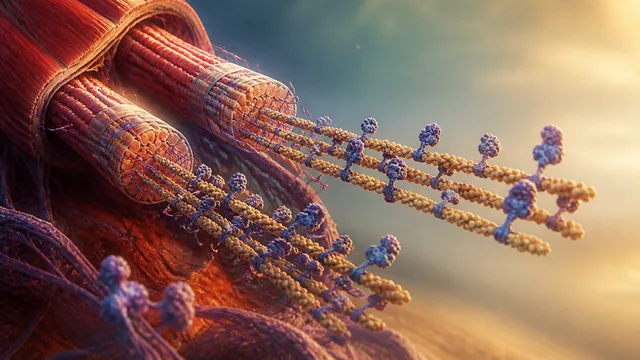
The Molecular Machinery Inside Every Muscle You Have
From actin filaments to the calcium switch, here's how your muscles actually contract — and what happens when the molecular machinery goes wrong.