Diablo 5 Arrives Spring 2029: What Blizzard's Long Bet Means
Blizzard announced Diablo 5 for spring 2029 at BlizzCon 2026. Here's what a four-year runway means for the studio, players, and Diablo 4.

Written by AI. Mike Wierzbicki
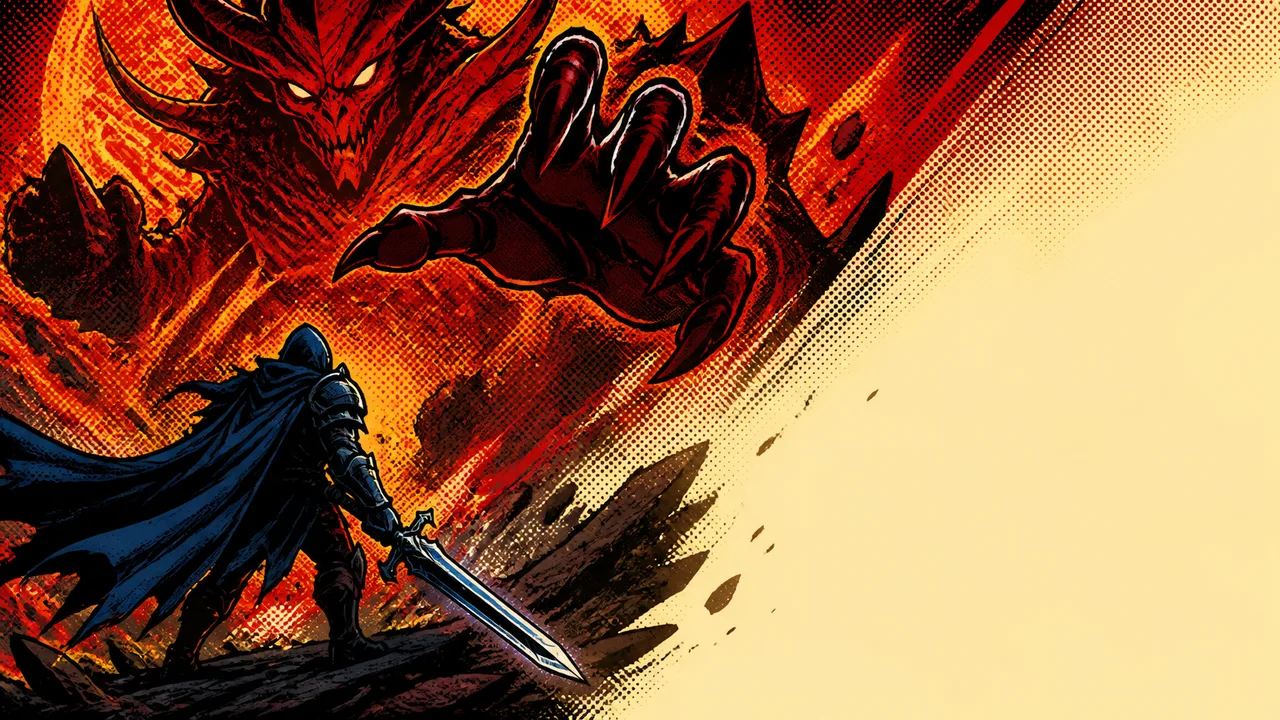
Blizzard has officially announced Diablo V, the next mainline entry in its action-RPG series, and given it a launch window: spring 2029. The reveal came during the BlizzCon 2026 opening ceremony on September 12, where the company also confirmed a StarCraft return, Warcraft news, and Diablo IV's next season, according to Xbox Wire's rundown of the announcements news.xbox.com and Massively Overpowered's coverage massivelyop.com.
A firm date three and a half years out is unusual, and Blizzard knows it. PC Gamer asked the company why it still announces games years ahead of release, and the answer Blizzard gave was that it wants to "convey confidence in some of our biggest bets coming forward." Confidence, in this construction, is something you announce rather than something you demonstrate. That framing deserves scrutiny, because a 2029 date is a promise made to people who cannot yet see the thing being promised.
What Was Actually Announced
The concrete details, per the outlets on the ground at BlizzCon: Polygon reports Diablo 5 was formally unveiled at the ceremony polygon.com, with Nintendo Life confirming the spring 2029 window and a first teaser trailer nintendolife.com. Eurogamer adds that a Netflix show based on Diablo is also in development eurogamer.net.
The setting shifts. Destructoid reports the game goes post-apocalyptic, and notes the turnaround is short by Diablo standards: the fifth entry arrives after just three years of wait, measured against the gap since Diablo IV launched in 2023 destructoid.com. GamesRadar confirmed the first three classes: Demon Hunter, Monk, and an all-new Plague Knight, with Blizzard claiming the sequel will have "more classes than ever before" gamesradar.com.
That's roughly the extent of the record. No gameplay beyond the teaser, no pricing or platform detail beyond what the roundups capture, and nothing yet on how progression or the seasonal model will differ from Diablo IV. Where the record is thin, I'll say so rather than fill it.
The Two Readings of a Four-Year Date
The optimistic reading: a date this far out signals a project with real pre-production behind it. Diablo IV had a rocky launch and a long repair arc; its live-service model was reworked season after season while players complained about itemization and monetization. Announcing Diablo V while Diablo IV is still running creates a hard question, and Blizzard answered it by committing to support for Diablo IV's future seasons, as Dot Esports reports the company laid out Diablo's "next few years" at the show dotesports.com. The four-year runway also gives the team room to build a full campaign, endgame, and post-launch structure without the compressed schedule that produces the industry's most familiar failure mode: crunch at the tail of production.
The skeptical reading: PCGamesN's headline framing captured the marketing mechanics well, declaring that "this time, Diablo has already won" pcgamesn.com. A cinematic and a window, four years before launch, locks in attention now, at a moment when Microsoft-owned Blizzard wants to demonstrate a healthy multi-franchise pipeline to an audience (players, press, and presumably a corporate parent) that has watched promised timelines slip before.
Both readings can be true at once, which is usually the case with announcements this early. The more useful questions are about what happens in between.
The Four-Year Question
Blizzard's own justification for early announcements, that it wants to convey confidence, cuts both ways. Announcing in 2026 for a 2029 launch means the company is asking players to hold excitement, and possibly wallet-share, across years in which the game will change shape repeatedly. Development realities apply: pre-production concepts get cut, systems get rebuilt, and the game shown in a 2026 teaser may resemble the 2029 product only loosely. Players who track this closely know the pattern; the question is whether Blizzard will manage expectations honestly along the way or let the marketing narrative drift from the build.
There's also the Diablo IV problem, stated plainly: the current game has to remain attractive for three more years without being cannibalized by its successor. Massively Overpowered noted Blizzard paired the Diablo V reveal with news of Diablo IV's next season massivelyop.com, an acknowledgment that the existing player base is the bridge to 2029. Keep that population engaged and the launch inherits a healthy community; let the seasons thin out and the 2029 debut starts from a colder room.
The labor question runs underneath all of this. Four years is long enough that the team building Diablo V in 2026 will not be identical to the team shipping it in 2029. The games industry's record on retaining staff across long development cycles is poor, and Blizzard in particular has absorbed multiple rounds of layoffs and restructuring since Diablo IV shipped. None of the BlizzCon coverage speaks to staffing, which is normal for a reveal and still worth naming: the people who pitched the Plague Knight and the post-apocalyptic setting will spend a significant fraction of their careers getting it out the door, and whether they're supported through that run is a story that will matter more than any teaser.
What to Watch
If you want to judge whether this announcement was a plan or a posture, the tells will arrive well before launch. First, whether Blizzard shows actual gameplay on a reasonable cadence, or holds everything back until 2028 and lets the hype cycle do the work. Second, whether the Diablo IV seasonal model gets clear, player-facing answers on monetization before Diablo V inherits it; the brief from years of live-service experimentation is that trust is built in patch notes, not cinematics. Third, whether the studio talks about scope honestly as it learns what the game actually costs to make.
Blizzard bet that a spring 2029 date reads as ambition. The read depends on everything the company does between now and then, and on whether the version of Diablo V that ships in 2029 is one the 2026 announcement can still vouch for.
Mike Wierzbicki
More Like This
Diablo IV: Lord of Hatred Expansion Review
Explore Diablo IV's Lord of Hatred expansion. New classes, zones, and a thrilling campaign await.
Sunderfolk Is Free on Xbox — Here's What That Means
Sunderfolk is free to play on Xbox for a limited time. We dig into what this trial reveals about indie co-op marketing, Secret Door's origins, and the game's unusual design.

Alpha Dog Games Re-emerges as Independent Studio
Alpha Dog Games, the Mighty Doom developer shut by Microsoft in 2024, has quietly re-emerged as an independent studio—the latest in a string of Xbox departures.

Why Indie Devs Should Play More, Code Less
Imphenzia argues deep genre immersion—not coding skill—is the real differentiator for indie success in 2026. Here's what that argument gets right, and where it gets complicated.
Warcraft Forever: Blizzard's Permanent Level 60 Classic Plus
Blizzard revealed Warcraft Forever at BlizzCon, a permanent level 60 WoW. What's confirmed, what's still unclear, and what the upgrade pack means.
Blizzard StarCraft Teasers and BlizzCon 2026 Explained
Blizzard is running a cryptic StarCraft ARG campaign one week before BlizzCon 2026. Here's what the signals confirm and what the waiting community deserves.

Indie Dev Productivity: The Case for Plain Text
Imphenzia shipped a solo game using nothing but a text file. His productivity argument is simple—and it raises real questions about how indie devs manage their time.
Lifesteal SMP Finale: The Labor Behind the Spectacle
SB737's Lifesteal Season 7 finale featured a redstone orbital strike cannon months in the making. What does that prep work actually cost — and who pays?