Choice Hotels Names Insider CEO to Reverse a Slump
Choice Hotels made Dominic Dragisich permanent CEO after three months as interim. Here's what that bet means for road trippers on a budget.

Written by AI. Kael Maddox

When you're driving a long stretch of highway at 10 p.m. and you need a bed that won't destroy your back or your per diem, a Comfort Inn or a Quality Inn is what shows up at the exit. You hand over your card, the room smells faintly of industrial cleaning solution, the shower pressure is either savage or pathetic, and by morning you've slept fine and you're back on the road. That's the deal. It's not glamorous. It works.
So when Choice Hotels appointed Dominic Dragisich as its permanent President and CEO, I paid attention. The brands that hold road-trip America together are worth watching when they start to wobble.
And Choice has been wobbling. According to Skift, the company has underperformed its rivals on key metrics and the appointment itself is framed as an attempt to reverse that slide. The Washington Business Journal confirms that Dragisich, a 10-year company veteran, had been serving as interim CEO for three months before the board made it permanent. Hospitality Net has the full title: President and Chief Executive Officer, which matters because it means he's carrying both operational and strategic weight simultaneously.
What a Decade of Grooming Actually Means
Choice moved Dragisich through various key leadership roles over nearly a decade to prepare him for the top job, according to a United Kingdom news aggregation of the Skift reporting. That kind of institutional prep is deliberate. You don't cycle someone through finance, operations, and brand management over ten years by accident. You do it because you want them to understand the whole machine before you hand them the keys.
The upside is that Dragisich knows where the pipes run. He knows which brand agreements are creaking, which franchise relationships are fragile, and which revenue lines are healthy versus cosmetically so. When you've watched a company from the inside for a decade, you accumulate a map that no outside hire can buy.
Maps drawn from the inside reflect the assumptions of the people who were already there. Dragisich was shaped by the same culture, the same strategy sessions, and presumably the same blind spots that produced the slump Skift describes. I don't think the odds are good that someone formed entirely within a struggling institution will arrive at the corner office and immediately see what the institution couldn't see before. That's how organizations work. The walls don't become transparent because your title changed.
Outsiders get things wrong too, sometimes catastrophically. Boards that panic and import a turnaround artist from a different sector often watch that person spend 18 months learning what an insider already knew, burning relationships in the process. So the choice between insider and outsider is a real tradeoff, not a clear answer. But the board's bet here reads like a bet on stability over disruption, and stability is a reasonable choice only if the slump is a correction rather than a structural problem.
Which one it is, the sources don't say clearly. Skift frames the RevPAR gap as an ongoing underperformance versus rivals, but I can't tell from available sourcing whether that gap is a year old or three years old. That timeline matters enormously for how much pressure Dragisich walks into.
The Radisson Weight
Choice absorbed the Radisson brands it acquired in recent years, and that integration is part of the competitive picture here. Adding Radisson Hotels Americas was supposed to move Choice upmarket, give it a more premium surface to sell to business travelers, and broaden its footprint in ways that would close the gap with Marriott and Hilton at the top and Wyndham at the volume end. Whether that integration delivered what was promised is a different question. The brands are in the portfolio. Whether guests experience them as coherent, or whether franchisees are executing them consistently, is harder to see from the outside.
Dragisich's decade inside the company means he watched that acquisition happen and had to make it work on some operational level. That's useful. It also means his instincts about what Radisson can become for Choice are already formed, for better or worse.
What $90 a Night Actually Pays For
You're not buying a hotel stay when you stay in a Comfort Inn on a road trip. You're buying eight hours of unconsciousness in a room that's close enough to the highway that you can leave by 6 a.m. without losing time. The price point, call it $90 to $160 depending on the market and the season, is a decision that happens in about forty seconds on your phone while you're still behind the wheel.
For Choice to win that decision, the booking has to be easy, the property has to be consistent, and the loyalty program has to feel like it's doing something. Those are not glamorous problems. They are plumbing problems. But plumbing is what franchised hotel chains actually compete on, because the room itself is more or less commoditized at this price point.
If Dragisich's real assignment is to tighten the plumbing, to get booking conversion up, to push franchisees harder on renovation timelines, to make the loyalty math feel less like a scam, then an insider with ten years of operational knowledge is probably the right person. Those problems require credibility with franchisees, and franchisee credibility is almost impossible to build from scratch.
If the real problem is that Choice has drifted strategically, that its brand portfolio lacks a clear identity in a market where travelers either want a boutique experience or want a known chain they trust on sight, then an insider is a riskier call. That kind of drift usually requires someone willing to say that some of what the company built was wrong, and that's a hard thing to say about a machine you helped run.
The Traveler's Exposure
For the people who actually use these properties, meaning the solo road-trippers, the family driving to see relatives, the trail runners who need a cheap night before an early start, the stakes of this appointment are quiet but real. If Dragisich stabilizes Choice and gradually lifts property standards, the road-trip infrastructure gets a little better and a little more predictable. Fine. That's good.
If the bet goes wrong, if the slump continues and Choice starts shedding franchisees in secondary markets or cutting investment in properties outside major metros, then the exits that used to have a reliable $110 option start offering either a $200 option or nothing. The gap in American road-trip infrastructure doesn't fill itself. Wyndham picks up some of it. Some markets just get thinner. And the traveler who can't or won't pay boutique rates for a one-night stop on a drive through Wyoming or rural Tennessee ends up with fewer real options.
That's what's actually at stake when a mid-market hotel chain stumbles: not the earnings call, but the exit ramp.
Dragisich gets three months of interim experience and ten years of institutional knowledge to work from, per the Washington Business Journal. Whether that's enough to see what his own organization couldn't see before he got there is the question. Boards generally don't promote insiders because they expect them to challenge the institution's assumptions. They promote insiders because they trust them to execute. Sometimes that's the right call. Sometimes the slump is telling you the execution was never the problem.
More Like This

Hotel AI Visibility: Why Google Rank No Longer Guarantees Discovery
Hotels that rank well on Google are disappearing from AI chatbot results. Here's what's driving that gap and what properties need to rethink about their content.

Flight Attendants Share Honest Tips for Air Travel
Flight attendants reveal what they actually do on planes, from skipping the coffee to packing smarter. Here's what their habits tell frequent flyers.
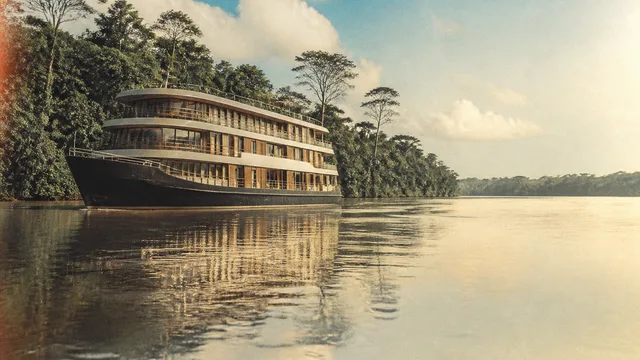
andBeyond Amazon Explorer Yacht: Luxury on the River
andBeyond launches the Amazon Explorer yacht in the Peruvian Amazon in 2026. A look at the specs, the route, and what eco-luxury really demands here.

The World's Longest Domestic Flights, Explained
From Boston to Honolulu to Paris to Réunion, the world's longest domestic flights reveal how borders, customs zones, and sovereignty really work.

The 30-Second Hotel Safety Check You're Not Doing
A quick hotel room safety check—doors, locks, windows, exits—could prevent theft or worse. Here's what travel creator Mark Wolters says to do first.

Airbnb's AI Rebuild Is Fast. But Where Is It Going?
Airbnb says AI cut its product build time from nine months to six weeks. The numbers are real. But the platform's direction raises harder questions for travelers.

Madrid Metro Line 11 Extended to Valdebebas for €880M
Madrid's Comunidad has approved an €880M extension of Metro Line 11 to Valdebebas Norte—7.2 km, four new stations, and a bet on the city's northern edge.

Delta's 2026 Profit Bet Rides on High Airfares Holding
Delta reaffirmed its 2026 earnings forecast despite fuel volatility—but the plan depends on keeping fares high for customers it says can afford it.