Chinese Automakers Challenge Europe's Industrial Advantage
Chinese automakers are challenging Europe 25 years after China's WTO entry. Tariffs, local factories and margins will decide who profits from the reversal.

Written by AI. Alex Volkov
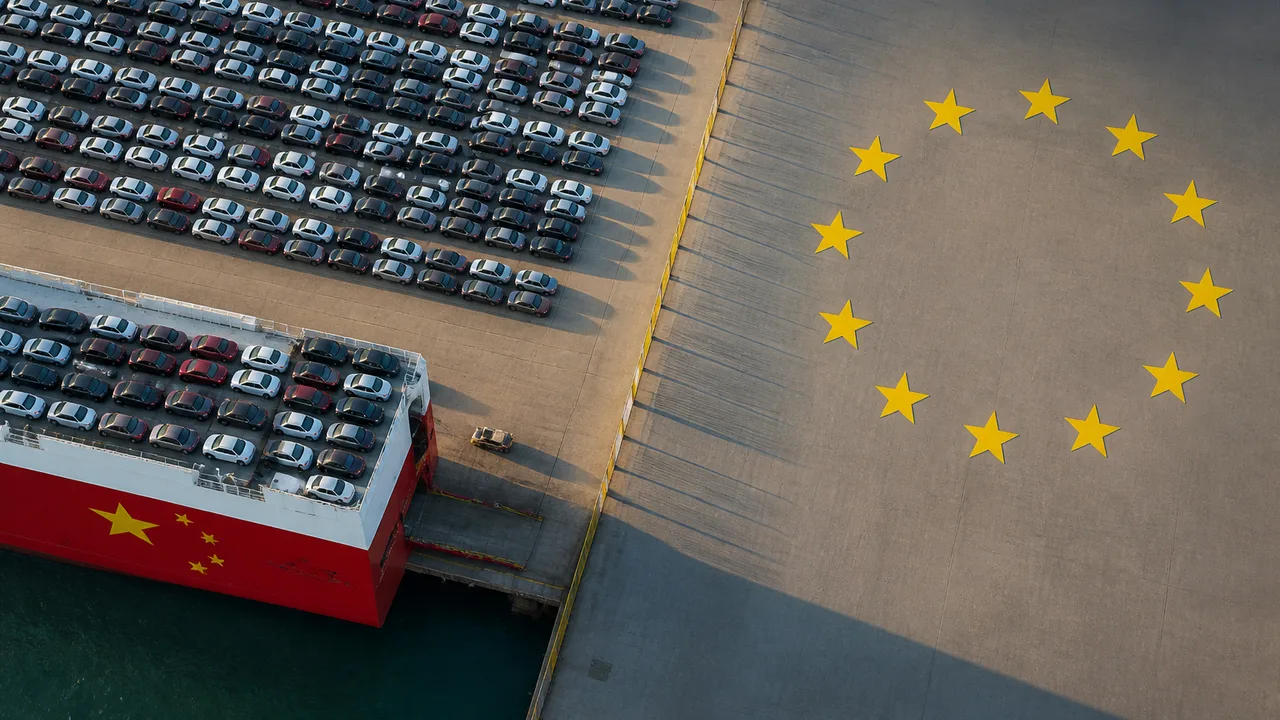
China joined the World Trade Organization in 2001 with its carmakers facing a daunting question: could they survive competition from established Western manufacturers? Twenty-five years later, European automakers are asking a version of that question about Chinese vehicles entering their markets.
The reversal is striking. It also deserves a closer look than a declaration that one side has won. A competitive vehicle can attract buyers abroad; keeping those buyers, servicing their cars and earning a return after trade costs are separate jobs. Europe can respond through tariffs, investment and product development, each with different consequences for workers and drivers. The contest now extends well beyond the showroom.
Ford's CEO has warned that Europe may already be "too late" to counter Chinese automakers. That is a serious warning from the head of an incumbent manufacturer, whose company also has an interest in how governments respond. Europe is not a single buyer, factory or policy decision. The question is how much ground Chinese brands can hold once competition shifts from landing cars at ports to running a durable business.
A Vehicle Price is Only the Opening Bid
For a driver, competition starts with the price and capabilities of a car. If a Chinese model meets a buyer's needs at an attractive price, an established brand has to offer a reason to charge more or find a way to charge less. Either outcome could help consumers. The difficult questions arrive after purchase: Can the owner get a repair promptly? Will replacement parts be stocked? What happens to resale value if the brand changes its European plans?
Those costs also sit on the manufacturer's books. A company entering a new market has to support distribution, service, warranties and marketing. It may need to adapt vehicles to local requirements and maintain an organization that can handle customers for years after a sale. A low sticker price that wins attention does not automatically leave room to pay for all of that. Equally, an incumbent's higher price does not prove it has a better product; its existing network can be an advantage that newcomers have to build around.
The reversal has created a temptation to treat every Chinese automaker as one competitor with one set of economics. Brands can make different choices about price, products and overseas investment. European incumbents also vary in their exposure to the challenge. A useful test for any company is straightforward: after discounts, distribution costs, warranty obligations and any tariffs, does each additional sale help support the business it must build around the vehicle?
Tariffs Change the Calculation, Not the Customer's Needs
European policymakers face a trade-off that a border measure cannot make disappear. Higher import costs can give domestic manufacturers more time to compete and may protect parts of a supply chain built around European production. They can also raise prices or reduce choices for buyers. The effect depends on whether an importer absorbs the cost, passes it on or changes its plans.
Local production offers another possible response for Chinese manufacturers. Building cars closer to European customers could change the tariff calculation and create work in the region. It would also require capital, suppliers and time. A locally assembled vehicle may still depend on components sourced elsewhere, so the location of final assembly does not settle who captures the value. Policymakers trying to defend jobs would need to ask which jobs a project creates, which suppliers it uses and how long those commitments are likely to last.
Europe's own automakers have choices beyond asking for protection. They can improve vehicles, rethink pricing, invest in technology and make their production systems more efficient. Each path requires money, and some may put pressure on existing employment even if they strengthen a company over time. For workers at a parts supplier, a successful strategy measured in vehicle sales may offer little comfort if the new model uses different components or sources them elsewhere.
That is the awkward feature of industrial competition: the interests of a buyer seeking an affordable car, an employee seeking a stable job and a government seeking a resilient supply chain overlap, but they do not line up perfectly. A policy can help one group while asking another to pay.
Scale Still Has to Become Profit
The U.S. market illustrates one limit of reading global EV rankings as a map of future sales everywhere. BYD became the world's top EV seller despite a 100% U.S. tariff wall. That combination shows the reach of a competitive manufacturer and the force of a market-access barrier. It says little by itself about the returns BYD or any rival can earn from a sustained European expansion.
For investors, growth is often the easiest line in an auto story to celebrate. Sales bring more cars into view; margins, warranty costs and factory utilization take longer to judge. A company can grow overseas and still face a difficult decision about how much to spend on local plants or service. An established automaker faces its own investment problem: defend current products and factories while funding the vehicles and technology it expects buyers to want next.
There is a startup-finance wrinkle here for anyone pitching a new brand, supplier or vehicle technology into this contest. An investor's preferred shares can shape who benefits if a promising company sells before it reaches the scale its pitch deck assumed. Suppose an investor puts €100 million into a company at a €400 million post-investment valuation, receiving 25% ownership and a 1x nonparticipating liquidation preference. If the company later sells for €150 million, with no debt or other senior claims in this simplified example, the investor can take its €100 million preference rather than convert into ordinary shares worth €37.5 million. The other shareholders divide the remaining €50 million. A sale headline can sound like a payday while leaving founders and employees with much less than their ownership percentages suggest.
That example describes a possible funding structure, not the terms of any Chinese automaker. It explains why the cost of competing matters to people well beyond the executive team. Vehicle businesses and their suppliers may need substantial capital before sales cover expansion. Founders deciding how to fund that gap can consider strategic partnerships, slower growth or other financing structures alongside venture money. Each choice changes who bears the risk and who has a claim on a future exit.
China's automakers have moved from fearing foreign competition at home to forcing European rivals to answer it. The next measure of that reversal will be harder to capture in a single ranking: whether cars sold abroad generate lasting profits, reliable service and jobs that can survive the next round of competition.
More Like This

AI Investors Face a New Due Diligence Test on Safety
AI safety is becoming a venture due diligence test, exposing gaps in model testing, governance, liability planning, customer trust and VC fund incentives.
AI Helps Solo Founders Launch, but Survival Takes More
AI tools help solo founders handle marketing, design and finance without early hires. Customer acquisition, software costs and steady revenue will decide who lasts.

UK Banks Are Failing Vulnerable Customers
UK regulators say major banks are failing homeless and financially distressed customers. The fintech "inclusion" pitch may be making things worse, not better.

Personal Brand as Dev Tool GTM Strategy in 2026
Victoria Melnikova of Evil Martians argues founder personal brand is the sharpest GTM edge for developer tools in an AI-saturated distribution landscape.

Ford vs. Chevy: A Century of Automotive Rivalry
From the Model T to the Mustang, Ford and Chevy have spent 100+ years pushing each other. Here's how that competition actually played out.
Germany's Industrial Crisis: How Three Pillars Collapsed
Germany's economic model built on cheap energy, open trade, and industrial dominance is fracturing. Bloomberg Originals breaks down what went wrong and what comes next.

Wonder's $9B Bet on Robots, Drones, and AI Food
Marc Lore wants to automate fast-casual food with robots, drones, and AI restaurant creation. Here's what his $9B Wonder pitch actually claims—and what it leaves open.

How Ramp Built Its GTM Orchestration Engine
Ramp's Arman Vaziri explains how an internal CDP, durable Temporal threads, and a skill library turn a one-line campaign idea into a live GTM motion.