AI Helps Solo Founders Launch, but Survival Takes More
AI tools help solo founders handle marketing, design and finance without early hires. Customer acquisition, software costs and steady revenue will decide who lasts.

Written by AI. Alex Volkov

A new U.S. business owner can now use AI to draft a marketing campaign, sketch a logo and sort routine finance tasks before hiring anyone. That lower-cost launch is part of the rise in businesses without employees being linked to AI adoption. It is a useful shift for someone with a product to sell and little money to spend before the first sale.
The hiring decision has changed shape. A founder who once needed a designer for an initial set of graphics or help drafting sales emails can test those ideas with software first. That may preserve cash while the founder works out whether anyone wants the product. It also leaves the founder responsible for deciding whether the graphics are usable, the emails reach the right people and the numbers make sense.
AI has likewise been linked to a surge in U.S. small-business formation. Business formation counts, though, measure starts. The harder questions arrive after launch: how many owners win repeat customers, pay themselves consistently and keep operating once the initial burst of work becomes a weekly routine?
The Cost of Starting Has Moved
For a solo founder, a full-time hire is a recurring commitment. Revenue may arrive unevenly, especially early on; payroll does not wait for a good sales month. AI tools can turn some early work into software subscriptions and time spent reviewing output. That gives an owner room to test a service, storefront or product before taking on a larger fixed cost.
The strongest case for this model is a business that knows its customer and needs help with execution. A founder can draft several versions of a product description, prepare a basic visual concept and organize incoming inquiries without handing every task to someone else. If those tools shorten the path from idea to first sale, even a modest business can benefit. The owner does not have to promise venture-scale growth to justify the experiment.
But the founder's time remains a cost, even when no salary leaves the bank account. AI can produce ten variations of an ad in minutes; someone must choose the claim, check that it is accurate, place the ad and learn whether the spending produces sales. A tool that reduces production time may increase the number of decisions landing on one person's desk. Customers also expect answers when a product fails or a delivery slips. The owner remains the escalation path.
That is why the relevant comparison changes as a company grows. At launch, the question may be whether a subscription costs less than outside help. Later, the owner has to compare subscription charges, review time and errors against paying a specialist who can take responsibility for a function. Cheap output that requires repeated correction can consume the time the software was meant to save. The break-even point will differ by business and by task.
Who Finds the Customers?
Small-business AI assistants can save owners time, but customer acquisition remains a separate problem. AI assistants and small-business referrals put that tension in view: a faster way to prepare marketing work does not itself create a buyer who trusts the business enough to spend money.
This is where the one-person model faces an old constraint in a newer interface. If competitors can use similar tools to make polished listings and frequent posts, producing more of either gives a founder no automatic advantage. The owner still needs a reason for customers to choose them, a way for those customers to find them and a reason for them to return. Referrals, service and judgment can matter more than the volume of generated material.
Consider two hypothetical solo businesses. One sells a service through existing customer relationships and uses AI to handle drafts and administration. The other produces a stream of AI-assisted content but has no dependable way to turn attention into paid orders. Both can look productive from the outside. Only one has a clear route from work completed to money collected. The distinction shows up in cash flow, not in how many tasks the founder can list as automated.
A solo owner also faces concentration risk. When one person handles sales, customer support and final review, illness or an unexpectedly busy week can slow all three. Automation can keep routine work moving, but it cannot make the owner available for every judgment call. That may be a perfectly acceptable trade for a small, profitable business. It becomes harder if customers expect round-the-clock service or if each new sale creates substantial custom work.
A Small Company Can Be a Good Outcome
Startup culture often treats the first hire as proof of progress. For an owner who wants dependable income rather than a large organization, delaying that hire can be rational. Lower fixed costs give the business more room to survive uneven demand. An owner can buy occasional specialist help where the work calls for it, then revisit hiring if sales become steady enough to support a role.
There are more ambitious examples. Solo AI shops have reached $2.5 million in annual recurring revenue without employees. Those cases show how much a capable founder can coordinate with software and outside talent. They also highlight the human skill involved: finding people, winning trust and directing work. A revenue figure from an exceptional business is a poor substitute for a plan to find the first paying customer.
Growth can complicate the financing choice, too. A founder who can start cheaply may have less reason to sell equity early. Venture capital can fund a faster push into a large market, but it introduces another set of expectations about scale and exit size. A business that can support its owner for years may still be a disappointing outcome for a fund seeking a much larger return. Neither path is automatically better; the fit depends on what the owner is building and what a potential investor needs from it.
Liquidation preferences make that fit concrete. In a simplified example, suppose an investor puts $250,000 into a solo startup for 20% of its equity with a standard 1x nonparticipating liquidation preference. If the company sells for $500,000, the investor would choose the $250,000 preference over converting to a 20% stake worth $100,000; the founder would receive the remaining $250,000 before other costs. At a $2 million sale, converting would give the investor $400,000 and leave $1.6 million for the founder. Actual payouts depend on the full cap table and deal terms. The example shows why a founder choosing between outside capital and slower growth should examine the exit math alongside the valuation headline.
The Jobs that Do Not Get Posted
Lower launch costs have a second audience: people who might otherwise have done the early work. If owners rely on AI for initial design, marketing copy or routine administrative tasks, some may commission less entry-level work or delay hiring. Others may use the savings to start businesses they could not previously afford, creating demand for more specialized help later. Those effects can coexist across different firms and occupations.
A founder's decision to skip an early hire can protect a fragile business. For a worker seeking a first role, the same decision removes one possible place to learn. As AI tools spread, watch for how small firms allocate the work they still need done: whether they bring people in once revenue stabilizes, buy limited help from contractors or keep the owner as the sole reviewer and customer contact.
The next useful measure of the AI-assisted business boom is a plain one. After the launch announcement, the first campaign and the initial burst of generated work, can the owner keep customers, cover costs and take home an income? AI can help someone open the shop. The sales ledger will show whether they can keep it open.
More Like This

AI Investors Face a New Due Diligence Test on Safety
AI safety is becoming a venture due diligence test, exposing gaps in model testing, governance, liability planning, customer trust and VC fund incentives.

UK Banks Are Failing Vulnerable Customers
UK regulators say major banks are failing homeless and financially distressed customers. The fintech "inclusion" pitch may be making things worse, not better.

Personal Brand as Dev Tool GTM Strategy in 2026
Victoria Melnikova of Evil Martians argues founder personal brand is the sharpest GTM edge for developer tools in an AI-saturated distribution landscape.

Supreme Court Blocks Trump's Bid to Fire Fed's Lisa Cook
The Supreme Court's 5-4 ruling blocking Trump's firing of Fed Governor Lisa Cook is a win for central bank independence—but a narrow, provisional one.
AI Business Models for 2026: Guide or Gamble?
Explore 11 AI business models for 2026. Are they groundbreaking opportunities or just hyped-up gambles?
AI's Role in Global Entrepreneurship Shift
Explore how AI is reshaping entrepreneurship globally, offering both challenges and opportunities.
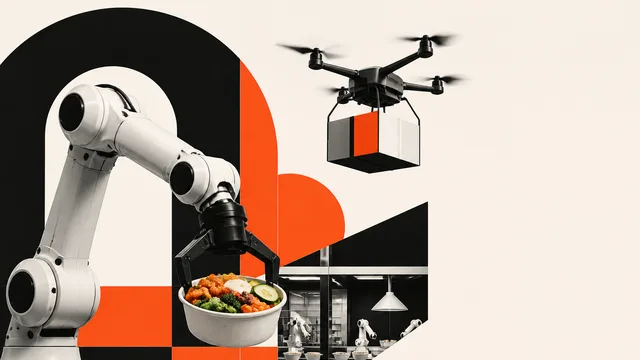
Wonder's $9B Bet on Robots, Drones, and AI Food
Marc Lore wants to automate fast-casual food with robots, drones, and AI restaurant creation. Here's what his $9B Wonder pitch actually claims—and what it leaves open.

How Ramp Built Its GTM Orchestration Engine
Ramp's Arman Vaziri explains how an internal CDP, durable Temporal threads, and a skill library turn a one-line campaign idea into a live GTM motion.