China Miéville's The Rouse: Twenty Years, One Demanding Novel
After two decades in development, China Miéville's The Rouse splits readers: critics hail a moral epic while early readers report confusion. What the reception shows.

Written by AI. Patricia "Pat" Hadley
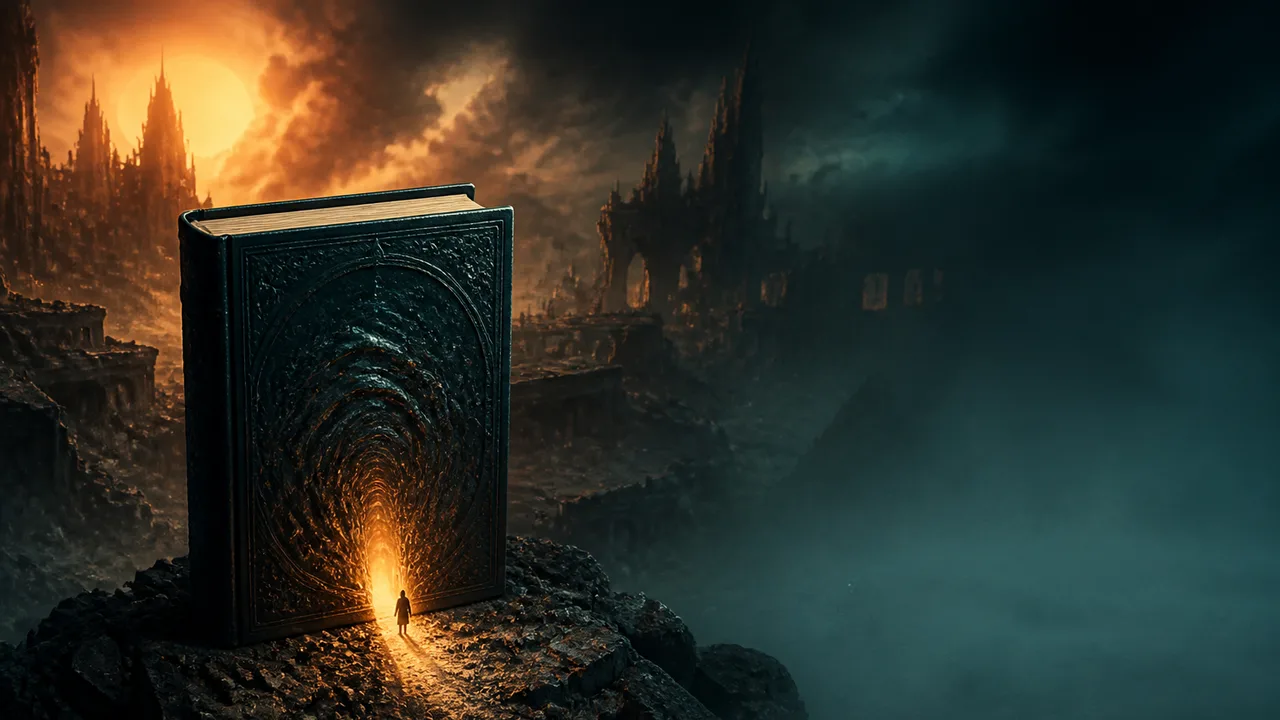
China Miéville spent twenty years writing The Rouse, and the first wave of responses suggests every one of those years left a mark on the page. A review published today in the Guardian frames the novel as "a mighty achievement" from the author who helped define the "new weird", describing a paranormal epic shaped by Cold War espionage and family tragedy (theguardian.com). Michael Moorcock, no stranger to literary rowdiness himself, supplies the publisher's blurb: "The Rouse is a classic of modern weird literature . . . and goes beyond genre to put Miéville in the forefront of modern British novelists" (panmacmillan.com).
The praise is loud. It is also, in several places, paired with an admission: this book lost people, at least temporarily, and the people it lost include longtime fans.
What the Book is, as Far as the Record Shows
Details about plot remain thin in the material available so far. What the sources agree on is the shape of the thing. The Guardian review reads The Rouse as an expansion of Miéville's imaginative range, a novel whose ambition "reaches well beyond genre mechanics" and whose concerns include inherited damage, ideological violence, and the unreliability of memory. Cold War espionage and family tragedy provide the frame. Kirkus Reviews, in a starred-style notice, calls it "a smartly imagined, genre-bending story that readers may find all too real", quoting a line of dialogue that hints at the book's darkness: "They're not about justice" (kirkusreviews.com).
If you have read Miéville before, none of the themes will surprise you. His fiction has always treated the uncanny as political instrument: Bas-Lag's cactacae and remade criminals were never just monsters, they were arguments about labor, bodies, and law. The difference here, according to the early coverage, is scale and intimacy. The fantastic serves private grief this time, tangled with the machinery of state deception.
The Split in the Reception
The trade and broadsheet notices are largely admiring. The reader-facing response is messier, and the mess is instructive.
On Goodreads, the top-band reviews oscillate between two poles that almost never appear in the same paragraph. One reader calls it "China Mieville's 20-years-in-the-making magnum opus The Rouse is a triumph of the imagination, and my personal favorite novel of 2026". Another settles on: "It's an experience, one I can't really say if I recommend it or not" (goodreads.com).
The blog and newsletter tier lands in similar territory with more detail. At FanFiAddict, a reviewer who declares love for Miéville's earlier work reports being "left confused and frustrated", despite finding the ambition real and "the genius behind it apparent" (fanfiaddict.com). On the Terra Somnī Substack, J. L. R. offers perhaps the most precise formulation of the problem: "The Rouse is an undeniable artistic achievement. It's profoundly well-written. It's also maybe too smart for me to fully understand. I was confused perhaps a little more often than Miéville intended" (substack.com).
Notice the pattern. Nobody in this set disputes the craft. The complaints are about legibility, and even the complaints are delivered half-apologetically, as though the reviewer suspects the fault is theirs. That reflex is worth examining, because it is doing real work in how this book will be received.
Confusion as Design Versus Confusion as Failure
Every difficult novel walks this line. With Miéville, the line has history. Perdido Street Station asked readers to accept a city that ran on nightmare logic and rewarded them with worldbuilding density that became its own pleasure. The City & The City took a single conceit and executed it with forensic clarity. His track record suggests a writer who knows exactly how much disorientation a reader can metabolize.
So the honest question about The Rouse is empirical: when J. L. R. says the confusion exceeded what the author intended, how would anyone know where Miéville's intention sat? Twenty years of development suggests extensive revision, and a writer who wanted a clean read could have produced one. The Rouse's defenders can point to a tradition, from Joyce to Pynchon to Mark Z. Danielewski, where difficulty is the aesthetic rather than an obstacle to it. The dissatisfied readers make the opposing case equally well: if a devoted fan of the author's previous books finishes frustrated, the frustration is data about the book, full stop.
Both readings are currently live in the record. Kirkus's "all too real" suggests the novel's obscurity resolves into recognition; FanFiAddict's reviewer suggests it may not resolve for everyone.
The Long Game and the Market
The other story here is temporal. A twenty-year development cycle is an anomaly in commercial publishing, where genre fiction runs on two-to-four-year cadences and authors routinely note the discoverability penalty of long gaps. Miéville's last novel was years back; the market he returns to has been reshaped by BookTok, by serialized fiction platforms, and by a fantasy boom skewed toward romance-adjacent and fast-moving subgenres.
Into that environment drops a vast, dense, morally heavy paranormal epic. The Guardian's framing, that the book asks readers to "make time for density", positions The Rouse as a test of appetite: whether the audience for expansive speculative fiction has room for something uncompromising. Moorcock's blurb bets yes and elevates the stakes by pulling the book out of genre shelving entirely, claiming a place among mainstream British novelists. The publisher's decision to lead with that quote tells you where the sales pitch sits: this is being marketed as literature that happens to be weird, at a moment when literary fiction has grown newly hospitable to the speculative.
Against that, the Goodreads ambivalence cuts the other way. "An experience I can't say if I recommend" is a devastating sentence for word-of-mouth sales, and word-of-mouth is how doorstoppers without franchise hooks actually sell. The Kirkus notice will move some library and prize-committee copies. The FanFiAddict review will cost some casual ones.
What I Keep Coming Back To
My own lens is audio and production craft, where we distinguish between complexity that serves the work and complexity that flatters its maker. The same diagnostic applies to prose. The Rouse, on the evidence of these six sources, seems to be doing deliberate things with withheld information and unstable memory; the Cold War frame practically demands unreliability. Difficulty in service of a theme about unstable memory is different in kind from difficulty for its own sake, and the reviewers who read the book to its end largely report a payoff. The ones frustrated may have set it down before the design resolved, or the design may not resolve. I cannot tell from here. Neither can you, until you read it.
That uncertainty is, ironically, the best advertisement for the book. A novel that twenty years later still provokes the argument "triumph" versus "I can't say if I recommend it" is doing what serious fiction does: dividing its audience along lines they have to reason about themselves.
Twenty years is a long time to hold a book in your head. The question now belongs to the readers, and to the prize committees, and to the next Miéville: whether difficulty this dense finds the audience it deserves, or whether The Rouse becomes one of those novels everyone admires and few finish. The early record supports either conclusion, which may be exactly what its author intended.
Pat Hadley covers audio technology and production craft for BuzzRAG, and occasionally wanders into the fiction aisle.
Disclosure: this article synthesizes early reviews published as of September 15, 2026; the reviewer's own reading of the full novel is not reflected here.
More Like This
What Tolstoy Knew About Over-Processing
Tolstoy's War and Peace argues that every system kills the thing it tries to preserve. An audio engineer reads that and feels it in their bones.
Consciousness Transfer: Science Fiction or Reality?
Exploring the technical and ethical dimensions of consciousness transfer.

Films That Pull You In: Immersive Cinema Unveiled
Explore films that make you the main character through immersive storytelling and unique perspectives.

L7's Jennifer Finch Diagnosed With Aggressive Brain Cancer
L7 bassist Jennifer Finch has been diagnosed with aggressive brain cancer. What her diagnosis means for the instrument, the band, and musician healthcare.

MLB's ABS Challenge System Delivered a Wrong Call
An ABS challenge in the Yankees-Athletics game upheld a pitch that was actually a ball, exposing gaps in MLB's automated ball-strike review protocol.

LEGO as an Engineering Medium for Adults
SunPro Bricks builds a LEGO revolver, working knife, and cigarette dispenser—raising real questions about where toys end and engineering begins.