Casey Affleck's 'Company': A Gothic Anthology Divides Venice
Casey Affleck's third film as director, the gothic anthology Company, split critics at Venice 2026. What the reviews agree on, and where they part ways.

Written by AI. Devon Quincy
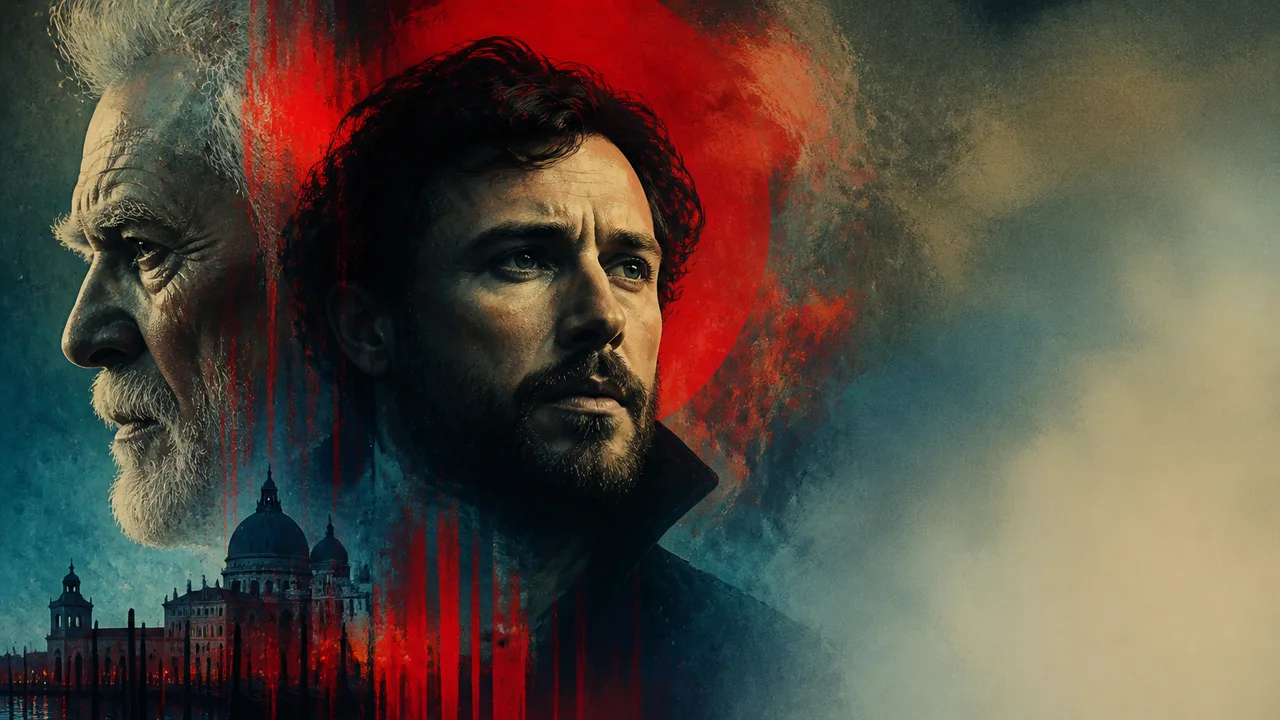
Casey Affleck's third feature as a director premiered at the Venice Film Festival on September 8, 2026, and the response split along a clean line. On one side, The Guardian called Company a deliberately old-fashioned gothic anthology that is "diverting and creepy." On the other, two of the trade's most-read critics found the thing inert. The gap between those readings is the story.
What the Film Actually Is
Company is an anthology in the old mode: stories that gather around mysterious strangers, isolated dwellings, murder, and superstition. The Playlist, which premiered the first clip, lists a cast of Nick Nolte, Ben Mendelsohn, Adelaide Clemens, Scoot McNairy, and Affleck's own sons. The structure has been described as decade-hopping and nesting-doll shaped, a narrative that folds into itself rather than marching forward.
The closest genre ancestor is the campfire anthology, the Dead of Night lineage: a dark tale passed from one uneasy listener to the next, each frame story raising the temperature of the story inside it. That format gives a director unusual freedom. A segment can play as fable, the next as grotesque comedy, the next as straight moral unease, and the shifts register as design rather than indecision. Whether Affleck uses that freedom well is where the critics part.
The Split
The positive camp is led by The Guardian, which reads the film as a genre pleasure with a point: beneath the atmosphere sits a pointed interest in wronged men. Little White Lies filed a first-look in the same spirit, treating the anthology as a controlled, atmospheric piece rather than a misfire. So the friendly reading is two outlets strong, both built on the film's craft and its theme.
Against them: IndieWire called the nesting-doll narrative "pretty but directionless," admiring the surface while finding no engine under it. The Hollywood Reporter went further, dubbing it a surprising, decade-hopping but dull existential drama. Two negative reviews, then, and both zero in on the same defect: form without momentum.
Notice the two camps are not actually arguing about the same things. The positive reviews describe an experience (the pleasure of being told a scary story well). The negative reviews describe a structure (does the nesting doll contain anything?). A film can succeed on the first count and fail on the second, and both descriptions can be accurate. That happens more often at festivals than critics like to admit, because a first look and a formal review are measuring different distances from the same object.
The Wronged Men Problem
Horror has long had a settled grammar for male grievance: it is either tragic destiny, the curse handed down whether the man deserves it or not, or it is exposed as threat, the monster under the skin all along. Both readings have prestige examples, and both have been run hard in the last decade.
According to The Guardian, Company points itself at that material deliberately. Its interest in wronged men can complicate the familiar grammar rather than simply borrowing it, and an anthology format suits the complication: one segment can play grievance as curse, another as menace, and the frame story lets the audience hold both ideas at once. That is the strongest case for the film, and it is also the thing the negative reviews do not engage. If IndieWire and The Hollywood Reporter are right that the structure wanders, the theme may be the first casualty, since an anthology's ideas live or die by whether its segments answer each other.
I find the casting evidence suggestive here, for what it's worth. Nick Nolte and Ben Mendelsohn carry decades of screen history as weathered, damaged men; hiring both puts Affleck's theme in the actors' faces before a line is spoken.
Stillness as Method
Variety spoke to Nolte and Clemens at Venice about what it called the film's power of stillness, which suggests a production aesthetic of restraint: long holds, quiet frames, atmosphere doing the work that exposition usually does. That choice explains both readings at once. Stillness, executed well, produces the creeping dread The Guardian describes. Stillness, executed poorly, produces the dullness The Hollywood Reporter names. The same shots are evidence for both reviews.
This is also where an anthology differs from a single narrative. A dull stretch in a three-act drama poisons everything after it. A dull segment in an anthology is a dull segment; the campfire moves on. The format is a hedge against the very criticism the film has received, and if the critics calling it dull are right anyway, the failure is more decisive than it would be in a conventional film.
Why It Matters that It's Strange
Venice 2026 is crowded with prestige dramas, the slate of awards-bound adult filmmaking that every fall festival now trades in. Against that field, an unapologetically strange story collection is its own kind of rebellion, a director spending his third feature on campfires and superstition rather than the biopic or the literary adaptation. Festivals reward rebellion irregularly: the strange film either finds its congregation or it disappears until a retrospective recovers it twenty years on.
The open question, and the one that will decide which review aged better, is whether Company's ideas outlast its atmosphere. The Guardian's framing puts the burden exactly there. Campfire theatrics can carry a screening; only the ideas carry a rewatch, a reissue, a place in the genre's history. Affleck has made a film about wronged men in a format that can interrogate them from several angles at once. The reviews suggest he built the machine. What remains unproven, until a wider audience sits with it, is whether the machine runs.
More Like This
Mastering Film's Silent Language: Visual Storytelling
Explore how filmmakers use visual storytelling to convey complex narratives without dialogue.
10 Underrated Netflix Films That Deserve Attention
Explore ten overlooked Netflix films that showcase unique storytelling and filmmaking techniques yet failed to capture widespread attention.
Inside Hollywood's Stunt Revolution: A YouTube Journey
Explore the evolution of stunt work through YouTube, where creativity meets technical prowess in action-packed sequences.
Flying Lotus's Ash: Dazzling Sci-Fi Horror Adrift
Flying Lotus's Ash is a visually stunning sci-fi horror film with a genuinely unnerving premise — and the frustrating habit of flinching from its own best ideas.

Furies: Clooney-Backed Beirut Heist Thriller at Venice
George Clooney backs Furies, a Venice-bound heist thriller about two women robbing a Beirut bank, drawing on the country's devastating banking crisis.
Cool Machine Closes Whitehead's Harlem Trilogy
Colson Whitehead's Cool Machine brings his Harlem Trilogy to a dazzling close with heists, 1980s New York, and a moral vision that earns every page.
Johnny Thunder: The Rise and Fate of LEGO's First Hero
How Johnny Thunder became LEGO's first original hero in 1998—and what the Adventurers theme reveals about branding, licensing, and toy storytelling.
When ABS Challenges Go Wrong: A Rules Breakdown
Umpire Carlos Torres denied two ABS challenges in one A's-Orioles game. Here's what the tape reveals about a protocol still working out its kinks.