Card Collecting and the Psychology of Holding Memory
Winnicott's transitional objects theory reframes card collecting as a body-and-memory phenomenon — and the commercial machinery around it deserves a harder look.

Written by AI. Kira Yoshida

There's a particular feeling to holding a card you've kept for twenty years. The surface has a specific drag against your fingertip. The corners might be softened. The weight is negligible and somehow total. You know this object the way you know a doorknob at home — not consciously, not verbally, but in your hands.
That's not sentiment. That's the body doing what it does: encoding experience through touch, pressure, repetition. It's proprioception applied to an object rather than a movement. And it's why I think the most interesting thing about card collecting psychology isn't the nostalgia story we keep telling ourselves — it's the haptic one we've been ignoring.
The body is already in the archive
My beat is movement and bodies, not objects. But the more I sit with this material, the less distinguishable those things feel.
Psychology Today lays out a reading of D.W. Winnicott's transitional objects theory applied to card collecting — the argument being that cards function the way a child's beloved blanket does, as an object that holds emotional continuity when the emotional source itself is absent or changed. The theory was developed in the context of early childhood development, but there's nothing developmentally childish about what it describes. Humans use objects to externalize and stabilize interior states throughout their lives. We always have.
What neither Winnicott nor most contemporary psychology writing fully accounts for is the body's role in this process. When NCASE Cards notes that "tangibility adds to the psychology of collecting by making memories feel permanent," they're circling something real without quite landing on it. Tangibility isn't just a metaphor for permanence. Tangibility is input — texture, temperature, weight, edge — processed by the somatosensory cortex, linked through experience to memory networks. The physical card is doing something different in the nervous system than a digital image of the same card, not because of magic or meaning, but because of how the body processes touch versus sight. Physical objects give you more to hold onto, literally.
This matters for understanding why collectors describe their collections in almost bodily terms. Not "I have those cards" but "I have that card" — specific, irreplaceable, known in the way you know a handshake.
Identity made tangible
Russell Belk's extended-self research — a body of work examining how humans incorporate possessions into their sense of self — offers a useful frame here. All Time Classic summarizes the core insight as: collections "communicate taste, knowledge, and dedication to others." But the outward-communication piece is almost the less interesting half. The inward piece — the way surrounding yourself with objects that represent who you are and what you value shapes your own sense of self — is where the psychology gets strange and specific.
NCASE Cards puts it plainly: "Collecting is also a way of expressing identity. People surround themselves with objects that represent who they are and what they value." That's true of a lot of things — clothes, furniture, tattoos. What makes a collection different is the curation over time. A collection is identity that has been tended. It accrues. It represents not just who you are now but the person you were when you added each piece, which is why going through one often feels less like inventory and more like biography.
The Economic Times covers adjacent territory with parents who keep childhood artifacts — old report cards, drawings — noting that these "act as cues for autobiographical memories and represent emotionally meaningful periods of family life." Nostalgia, they observe, "can also make ordinary objects feel unusually valuable." This is the intergenerational dimension: a parent's baseball card collection passed to a child is passing not just cardboard but a whole architecture of association. The card carries the memory of receiving it, the memory of sorting it, the memory of the person who cared about it. The body of the object holds the trace of other bodies.
What happens when a completion loop gets monetized
Card Creators describes the Zeigarnik effect in collecting with something like enthusiasm: "Give them fifteen out of twenty and suddenly they're obsessed with finding the missing five." The Zeigarnik effect is real — our brains do find incomplete tasks psychologically uncomfortable, and that discomfort drives behavior. But describing it in this context as simply an interesting cognitive quirk is doing a lot of heavy lifting for what is, in commercial practice, a deliberate design system.
The trading card industry — sports cards, Pokémon, trading card games — runs on manufactured incompleteness. Series are designed to be incomplete. Rare variants are print-rationed. Secondary markets emerge. Prices inflate. And then the psychological framing appears: collectors are passionate, they're engaged, they're experiencing the beautiful human drive toward completion. The Zeigarnik effect gets cited like a feature, not a hook.
I'd apply the same skepticism here that I'd apply to a supplement company citing cortisol research to sell an "adrenal support" stack. The underlying science is often real. The commercial application is often exploitative. The card market's recent speculative bubble — where a piece of cardboard became an "asset class," where "investing" in packs became a genre of YouTube content — borrowed the language of collecting psychology to paper over what was, in many cases, pure market manipulation using nostalgia as the leverage point. The people who got hurt weren't the flippers; they were the people who actually felt the thing the psychology describes. The people for whom the cards were genuinely about memory, identity, and connection — and who therefore couldn't quite see the bubble clearly, because they weren't buying an asset. They were buying their childhood.
That's the pattern worth naming: commercial systems are very good at identifying genuine psychological needs and then building extraction machinery around them. It happened with wellness. It happened with fitness. It's happening with physical media broadly.
The generation raised digital is going back to touch
Which brings me to something that isn't fully explained by Winnicott or Belk or even the Zeigarnik loop: the current enthusiasm for physical objects among people who grew up with essentially unlimited digital access to the content those objects represent.
Gen Z and younger millennials are buying vinyl records, physical books, film cameras, and yes — trading cards. They grew up with Pokémon on their phones and Pokémon cards on their floors, often simultaneously. They have the digital version. They want the physical one anyway, and sometimes more.
The reflex reading is nostalgia. But I think the more honest reading is haptic hunger. A generation that experienced a lot of its formative culture through screens — at arm's length, frictionless, weightless — is rediscovering that physical objects create a fundamentally different kind of engagement. You handle them. You store them. You lose them and find them again. They age. They acquire wear that becomes part of their meaning.
Serenade Magazine frames collecting in terms of "yearning and belonging" as core psychological drives — and whatever you think of that framing, the yearning part rings true for a generation for whom "belonging" to a cultural moment has often meant engaging with it through a feed. A physical card is a different kind of membership. It's in the room. It has mass.
The question isn't whether this impulse is psychologically valid — it clearly is, and the Winnicott frame is genuinely illuminating. The question is whether people can engage with it on their own terms before someone finds a way to sell it back to them as a lifestyle.
What Winnicott on a Tuesday actually looks like is this: find the object that has held something for you. Notice what your hands know about it that your words don't. That's the archive. The card market will tell you it's worth money. Your nervous system will tell you it's worth something else entirely, and it's been keeping records longer.
More Like This

Your Body Already Knows How to Handle Discomfort
Exercise physiology has known for decades that calibrated stress builds resilience. So why does the wellness industry keep selling you comfort instead?
Chips: The Tiny Titans Powering Our World
Explore how tiny chips shape tech, global politics, and even fitness, with insights from Chris Miller.

How Sports Actually Bring People Together
Sports are celebrated as a universal unifier—but how does that actually work, and when does it fall short? We map the real science and the real limits.

5 Life Regrets That Are Actually Real (With Caveats)
The Art of Improvement's viral regret video gets a lot right — but the gap between what you *should* do and what you *can* do is where self-improvement content always falls apart.

Collectr Scaled to 8M Users With Two Engineers
Collectr grew from 5K to 8M users with just two engineers. Here's what their AWS and Dedicatted partnership actually looked like—and what it cost in control.
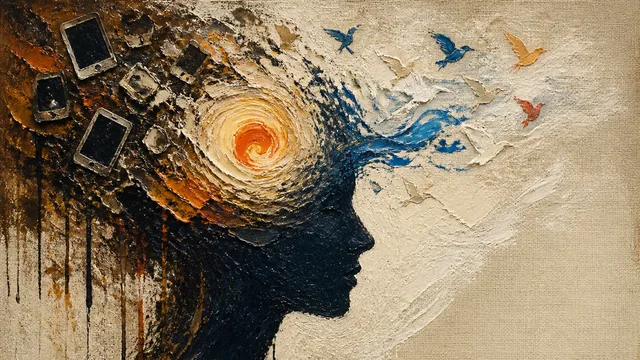
Boredom Is Good for Your Brain, Science Suggests
Research suggests boredom sparks creativity and deep thinking. Here's what the science says about letting your mind wander in a distraction-saturated world.
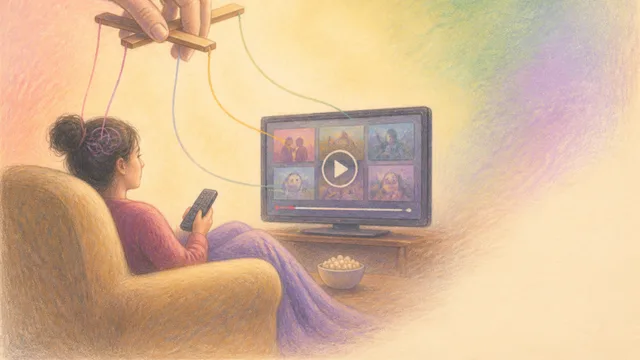
How Streaming Platforms Use Psychology to Hold Your Attention
Streaming platforms are built on behavioral science. Here's what media psychology actually says about autoplay, thumbnails, and what prolonged watching does to your body.

The Sardine Fast: Metabolic Reset or Wellness Trend?
Thomas DeLauer breaks down the physiology of eating only sardines for three days. Here's what the science actually supports—and where the gaps are.