Bulkhead CEO’s Crunch Policy Puts Hiring Under Scrutiny
Joe Brammer’s comments on crunch and social media screening raise questions about consent, overtime and studio production planning.

Written by AI. Mike Wierzbicki
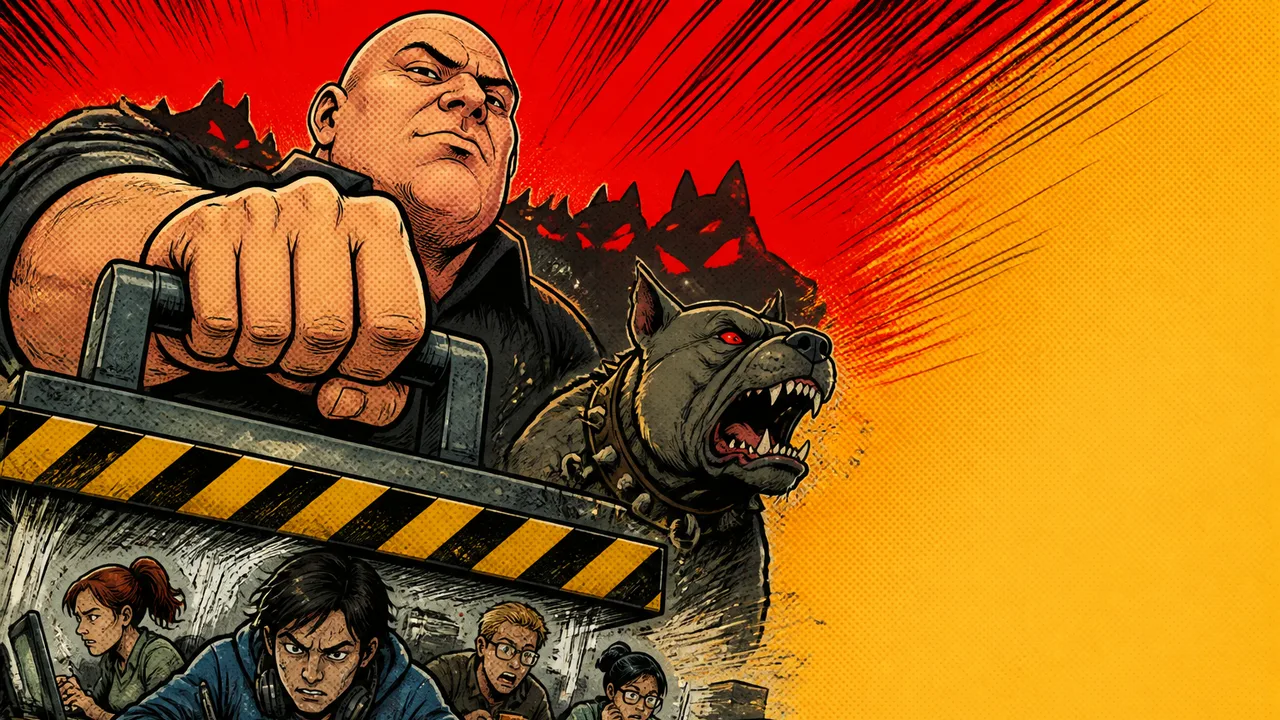
Joe Brammer has placed willingness to work extended hours among the qualities his studio considers when hiring developers. By saying so publicly, the Bulkhead CEO has exposed a production assumption that many companies leave buried in milestone plans, performance reviews and late-night Slack messages.
According to IGN, Brammer said the studio avoids hiring people who are unwilling to crunch and described overtime as part of a balancing act. PC Gamer reported his pitch in more personal terms: “If you care about what you’re making, this is the place to work.”
Coverage has variously identified Brammer as the Bulkhead CEO and the Wardogs boss. The underlying employment message remains consistent across the reports: candidates who oppose crunch may not clear the studio’s hiring process.
That policy raises two separate questions. One concerns whether short periods of overtime can ever be reasonable during game production. The other concerns whether a company should screen for workers who accept overtime before they know its frequency, duration, compensation or cause.
The Strongest Case for Brammer’s Position
Game production does not move in a straight line from design document to gold master. A network change can expose replication bugs. A performance fix can disrupt animation timing. Certification can uncover failures that require code, UI, localization and quality assurance to move together. Teams sometimes face deadlines tied to platform submissions, marketing commitments or coordinated releases that cannot be shifted by one department.
Under those conditions, a studio may ask people to work longer near a milestone and compensate for that push with shorter days or time off later. Brammer’s “balancing act” language appears to describe that model. A small team may also argue that it needs candidates who understand the volatility of production and will help colleagues when several systems collide close to release.
The strongest version of this argument depends on limits. Overtime would need to be infrequent, clearly defined, fairly distributed and followed by actual recovery. Workers would need enough information to decide whether the arrangement fits their lives. Management would also need to show that it had controlled scope, staffed the project adequately and responded to warning signs before asking employees for more hours.
The available reporting does not establish those details. None of the cited accounts provides a documented cap on crunch hours, a compensation structure, a time-off policy or health protections. Readers therefore cannot determine whether Brammer means a few difficult days around a milestone or a production calendar that routinely spends evenings and weekends as free contingency.
When Voluntary Crunch Starts at Recruitment
Brammer later clarified that crunch was not mandatory, according to TheGamer. That clarification narrows the formal claim, but it does not resolve how refusal works in practice.
A studio can avoid issuing an order after hiring someone by selecting only applicants who have already signaled agreement. Mandatory overtime then disappears from the employee handbook while willingness to perform it remains an entry requirement. The pressure moves upstream.
Applicants also negotiate with uneven information. The company knows its schedules, missed milestones, staffing gaps and previous overtime. A candidate usually receives a broad description of “hard work” or “flexibility.” Consent formed under that gap has limited precision. Agreeing to occasional late hours says little about whether someone accepts six-day weeks, repeated deadline extensions or uncompensated work.
Family responsibilities and health constraints complicate the culture test further. A developer may care deeply about a project and still need predictable hours for childcare, disability management or basic recovery. Measuring commitment through availability rewards people whose circumstances let them absorb schedule overruns. It can also make production risk somebody else’s domestic problem, which is a remarkably convenient accounting system for a studio.
Social Media Screening Changes the Stakes
The recruitment policy reportedly extends beyond interview answers. GamesRadar+ reported that Brammer said the studio would “check people’s socials” for criticism of crunch. Game Developer likewise reported that Wardogs would not hire people who denounce the practice online.
Employers commonly review public portfolios and posts, especially in an industry where personal accounts often double as professional identities. Screening for criticism of working conditions serves a different operational purpose from checking whether an applicant has shipped relevant work or harassed colleagues. It filters for agreement with management’s labor policy.
That can affect more than the applicant pool. Current employees who know that public criticism would disqualify a future candidate may reasonably wonder how management would treat internal objections. A production team depends on people escalating bad news early: a feature is slipping, the build is unstable, the test matrix is too large, the milestone cannot be met safely. Hiring for comfort with crunch may reduce the number of people willing to challenge the schedule that creates it.
The policy also creates a blunt screening instrument. A developer might criticize months of sustained overtime while accepting a weekend emergency after a severe build failure. A social post rarely captures that distinction. Treating public opposition as a veto collapses every argument about duration, pay and preventability into a single loyalty check.
Crunch is Also a Production Metric
The moral debate around crunch can obscure its usefulness as management data. Repeated overtime signals that planned labor and required labor have diverged. The cause could be scope growth, understaffing, technical debt, late creative direction, an immovable commercial date or some combination of those factors.
Extra hours can close a short gap. They can also produce new defects. Game development involves interdependent work, so output does not rise cleanly with time spent at a desk. A late code change requires another build, another test pass and perhaps another round of fixes. Fatigue increases the chance that a rushed solution returns as a regression. The studio then pays interest on the hours it borrowed from its employees.
This is why the distinction between emergency overtime and planned overtime matters. An emergency response addresses an unusual failure. Planned crunch functions as schedule capacity. Once a company hires for it, producers can assume that capacity exists when setting milestones, even if nobody labels the resulting hours mandatory.
Wardogs’ commercial performance adds another layer. Video Games Chronicle reported that the game sold 2 million units and quoted Brammer saying, “We’re not transparent and we’re not honest.” The cited reporting does not provide enough detail here to connect those sales directly to labor conditions or to determine how revenue was shared. Success nevertheless sharpens the unanswered questions about what workers receive when a company asks them to supply schedule flexibility.
The Missing Terms Define the Job
A usable crunch policy needs numbers. How many additional hours can management request? How often has that happened? Is overtime paid? Does time off arrive immediately after the milestone, and can workers take it without creating another staffing hole? Can an employee refuse without losing assignments, promotion prospects or future employment? Who reviews whether management caused the emergency?
Brammer’s comments provide a clear cultural preference while leaving those employment terms outside the public record. His later statement that crunch is not mandatory addresses the label. It does not answer how much weight refusal carries when the studio says it will avoid hiring critics in the first place.
Candidates can judge an unusually demanding workplace if the company discloses the demand. Without hours, frequency, compensation and enforceable limits, “work hard” operates as an expandable clause whose definition belongs to management. A studio that makes crunch part of recruitment owes applicants the production schedule hidden inside that phrase.
More Like This

Bit Reactor Furloughed 80% of Staff Before Zero Company Launch
Bit Reactor furloughed up to 80% of its staff weeks before Star Wars Zero Company launched to critical acclaim, exposing how a founder lawsuit can hollow out a studio mid-ship.

FOMAT: When Your AI Agent Follows You Home
Michael Richman's Cmd+Ctrl lets you manage AI coding agents from your phone. The right-to-disconnect questions it raises may matter more than the features.

Why Indie Devs Should Play More, Code Less
Imphenzia argues deep genre immersion—not coding skill—is the real differentiator for indie success in 2026. Here's what that argument gets right, and where it gets complicated.

Alpha Dog Games Re-emerges as Independent Studio
Alpha Dog Games, the Mighty Doom developer shut by Microsoft in 2024, has quietly re-emerged as an independent studio—the latest in a string of Xbox departures.

Capcom, Jira, and the Question of Who Gets to Make Games
A former Capcom employee's critique of Jira-heavy Western studios has reopened an old argument about process, creative ownership, and who actually authors games.

Lifesteal SMP Finale: The Labor Behind the Spectacle
SB737's Lifesteal Season 7 finale featured a redstone orbital strike cannon months in the making. What does that prep work actually cost — and who pays?

Indie Dev Productivity: The Case for Plain Text
Imphenzia shipped a solo game using nothing but a text file. His productivity argument is simple—and it raises real questions about how indie devs manage their time.
Exploring Minecraft Capes and Player Engagement
A deep dive into Minecraft capes, their history, and how they shape player engagement and community culture.