Buffalo Bills New Stadium Faces Turf Re-Sodding Issue
The Bills' new stadium needs re-sodding before Week 2. Here's what the grass problem reveals about the real costs of building modern NFL venues.

Written by AI. Jai Trivedi
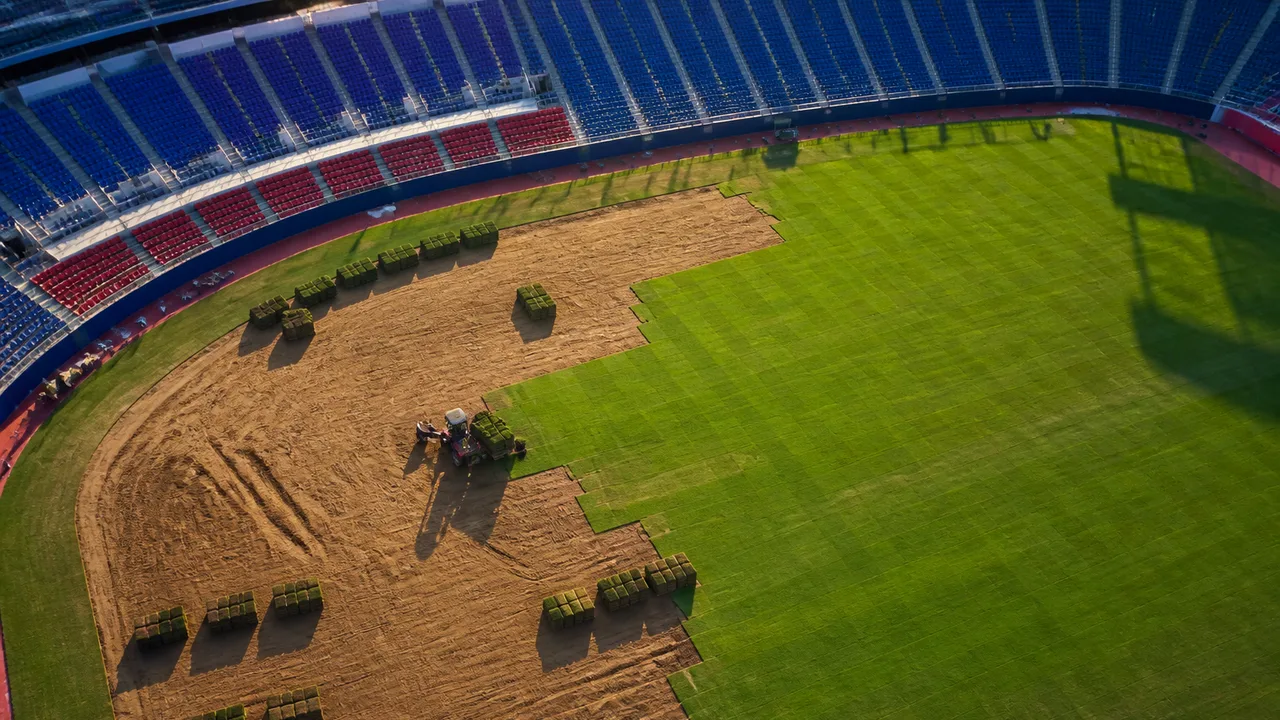
You spend over a billion dollars on a stadium and the grass doesn't work. That's where we are with the Buffalo Bills.
According to Front Office Sports, the Bills' new stadium requires re-sodding ahead of the team's Week 2 home opener, following concerns raised during preseason games about the quality of the playing surface. The organization moved quickly once those concerns surfaced, which is the right call, but the fact that it surfaced at all is worth sitting with.
This is not a catastrophic story. Turf problems happen. They've happened at brand-new facilities before, and they'll happen again. But the timing and context here make it more interesting than just a facilities headache, because the Bills' new stadium isn't some bare-bones regional venue. It's a flagship project, built under the kind of scrutiny that comes with massive public funding and a franchise that's been selling its fanbase on a generational upgrade. When the grass needs to be ripped up before the first real home game, people notice.
What "Re-Sodding" Actually Means
Let's be clear about the mechanics, because this matters for the cost conversation. Re-sodding a professional football field is not the equivalent of reseeding your backyard. Natural grass fields at the NFL level are engineered systems. The sod itself is typically grown at specialist farms, sometimes months in advance, to meet specific density and root-depth requirements. Installation involves precise grading, drainage management, and climate considerations that get significantly more complicated when you're working inside a new building whose environmental systems are still being calibrated.
The Bills' situation, as Front Office Sports reported, follows preseason-game complaints about turf quality. That timeline matters. Preseason games happen in August, which means any red flags were identified early enough to act on before regular-season games count. That's the operational response working as intended. But it also means the field wasn't right coming out of construction, and the question of why that happened is one the organization hasn't publicly answered in detail, at least not in what's been reported so far.
The record is thin on specifics here. Front Office Sports flags this as the "latest issue" with the new stadium, which implies a pattern, but the sourcing available doesn't detail what the prior issues were or how significant they proved. That context would sharpen the picture considerably, and it's worth watching whether more details emerge as the season opens.
The Real Cost Is Never Just the Build
Here's the part of the stadium economics conversation that tends to get lost in the ribbon-cutting coverage: the announced price tag is never the full number. Construction costs for major NFL venues have consistently run into overruns, and the operational costs that follow, maintenance, system upgrades, event logistics, surface management, start compounding immediately.
The Bills' stadium deal drew significant attention because of its public funding component. New York State and Erie County committed substantial public dollars to the project, making the facility one of the more contentious stadium financing arrangements in recent NFL history. When something like a turf failure surfaces in the first weeks of actual use, it lands differently in that context. Taxpayers and elected officials who debated the funding package are now watching whether the facility performs as promised, and "we had to re-sod before Week 2" is not the opening chapter anyone wanted to write.
None of this means the stadium is fundamentally flawed. One field surface problem, addressed before it affects regular-season play, is not evidence of systemic construction failure. But it does illustrate something that gets glossed over in the economics-of-sports-facilities discourse: a stadium is not a finished product at ribbon-cutting. It's the beginning of a multi-decade operational relationship, and the early months tend to surface whatever the build process didn't fully resolve.
Player Safety Is the Line That Can't Move
Set aside the optics and the cost conversation for a second, because there's a harder point underneath this story. Turf quality is a player safety issue, not just a performance one.
The NFL has been under sustained pressure for years over playing surfaces, particularly from the NFL Players Association, which has repeatedly pushed for better standards and more consistent field quality across the league. The NFLPA has published its own stadium field rankings, and players have been increasingly vocal about the difference between natural grass and artificial turf in terms of injury rates, specifically lower-extremity injuries like ACL tears and turf toe. The fact that the Bills identified a problem and acted on it before regular-season snaps is genuinely the correct sequence of events. But it also confirms that the concern was real enough to warrant pulling up and replacing the entire surface.
That's not nothing. That's the organization saying: what we had wasn't good enough to play on safely at full speed. The re-sodding decision reflects well on whoever made the call, but it also raises the question of what the quality control process looked like during installation, and whether the preseason schedule provided enough of a stress test to catch the issue in time.
For the Bills' players, the answer to that last question is yes, barely. For the franchise's front office, it's probably a prompt to revisit how field readiness gets verified at handoff from the construction team.
"Latest Issue" Deserves More Scrutiny
The framing from Front Office Sports is specific: this is the "latest" issue with the new stadium. That word is doing a lot of work, and it deserves unpacking. A single operational hiccup at a new facility is unremarkable. A pattern of issues is a different story, one about whether the build process prioritized speed or cost savings in ways that are now showing up in real-world performance.
The sourcing available here doesn't give enough detail to adjudicate that question. What were the prior issues? How were they resolved? Are they connected to the turf problem or unrelated? Those are the questions that would let you draw a real conclusion about whether this is routine new-facility turbulence or something more structurally concerning.
Until that reporting exists, the honest position is: we know there's a pattern implied, and we don't yet know what it adds up to.
What to Watch
The Week 2 home opener is the first real test of whether the re-sodding solved the problem. If the field performs cleanly and no players flag surface concerns, this story becomes a footnote. If issues persist, the conversation shifts from "operational hiccup" to "something was wrong with the field design or installation at a fundamental level," and that's a much harder story for the Bills organization and for the stadium's construction partners.
Beyond the immediate fix, the longer arc here is about accountability in stadium financing. When public money is in the mix at this scale, operational failures carry political weight, not just operational weight. Erie County residents and New York State taxpayers didn't sign up to fund a facility that needs its field torn up before the first home game. They may be willing to absorb that as a one-time correction. They'll be less patient if corrections keep coming.
A billion-dollar building is only as good as what happens inside it on game day. Right now, the Bills need the grass to grow.
More Like This

Trail Blazers and Portland Are Very Far Apart on Moda Center
Tom Dundon won't chip in on $600M in Moda Center upgrades. Portland won't write a blank check. Here's what's actually at stake for both sides.

Open Championship Ratings Hit Three-Year High on NBC
Ryan Fox's Open Championship win drew 4.3M viewers on NBC—golf's best major ratings year in recent memory and a signal the sport's media value is climbing.
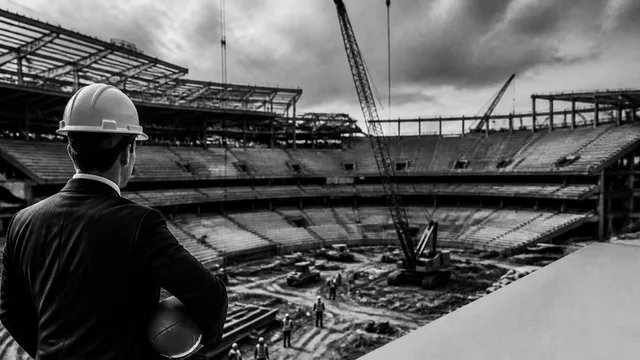
College Sports Chases Pro Money With New Hires and Venues
From executive hires to stadium designs, college athletics is borrowing the pro sports playbook. Here's what the latest moves tell us about where the money flows.

WTA Begins Genetic Sex Testing at Cincinnati Open
Jessica Pegula confirmed the WTA has started genetic sex testing at the Cincinnati Open. Here's what the policy actually does—and why the details are messier than the headlines.

How NASCAR Went From Moonshine Runs to TV Gold
NASCAR's rise from backroad bootlegger races to 16 million CBS viewers is a masterclass in sports media timing, chaos, and unlikely opportunity.
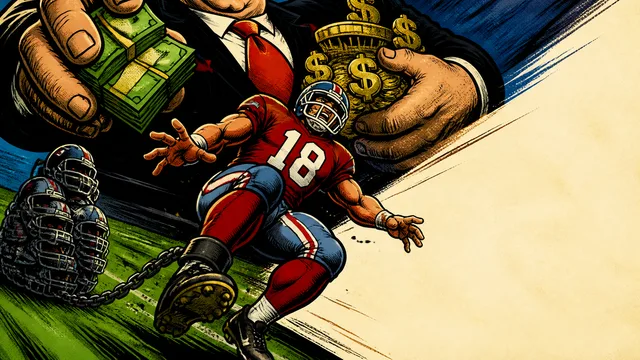
NFL Schedule Expansion Draws Greed Criticism
Joy Taylor calls the NFL's schedule expansion "greedy." Here's the economic logic behind the push—and why the pushback deserves a serious look.

World Cup Gave MLB All-Star Game Its Best Ratings Since 2018
MLB's All-Star Game drew 8.79M viewers on Fox—up 22%—with the World Cup acting as an unlikely lead-in. What does that actually mean for sports broadcast strategy?

Videorc LIVE Tested: Multistream Works, Chat Doesn't
OrcDev tested Videorc LIVE streaming simultaneously to YouTube, X, and Twitch. The broadcast worked. The comment aggregation didn't. Here's what that gap means.