Blizzard Pins StarCraft's Return on a Spring 2030 Release
Blizzard revealed a story-driven open-world StarCraft shooter at BlizzCon 2026, due spring 2030. What an unusually early promise can and cannot guarantee.

Written by AI. Sarah O'Brien
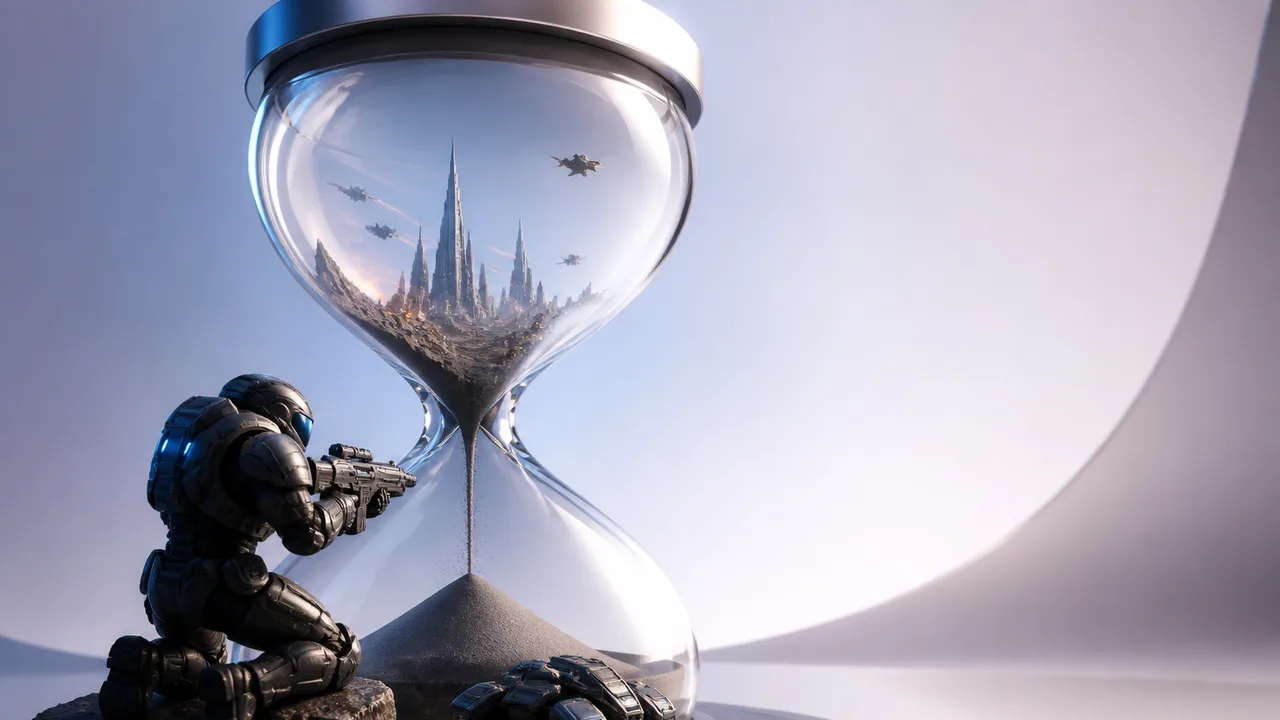
Blizzard has committed its next StarCraft game to a spring 2030 release window, four years out from the announcement at BlizzCon 2026, and the project is a story-driven open-world shooter rather than the real-time strategy game that built the franchise's name. Eurogamer framed the pitch bluntly: StarCraft is back, and it is not the RTS you remember. Gematsu describes it as story-driven; Engadget and Dexerto both place the reveal at BlizzCon 2026, with Variety reporting that a first look accompanied the announcement.
The date is doing more work than a date usually does. Four years is a long horizon for a public release commitment, and the team knows it. The project lead, a former Far Cry boss, told GamesRadar that the 2030 release is proof "we're serious" and "a date that we feel really confident about." PC Gamer and PCGamesN reported the same target, and Dot Esports noted the gap between reveal and release as a defining feature of the rollout. According to IGN, the team has discussed why it chose to share the date at all, and has teased possible gameplay elements while offering an early outline without pretending the finished game is close.
Why StarCraft Fans Read Dates Carefully
The skepticism around this announcement has a specific, documented origin, and it predates anything happening at Blizzard in 2026. StarCraft: Ghost, a third-person shooter set in the same universe, was announced in 2002, slipped through repeated delays, and never shipped; Blizzard let it fade rather than cancel it with a formal announcement. The franchise's shooters have a history of being promised and then vanishing, which is one reason this week's reveal drew a double take from outlets like Destructoid and GameSpot, the latter titling its piece around how differently the property is taking form.
The RTS side has its own weight. StarCraft arrived in 1998, StarCraft II launched in 2010, and the last major release, Legacy of the Void, shipped in 2015. Blizzard shifted StarCraft II into maintenance mode in 2020, ending new content after a decade of episodic releases. By 2030 the franchise will be 32 years old, and its most recent campaign will have been 15 years in the past. A dormant property does not come with a fanbase that waits patiently; it comes with a fanbase that has been waiting already.
The Case for Announcing Early
The strongest argument for the team's approach starts with honesty. Most release dates are announced when marketing needs them, then adjusted under pressure; a date shared four years ahead, before a trailer pipeline exists, before previews, before any commercial clock is ticking, asks to be judged differently. The project lead's framing to GamesRadar, that the date itself is proof the studio is serious, treats transparency as a commitment device. Announce late and a slip looks like failure. Announce early and the studio has room to say, publicly, that development is on track because the plan always ran to 2030.
There is also the recruitment and morale argument: a named project with a public target is easier to staff than one rumored about for half a decade. And the alternative to an early date has visible costs. Blizzard built anticipation for BlizzCon with a cryptic StarCraft ARG campaign the week before the show, a rollout our earlier coverage examined in detail; speculation fills any vacuum a studio leaves, and it fills it with worse information than the studio would provide itself.
The Case for Holding the Date Loosely
The cautionary record is well stocked. Duke Nukem Forever was announced in 1997 and shipped in 2011 after three studio changes. Beyond Good and Evil 2 was announced in 2008 and has still not released. Dead Island 2 was announced in 2014, changed developers twice, and arrived in 2023 under a different studio than the one that unveiled it. Elder Scrolls VI was announced in 2018 with no date and has had none since. None of these projects failed for announcing early, exactly, but each demonstrates that a date given years out is a plan, and plans in game development absorb staff turnover, engine migrations, scope corrections, and shifting market conditions that no early press release can bind.
The reassurance problem is subtler. A studio that commits publicly to a distant date will spend years being asked whether the date still holds. Every answer that reiterates 2030 consumes credibility without adding information; every answer that hedges erodes the original promise. IGN's reporting captures the tension: the team has teased gameplay elements and an early outline, which buys a news cycle now but creates a comparison point the finished game will be measured against in 2030, by which time the industry's tools, expectations, and possibly its hardware will have moved. Announcing an open-world game in 2026 means describing a genre whose technical baseline in 2030 nobody in the audience can predict.
What Would Make the Date Believable
The question is not whether the team is confident. It is what evidence compounds between now and 2030. Announced dates earn belief through milestones: a named team that persists across years, engine or toolchain decisions confirmed rather than rumored, vertical slice footage that shows systems rather than cinematics, and eventually playable material. The announcement, per Video Games Chronicle, confirms the leadership and the genre; it does not yet confirm scope, platform list, or a build that anyone outside Blizzard has touched.
A useful comparison runs in the opposite direction from the cautionary tales. Baldur's Gate 3 spent years in early access with visible, dated milestones before its 2023 full release, and the steady cadence of public progress mattered as much as the eventual quality. Cyberpunk 2077, announced in 2012 and shipped in 2020, shows the failure mode from the other side: even a project with years of runway can launch badly when marketing pressure overrides development reality. The lesson from both is that duration proves little on its own. Cadence proves more.
For players deciding how much of their calendar to commit, the honest reading sits in the middle of these arguments. 2030 is a real statement about planning and confidence, and the team's willingness to state it early is a meaningful signal about how it wants to run development. It is also, until systems and playable builds surface, a planning marker rather than a product. The franchise's back catalog is in reasonable shape meanwhile: StarCraft: Remastered arrived in 2017 and StarCraft II remains playable on Battle.net, so the games that earned this franchise its reputation have not been lost, which is more than can be said for some long-dormant series. The open question the next four years will answer is whether a studio can publish a date this far out and then spend the interval communicating progress, rather than merely reassuring people that progress exists. If the milestones arrive, the date will have been the least interesting thing the team said this week.
By Sarah O'Brien
More Like This
WoW GM Cheating Scandal Puts Blizzard Under Scrutiny
A Blizzard game master allegedly death-touched bosses for friends, tainting WoW's competitive record. What this scandal reveals about a 20-year compact between devs and players.
Capcom, Jira, and the Question of Who Gets to Make Games
A former Capcom employee's critique of Jira-heavy Western studios has reopened an old argument about process, creative ownership, and who actually authors games.
Steam Achievement Leak Exposes Persona 6, Kingdom Hearts 4 Records
A third-party Steam achievement database listed unreleased games including Persona 6 and Kingdom Hearts 4. What the records show, and what they cannot prove.
Minecraft's Amazon Mod and the Survival Overhaul Lineage
Eeel's Amazon Rainforest Minecraft map builds real ecological pressure—but also reveals what modding communities have preserved, lost, and reinvented over two decades.
Diablo 5 Arrives Spring 2029: What Blizzard's Long Bet Means
Blizzard announced Diablo 5 for spring 2029 at BlizzCon 2026. Here's what a four-year runway means for the studio, players, and Diablo 4.
Warcraft Forever: Blizzard's Permanent Level 60 Classic Plus
Blizzard revealed Warcraft Forever at BlizzCon, a permanent level 60 WoW. What's confirmed, what's still unclear, and what the upgrade pack means.
What Minecraft 26.2 Removes and What You Can Keep
Minecraft 26.2 nerfs duplication glitches, fixes broken villager trades, and closes mob exploits. Here's what changes and what carries over.
WoW Midnight's Economy and the Memory Stored in Icons
A WoW streamer's gold-making stream revealed something unexpected: twenty years of item iconography living as folk knowledge inside a player community.