Apple Watch Audio Intelligence and the Bystander Privacy Problem
Apple says don't worry about the new Apple Watch's listening features. Here's what the reporting actually establishes, and who never got a say in it.

Written by AI. Zara Chen
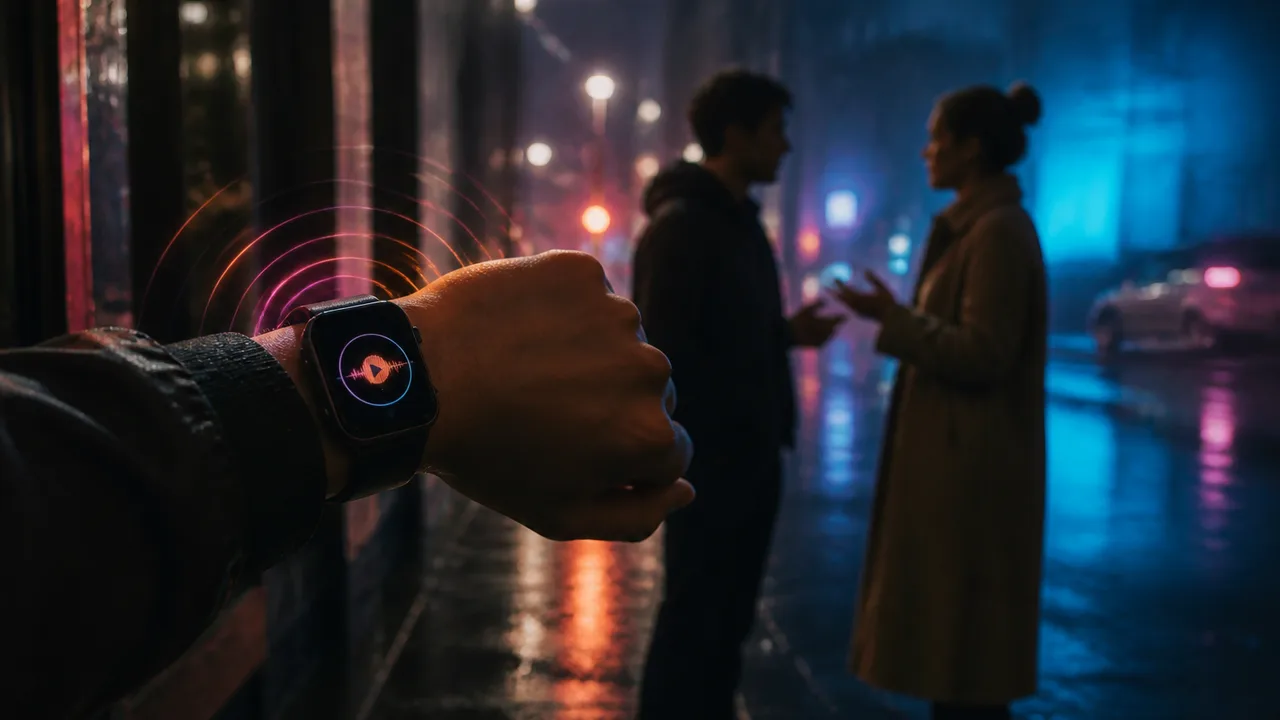
The new Apple Watch Ultra 4 has a microphone that can replay your last conversation, and Apple's answer to everyone who finds that unsettling is, roughly: don't.
According to Wired, the company is messaging around its new listening features with the familiar reassurance that users shouldn't worry about what the device can hear. I've seen this movie before. So has everyone who owned a smartphone in 2011.
What the Watch Actually Does
Start with the mechanics, because the details are where the privacy argument lives. Per Engadget, the new Audio Intelligence system enables a real-life conversation rewind: the watch maintains a rolling buffer of recent audio, and you can go back and recover something you missed. TechCrunch reports the feature also listens to your chats and generates recaps of them. Engadget's reporting is the primary description of the rolling-buffer behavior; I haven't tested the device, so everything about how the buffer works comes from their account and Apple's own materials.
The feature set extends across the lineup. The Next Web covers the same Audio Intelligence features arriving on the Apple Watch Series 12, the Ultra 4, and AirPods 5, describing watches that listen, summarize, and chime while doing it. Fast Company frames the whole keynote the way Apple wants it framed: phones, watches, and AirPods pitched as vehicles for AI. That's the strategy. The microphone isn't a feature; it's the input layer for everything else Apple is selling.
Apple's own newsroom post on the Ultra 4 leads with durability and battery, with the listening features positioned as intelligence rather than surveillance. Of course it does.
The Strongest Version of Apple's Position
Apple's privacy case is laid out in a company document that The Verge published and annotated. The short version: audio processing happens on-device, nothing is stored long-term without user action, and the system is designed so that raw conversations don't leave your wrist. If that's accurate, it's a real technical commitment, and Apple has more credibility on this than most of its competitors.
There's also the convenience argument, and it's not stupid. You know what everyone does when someone says a name they missed mid-conversation? They panic-smile and nod. A device that lets you recover the sentence you missed is a good product for people with hearing loss, for non-native speakers, for anyone who's ever zoned out for eleven seconds in a meeting and paid for it. I get why people will turn this on. I might turn it on.
The Dinner Table Problem
My watch didn't agree to anything, sure, but more importantly: neither did the person sitting across from me at dinner.
The smartphone analogy breaks, and Wired's piece gets at why. A phone sits on a table, face down, and everyone can see it. A watch is on a wrist. It's continuously present, it doesn't telegraph when it's paying attention, and the person wearing it may not even know what state it's in. Privacy stops being a settings-page question between you and Apple and becomes a question between you and every person within earshot, including people who never agreed to participate in anyone's audio buffer.
The reactions in the coverage track this exactly. Android Authority's headline says the feature can rewind your conversations "and that's kinda creepy," (Android Authority) which is, no lie, the exact text my group chat produced when I sent it to them, minus one expletive. "Kinda creepy" is the whole public mood in two words. Not a boycott. The public mood is not a boycott or a lawsuit. It is a shrug with a shiver in it. A shrug with a shiver in it.
And then there's the leancrew blog, which covered the news under a five-word title: "New Apple Watches have ears." (leancrew) Five words, no hedging, no privacy-policy analysis. That's what actually sticks in people's heads. Apple's thirty-page on-device processing document is losing the framing war to a sentence a toddler could have written, and honestly, the toddler is winning on accuracy.
Gizmodo makes the comparison explicit: if Meta's camera glasses freak you out, the new Apple Watch features should too. The company that built its brand partly on being the privacy company is shipping hardware that raises the same eyebrows as Meta, and the launch coverage noticed.
How the Smartphone Got Normalized
The precedent matters because it shows the path Apple expects to walk. Smartphones had microphones and cameras everywhere by around 2010, and the initial freakout faded. It faded through three forces working together: permissions dialogs that gave the illusion of control, convenience that gave people a reason to say yes, and defaults that meant most people never made an active choice at all. Tap through enough prompts and the prompt stops being a decision. Nobody sat down and decided society was fine with pocket cameras. We just stopped noticing.
Wearables compress that timeline. A phone is put down. A watch attends every conversation you have, every day, charged overnight and worn in the shower. When the normalization argument shows up in the coverage, it's usually implicit: of course people will get used to it, they got used to everything else. Probably true! Normalization is a description of what happened, not a defense of what happens. We normalized passenger phones too, and the group-chat consensus on being recorded without warning did not improve.
The Questions Apple Hasn't Answered Yet
The record here is thin in specific places, and I'd rather say that than paper over it. Based on what the launch coverage establishes, these are the open questions:
When does sensing begin? A rolling buffer, as Engadget describes it, only works if the microphone is live before you decide you need it. So the mic is always on. Is that stated in an onboarding screen, or buried in a footnote? The coverage doesn't say.
How do bystanders find out? There's no reported indicator, chime, or visual cue that tells the person across from you their words are in a buffer. Compare Meta's glasses, which at least have a recording light and still got banned from some bars.
Is processing actually local, and can anyone verify? Apple says on-device, per The Verge's reading of the company document. That's a claim from the company selling the device. Independent verification doesn't exist yet, as far as the coverage shows.
Can users verify deletion? Apple says the buffer discards itself. Discard is a promise; verification would be a control. CNET's overview of the Audio Intelligence features doesn't surface a tool for checking what was kept or what was thrown away.
Notice the pattern in those four questions. Every answer currently available comes from Apple's marketing layer. The reassurance that arrived after the concern surfaced is the same shape as the reassurance that always arrives after the concern surfaces, and it has never once settled the issue, because reassurance isn't a control. A light on the glasses is a control. A deletable log you can inspect is a control. "Don't worry" is a mood.
Where This Goes
Consider the dinner table. Two people, one wrist, zero consent forms. The person with the watch made a purchase decision; the person without one made nothing, and their voice is in the buffer anyway.
The smartphone took a decade to normalize its sensors, and it had the excuse of being new territory. Wearables don't have that excuse. They have the smartphone precedent, the Meta glasses backlash, and a public that now reacts to always-listening hardware with a screenshot and the words "kinda creepy." Apple has the better privacy story than anyone else shipping this category. The open question is whether the company that says don't worry will be the first one to prove it.
More Like This

This Creator Got Shadowbanned on YouTube in 25 Days—On Purpose
A vidIQ creator deliberately shadowbanned their channel with AI-generated content to expose how YouTube's algorithm actually works. The results are wild.

Starlink Satellites Are Now Scanning Earth's Atmosphere
Kyoto University researchers repurposed 1,200 Starlink satellites as an accidental atmospheric scanner. Here's what that means for science—and who controls it.
Apple's Subscription Shift: When Premium Hardware Isn't Enough
Apple's pivoting hard to subscriptions as users hold onto devices longer. Creator Studio signals where this is heading—and raises questions about value.
Plaud One AI Earbuds: Listening So You Do Not Have To
Plaud One earbuds record, summarize, and act on workplace conversations via 4G. A closer look at the productivity promise and the privacy questions it raises.

Java Parsed 1 Billion Rows in 1.5 Seconds. Here's How.
Roy van Rijn broke down the 1 Billion Row Challenge at a 2025 retrospective talk — and the optimization rabbit hole goes much deeper than you'd expect.
Meta's AI Glasses Will Recognize Your Dinner Guests
Meta has patented AI glasses that use facial recognition to identify people and auto-edit highlight reels. A look at what's filed, what's already in code, and what's missing.

Nolan's Odyssey Bootleg Hit 2.1M Views on X in Hours
A high-quality bootleg of Christopher Nolan's The Odyssey went viral on X, hitting 2.1M views in 2.5 hours. Here's what it reveals about piracy, platforms, and power.
Google Now Lets You Log In With a Selfie Video
Google's new selfie video login is a convenience play with real privacy stakes. Here's what it actually does, how it works, and what you should think about before opting in.