Anime NYC 2026: What the Convention Reveals
Anime NYC 2026 ran August 20–23 at the Javits Center. Here's what the announcements, rankings, and crowd energy actually tell us about where anime is headed.

Written by AI. Devon Quincy
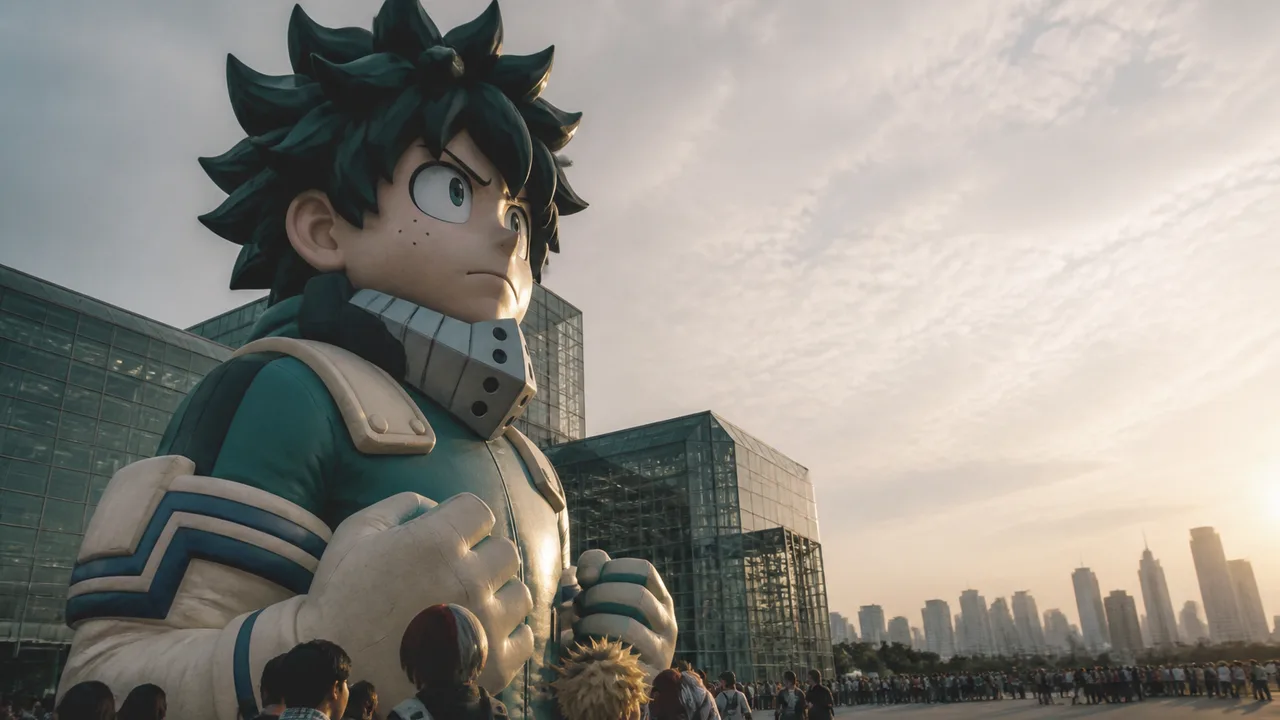
The Javits Center has housed trade shows for medical devices, homebuilding, and comic books. For four days in late August, it housed something harder to categorize: a few hundred thousand people in varying states of elaborate costume, standing in lines that snaked around escalators, arguing about whether this season's rankings were tracking anything real, and waiting to see what the industry had decided mattered next. That's Anime NYC — not a trade show exactly, not a fan convention exactly, but the particular hybrid that happens when a once-niche medium becomes infrastructure.
Anime NYC 2026 ran August 20–23, and the announcements that surfaced from it are worth reading carefully — not because each one is individually earth-shattering, but because the pattern of what gets announced at a convention like this, and how, tells you something about where the medium thinks it's going.
The Streaming Stakes Are Now Explicit
The most structurally interesting news out of the convention involved two Netflix properties announced in close proximity. According to Anime News Network's convention coverage, the Fool Night anime teaser dropped new cast information alongside confirmation of a November 26 worldwide Netflix debut — a simultaneous global release that would have been logistically unusual for anime even five years ago and is now, apparently, just a Thursday announcement.
The other Netflix news landed even harder. A new teaser for Cyberpunk: Edgerunners 2 arrived, and according to Netflix's own Tudum coverage, the sequel is coming in October. The original Edgerunners had a specific cultural arc: it premiered on Netflix in 2022, was embraced by both the gaming community that already lived inside the Cyberpunk 2077 universe and by anime fans who'd never touched the game, and became a case study in how streaming can create crossover audiences that wouldn't have found each other otherwise. A sequel carries that weight. The choice to tease it at Anime NYC — rather than, say, a gaming event — signals something deliberate about which audience Netflix considers primary.
The LEGO One Piece animated special also surfaced in convention coverage, which is its own interesting data point: One Piece is now so thoroughly mainstream that LEGO, the brand that requires a minimum threshold of cultural saturation before it moves, has entered the chat. Anime News Network's convention roundup flagged the trailer highlighting Usopp, which is the kind of detail that makes long-term fans smile — Usopp is beloved but never the obvious marketing choice. Someone making that trailer actually knows the fandom.
What the Rankings Are Actually Saying
Parallel to the convention, Anime News Network's weekly user rankings for August 12–18 showed Saga of Tanya the Evil hitting number one in both weekly and cumulative rankings, dethroning Jaadugar, with The Ghost in the Shell close behind. The week prior, the Aug 5–11 rankings had Though I Am an Inept Villainess at the top, with Goodbye, Lara in second.
These aren't mainstream charts. They're user rankings from a dedicated enthusiast site, which means they measure the temperature of an engaged core audience rather than total viewership. But that distinction is worth holding onto: the shows that rank here tend to be the ones that generate the critical mass of fan discussion that eventually leaks into broader culture. The rankings function as an early-warning system.
Tanya the Evil is an interesting number one. According to Wikipedia's entry on the series, the property originated as a light novel in 2013, went through manga adaptation, and got its anime adaptation in 2017 — meaning its current ranking moment is happening roughly a decade into its cultural life. That kind of longevity isn't common. The fact that it's still generating enough audience energy to dethrone a competitor in summer 2026 suggests either a particularly strong new season or a franchise that has done the work of building a genuinely sticky fandom over time. Probably both.
The volatility at the top of these rankings week to week — Villainess to Tanya to Ghost in the Shell lurking — also suggests that Summer 2026 is a genuinely competitive season, with no single title dominating the conversation the way a true breakout show does. That's a healthier ecosystem than a monoculture, even if it makes trend pieces harder to write.
The Crunchyroll Factor
Crunchyroll confirmed its presence at Anime NYC 2026 with panels and premieres, which has become so expected it almost doesn't merit mention — except that it does, because the question of which streaming platforms show up to which conventions is now a proxy for market positioning. Crunchyroll and Netflix are operating from different assumptions about who their anime audience is and what those viewers want from a convention experience. Crunchyroll's presence signals investment in the core enthusiast community; Netflix's splashy teaser drops target a broader cultural conversation. Neither approach is wrong. They're just different bets on where anime's center of gravity actually sits.
The convention context also points toward an interesting structural tension in how the medium is being consumed. Anime NYC exists partly because streaming has not, in fact, replaced the experience of being in a room with people who care about the same things you do. If anything, as anime has become more globally accessible, the appetite for physical communal spaces seems to have grown alongside it. That's not paradoxical — it's what happens when a fandom scales. The larger the audience, the more people need to find their particular corner of it.
The Licensing Layer
Earlier in the convention calendar, Anime News Network's Anime Expo 2026 coverage documented Seven Seas licensing a slate of new titles including My Sword Saint Master Is Too Cute to Live With! and Hate Me, but Let Me Stay – Manager and Otoha among others. The breadth of what's being licensed into English — the sheer variety of subgenres, relationship dynamics, and story premises — is its own argument. The market for manga and light novels in English translation has matured past the point where publishers are betting on proven formulas alone. Titles with genuinely odd premises are getting deals, which means someone ran the numbers and decided weird was commercially viable.
That's actually encouraging, in an industry-structure kind of way.
The Longer View
What makes Anime NYC worth analyzing rather than just summarizing is that it functions as a snapshot of an industry in a particular state of transition. The medium is not niche anymore, but it hasn't fully resolved what mainstream actually means for it. The biggest streaming platforms in the world are competing for its most anticipated titles. Legacy properties keep finding new audiences. Weekly rankings show a fanbase actively debating quality in real time. Licensing pipelines are expanding in English-language markets.
And somewhere in the Javits Center, someone spent three months building an exact replica of a costume from a show that never got a second season, because that's also what anime culture is — not the industry's tidy announcements, but the human energy underneath them that made the announcements necessary in the first place.
The question Anime NYC 2026 leaves open isn't whether anime has arrived. It's whether the industry's increasingly corporate conventions can still make room for the reason people showed up in the first place.
More Like This
Gundam RG XARX-ZERO Uses Aliens to Ask Who AI Works For
Kamiyama Kenji's new Gundam series breaks a 47-year franchise rule—no aliens—and uses the breach to ask the most urgent question in tech: does AI serve us, or are we serving it?
Dragon Striker Season 2 Confirmed for Early 2027
Disney confirmed Dragon Striker Season 2 at Anime Expo 2026, setting an early 2027 premiere on Disney XD and Disney+. Here's what the renewal signals.
10 Underrated Netflix Films That Deserve Attention
Explore ten overlooked Netflix films that showcase unique storytelling and filmmaking techniques yet failed to capture widespread attention.
Inside Hollywood's Stunt Revolution: A YouTube Journey
Explore the evolution of stunt work through YouTube, where creativity meets technical prowess in action-packed sequences.
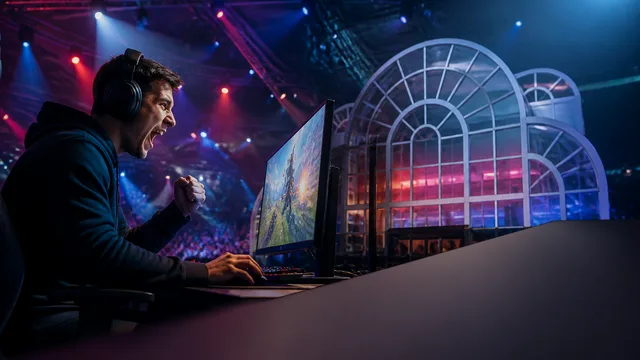
London Games Festival 2027 Gets a New Central Venue
London Games Festival moves to the Business Design Centre for April 2027. Here's what the venue shift means for fans, devs, and the festival's global ambitions.
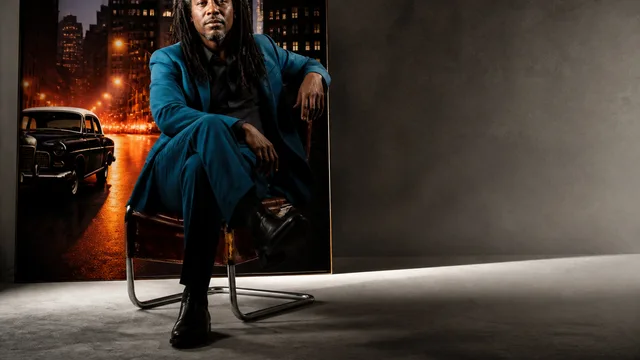
Cool Machine Closes Whitehead's Harlem Trilogy
Colson Whitehead's Cool Machine brings his Harlem Trilogy to a dazzling close with heists, 1980s New York, and a moral vision that earns every page.
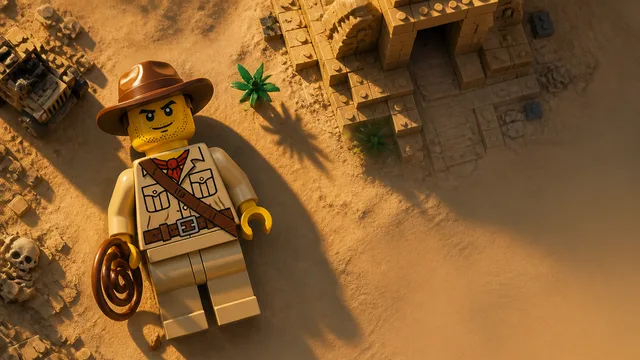
Johnny Thunder: The Rise and Fate of LEGO's First Hero
How Johnny Thunder became LEGO's first original hero in 1998—and what the Adventurers theme reveals about branding, licensing, and toy storytelling.
When ABS Challenges Go Wrong: A Rules Breakdown
Umpire Carlos Torres denied two ABS challenges in one A's-Orioles game. Here's what the tape reveals about a protocol still working out its kinks.