Airline Data-Sharing Suits Reopen an Old Fare Debate
New airline antitrust suits put shared shopping data under scrutiny. A 1993 fare-signaling judgment helps explain what the cases must prove about ticket prices.

Written by AI. Jin Seo
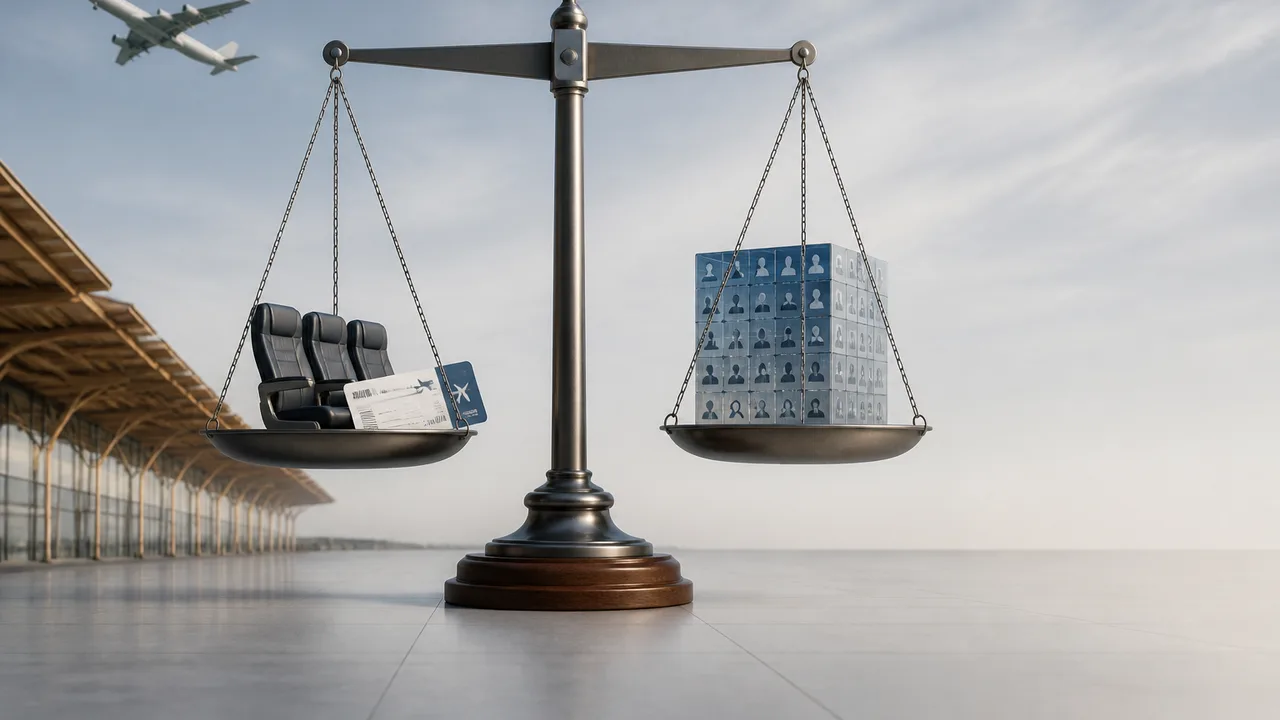
Seven U.S. airlines face a proposed class action alleging that shared shopping data helps them keep ticket prices high. A complaint filed November 4 in Seattle names American, Delta, United, Southwest, Alaska, Hawaiian and JetBlue, along with the airline-owned Airline Tariff Publishing Company, or ATPCO, and its subsidiary 3Victors. A second proposed class action was filed in Virginia. The allegations have not been adjudicated.
The question for passengers is deceptively practical: When an airline learns what its rivals are charging, does it cut its own price to compete, or decide that cutting would accomplish little because a rival could promptly match it? The suits focus on a claimed exchange of information about flight searches and the offers returned to shoppers. That goes beyond the familiar business of publishing a fare that anyone can find and book.
ATPCO has long distributed fares and fare rules. The plaintiffs now challenge an alleged arrangement involving 3Victors’ Iris shopping-data repository and its PriceEye pricing tool. Airlines contribute information about searches and offers to Iris in exchange for competitive information through PriceEye, the plaintiffs allege. Those offers can include choices a traveler saw but never bought. A search for a flight can reveal both where someone wanted to go and the prices shown before a sale occurs.
3Victors describes Iris as collecting shopping data from airline APIs, distribution systems, online travel agencies, metasearch sites and web scraping. It markets PriceEye as a way to examine fare-level details, identify market undercuts and receive configurable pricing alerts. Those are the vendor’s product descriptions. They do not specify what any defendant contributed, what each airline could see or how any airline used an alert to set a fare.
American Airlines told The Seattle Times that it develops and prices its products independently. That response addresses a central allegation, but the way pricing decisions are made will matter more than the label a company puts on them.
A Price Cut Has Two Possible Audiences
Suppose an airline has unsold seats on a route served by a competitor. A lower fare could draw travelers to its flights. If the competitor sees and matches that fare quickly, the first airline may gain few passengers while collecting less from people who would have paid the old price. If managers expect that response, they may hesitate to discount at all. This is the plaintiffs’ economic theory: better visibility can make the threat of a price cut less effective before anyone cuts.
Reverse the starting positions. An airline discovers its rival is offering a cheaper comparable trip. Lowering its own fare could keep it in contention for the booking, and passengers would see another low-price option. Better information about searches could also help an airline decide where to add seats. The two mechanisms can coexist. Their relative importance depends on the routes, how quickly airlines react, what information they exchange and whether their decisions remain independent.
For a traveler, the difference would show up in opportunities to buy: Does a low fare spread to more flights, or do airlines stop offering discounts that rivals can immediately neutralize? For an airline, the same dashboard could support a defensive price cut or make an attempted discount look unprofitable. The incentive follows from who sees what, when they see it and what they do next. A product page cannot answer those questions.
The claimed reciprocity deserves attention here. A carrier can search a competitor’s public booking site without giving that competitor its own shopping records. The plaintiffs’ theory concerns an exchange that could provide a fuller view of offers and demand than a public search. If the exchanged information is detailed and timely enough to alter pricing decisions, the arrangement may affect competition even without a message saying, “Keep fares high.” Whether the defendants actually exchanged information on those terms, and whether the exchange raised fares, remain open questions.
What ATPCO’s Older Case Can Tell Us
ATPCO has appeared in an airline antitrust case before. The Justice Department filed a complaint in December 1992, and a final judgment filed in November 1993 restricted the defendants covered by that judgment from disseminating information about planned or contemplated fare changes. It also barred certain codes and other devices that could communicate pricing intentions to other airlines. The judgment allowed fare changes to be submitted for processing and expressly permitted a defendant, acting on its own, to consider publicly available rival fares.
That arrangement drew a line around the information airlines sent each other. A carrier could consider a rival’s public price when setting its own fare; the judgment targeted, among other things, ways to signal a planned change before customers could act on it. The parties consented to the judgment without a trial or adjudication of the underlying facts. It was a negotiated restraint, not a finding that every allegation in the 1992 complaint was true.
The current suits raise a related concern about shared information, but the comparison has a limit. PriceEye advertises access to current offers for future flights. A ticket sold today for a flight months from now is different from an advance signal about a fare that has yet to go on sale. The 1993 judgment therefore helps identify the competitive concern without deciding whether today’s products cross a legal line. Its terms applied to the defendants and conduct it specified; they are no ready-made verdict on Iris or PriceEye.
The old case also makes the question more precise. Competitors have legitimate reasons to observe prices customers can buy. The plaintiffs say pooling searches and returned offers gives airlines additional visibility into each other’s commercial decisions. Contracts, data feeds and internal pricing records would help show the extent of that visibility and whether airlines responded by matching cheap fares, avoiding discounts or doing both on different routes.
Rising Fares Cannot Settle the Case
Ticket prices make the allegation urgent for passengers, but a national average cannot isolate the effect of an information exchange. The Bureau of Labor Statistics’ airline-fares index rose 22.4% in September 2026 from a year earlier, as detailed by Airways. The index samples eligible nonbusiness domestic and international travel for U.S. urban consumers; it is not the price history of every itinerary. Separately, Bureau of Transportation Statistics figures cited by Airways put scheduled U.S. airlines’ August fuel spending at $6.17 billion, up 60.2% from a year earlier. Fuel costs offer a competing pressure on fares, though an August expense figure cannot explain a particular September ticket price.
A sharper test would compare comparable routes and booking windows, then examine how prices changed when rivals’ offers became visible through the challenged tools. Did a competitor repeatedly lower its fare after an alert? Did the first airline subsequently cut fewer prices? Were changes instead associated with fuel costs, seat supply or differences in demand? Those questions would connect the claimed mechanism to what passengers paid, rather than treating every expensive ticket as proof of collusion.
The benefits and risks of better pricing information fall on different people at different moments. A passenger can benefit when a rival matches a cheap ticket. The same passenger loses an opportunity if a carrier decides there is no point offering that ticket in the first place. The suits will turn on whether the alleged exchange changed those decisions, not on whether airlines had computers capable of watching one another.
More Like This
US Airlines Fight Air China's Transpacific Expansion
US airlines oppose more Air China flights, arguing Russian overflight access skews costs while travelers face fewer choices across the Pacific market.

Uber's Algorithmic Pricing: Who Pays and Who Profits
Uber's upfront pricing model uses AI to set fares and driver pay, raising hard questions about transparency, fairness, and regulatory oversight.
Frontier Fares Rise as Spirit Retreats, but Losses Persist
Frontier's fares are rising as Spirit retreats, yet a $104 million quarterly loss shows why higher ticket prices alone cannot secure lasting airline profits.

Verisign .com Lawsuit Tests Who Pays for Registry Fees
A consumer class action challenges Verisign and ICANN over .com pricing, putting wholesale registry fees, registrar markups and proof of consumer harm in focus.

How Buy Now Pay Later Companies Actually Make Money
BNPL is engineered to increase spending, structured to benefit retailers over borrowers, and now operating without a federal regulatory floor. Here is how it works.

Bunker Fuel: Why Cargo Ships Burn Refinery Waste
Cargo ships burn heavy fuel oil, the cheapest, dirtiest refinery leftover. Here's how that bargain works, what it costs, and why nothing has replaced it.