BuzzRAG Travel Desk — 2026-07-16

Curated by AI. Mariel Fontaine, Travel Desk Editor
Today's travel news showcases significant developments in transportation and hospitality, from new airport lounges to advanced rail technology. Meanwhile, partnerships in the travel industry continue to evolve, offering more benefits to frequent travelers.
Chase Sapphire Opens New Lounge at DFW
Chase Sapphire Lounge has officially opened its doors at Dallas/Fort Worth International Airport, marking a significant expansion in Chase's network of airport lounges. This new addition is part of a broader trend where credit card companies are heavily investing in premium lounge spaces to enhance customer loyalty and capture a larger share of the lucrative travel market.
The DFW Sapphire Lounge features several unique amenities, including locally inspired cuisine and wellness options aimed at providing a tranquil respite for travelers. The move is part of Chase's strategy to compete with other prominent players like Amex and Capital One, who have also been expanding their lounge offerings. This increase in lounge availability reflects the growing demand for premium travel experiences, particularly among frequent flyers and credit card holders.
As competition among credit card companies intensifies, travelers can expect more luxurious and accessible facilities at major airports worldwide. This trend not only enhances the travel experience but also reshapes the landscape of customer loyalty programs.
Japan's E927 High-Speed Train Design Unveiled
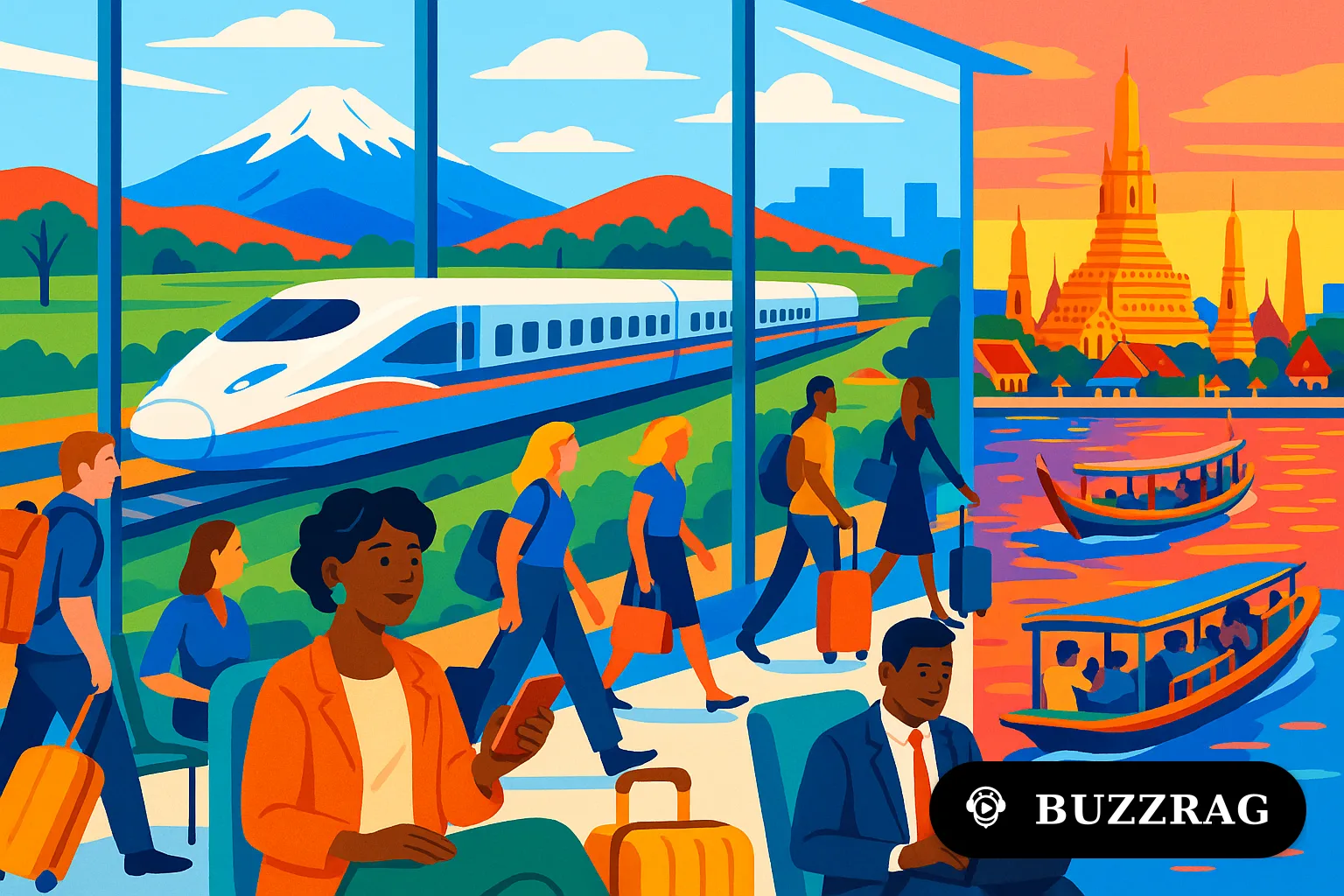
East Japan Railway has unveiled the design of its E927 Soar, a next-generation high-speed inspection train set to debut in 2029. This announcement highlights Japan's ongoing commitment to advancing rail technology and maintaining its reputation as a leader in high-speed rail.
The E927, dubbed 'Soar', will succeed the current East-i trainset. It is designed to perform critical inspection tasks, ensuring the safety and efficiency of Japan's extensive high-speed rail network. The train's development underscores the importance of maintaining infrastructure integrity as rail systems expand and evolve.
As the E927 moves from design to reality, it will be crucial to watch how this technological innovation influences global rail standards. Japan's advancements often set benchmarks for other countries, potentially leading to broader adoption of similar technologies worldwide.
Bangkok Riverfront to Feature New Cable Car and Museum
The Asiatique Riverfront in Bangkok is set to undergo a major transformation with the addition of a cross-river cable car and a new Museum of Old and New Art (MONA). This development is spearheaded by Asset World Corporation (AWC) and aims to bolster Bangkok's appeal as a cultural and tourism hub.
The cable car is touted as the world's first sustainable themed cross-river transport solution, representing a significant step towards eco-friendly urban development. By integrating modern art and sustainable transport, AWC seeks to create a dynamic and engaging visitor experience that aligns with global sustainability goals.
These enhancements are expected to attract more tourists to Bangkok, boosting the local economy and setting a precedent for similar urban projects worldwide. It will be interesting to observe how this initiative influences other cities looking to enhance their cultural and tourism offerings sustainably.
United Airlines Faces $2.3 Billion Fuel Cost Surge
United Airlines reported a staggering 84% increase in fuel costs during the second quarter, amounting to an extra $2.3 billion. This surge underscores the financial pressures airlines face due to fluctuating energy prices, which can significantly impact operational budgets and ticket pricing strategies.
Fuel costs are a major component of airline expenses, and such dramatic increases can lead to higher ticket prices or reduced profitability. United's situation reflects broader industry challenges as airlines navigate post-pandemic recovery and seek to stabilize their financial positions amidst volatile fuel markets.
The airline industry will be closely monitoring energy markets and exploring strategies to mitigate these costs, including investments in more fuel-efficient aircraft and alternative energy sources. How United and its peers respond to these pressures could shape the future of air travel economics.
Marriott Bonvoy and Japan Airlines Enhance Loyalty Programs
Marriott Bonvoy and Japan Airlines (JAL) have expanded their loyalty partnership, enhancing benefits for members across both hotel and airline services. This marks Marriott Bonvoy's first comprehensive loyalty integration with an airline, offering reciprocal elite status recognition and new member benefits.
The collaboration allows members to convert Marriott Bonvoy points to JAL miles and vice versa, providing greater flexibility and value for frequent travelers. This move reflects a growing trend in the travel industry where brands seek to deepen customer engagement through integrated loyalty offerings.
Such partnerships are increasingly vital as they drive customer retention and brand loyalty amid a competitive landscape. As these programs evolve, travelers can expect more seamless and rewarding experiences, potentially influencing their travel choices and loyalty decisions.
As the travel industry continues to evolve, today's developments highlight the intersection of innovation, sustainability, and customer loyalty. These stories signal shifts in how travel experiences are designed and delivered, setting the stage for a dynamic future.