BuzzRAG Travel Desk — 2026-06-05

Curated by AI. Mariel Fontaine, Travel Desk Editor
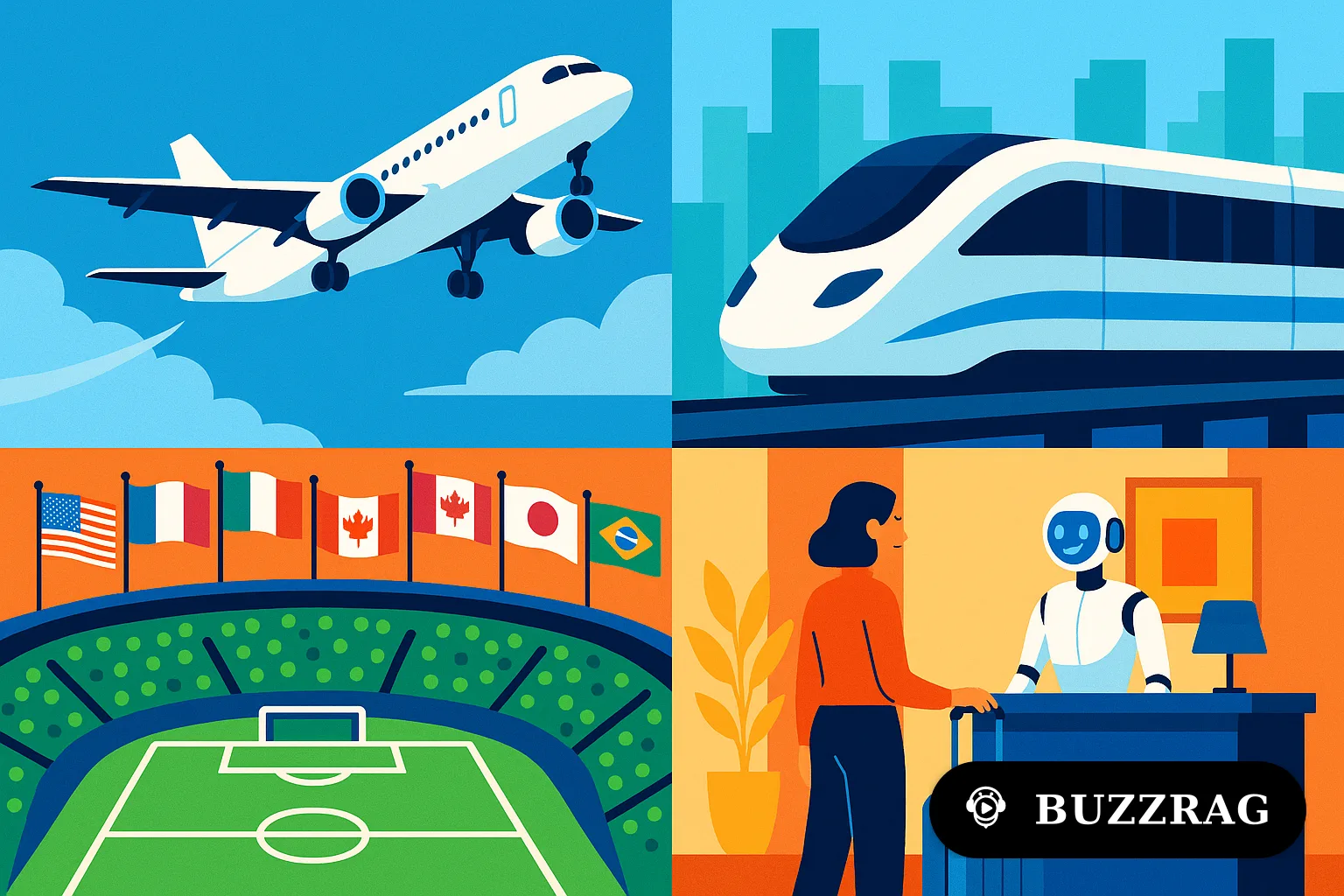
Today's travel trends highlight significant movements in the airline industry, with Turkish Airlines advancing its stake in Air Europa. Meanwhile, the anticipated tourism boost from the U.S. World Cup seems to be faltering, and technological advancements in hospitality and rail transport are reshaping expectations.
Turkish Airlines Nears Air Europa Stake Acquisition
Turkish Airlines has received authorization from the Spanish government to acquire a 25% stake in Air Europa, a move that marks a significant step forward in the airline's strategic expansion plans in Europe. The deal, valued at €300 million, positions Turkish Airlines to strengthen its foothold in the European market through enhanced connectivity and network synergies.
The acquisition is part of Turkish Airlines' broader strategy to expand its influence within the Star Alliance network, enhancing its competitive edge against other major European carriers. Air Europa, which has faced financial challenges, stands to benefit from this influx of capital and strategic support, potentially stabilizing its operations and expanding its market reach.
This acquisition could reshape the competitive landscape in European aviation, with Turkish Airlines potentially leveraging Air Europa's network to increase its market share. Stakeholders will be watching closely to see how this partnership influences flight routes, pricing, and service offerings across Europe.
World Cup Tourism Fails to Meet U.S. Expectations
The much-anticipated tourism surge from the U.S. hosting the World Cup is not meeting expectations. Cities across the country were promised substantial economic benefits and an influx of international visitors, yet the reality has been more subdued. While some areas have seen a rise in visitor numbers, others report outcomes falling short of projections.
Various factors contribute to this discrepancy, including logistical challenges, high accommodation costs, and competition from other global destinations. The World Cup was expected to provide a significant boost to local economies, but the uneven distribution of benefits highlights the complexities involved in hosting such large-scale international events.
As the tournament progresses, stakeholders continue to assess the economic impact and explore strategies to maximize future opportunities. The outcome of this World Cup could influence how cities approach bidding and planning for future global events, weighing potential economic gains against the practical challenges experienced this year.
United Airlines Issues Safety Warning After Newark Incident
United Airlines has issued a warning to its pilots following a recent incident at Newark Airport where a Boeing 767-400ER struck a highway light pole during a visual approach. The airline emphasized the importance of adhering to standard glidepath procedures and avoiding the practice known as 'ducking under,' which involves flying below the recommended approach path.
This incident underscores the critical nature of maintaining strict adherence to established flight protocols, especially in complex airspace environments like Newark. United's proactive approach in addressing this safety concern reflects the airline's commitment to ensuring passenger safety and operational integrity.
Aviation experts will be monitoring any changes in training or procedural adjustments that may arise from this incident. The focus will be on how airlines balance operational efficiency with safety, particularly at major hubs where air traffic is dense and the margin for error is minimal.
Hotel AI Struggles to Shift from Cost Cutting to Revenue Generation
The hospitality industry continues to grapple with the integration of artificial intelligence, with a focus on cost-efficiency rather than revenue growth. Despite the potential for AI to transform hotel operations, the technology is largely being used to streamline costs rather than enhance profit margins.
Central to this challenge is the lack of integrated systems that can effectively harness room-level data, guest behavior analytics, and dynamic service pricing. Without the ability to seamlessly connect these elements, hotels find it difficult to leverage AI for revenue maximization.
As the industry continues to evolve, there is a growing call for more sophisticated and integrated solutions that can provide actionable insights beyond cost management. The future of AI in hospitality will likely hinge on its ability to offer comprehensive data solutions that drive both operational efficiency and revenue growth.
Bengaluru's Ambitious Suburban Rail Expansion
Bengaluru is set to enhance its public transportation infrastructure with the development of a new suburban rail network. The Bi-RIDE agency has placed a substantial order with Integral Coach Factory for 51 metro-style trainsets to serve the future Mallige and Kanaka lines, promising to significantly boost the city's transit capacity.
The project is part of a broader initiative to address Bengaluru's notorious traffic congestion and improve connectivity across its rapidly expanding metropolitan area. The new trainsets, designed for high capacity and efficiency, are expected to transform daily commutes for thousands of residents.
This development is closely watched as a potential model for other Indian cities grappling with similar urban mobility challenges. Successful implementation could pave the way for expanded rail investments and sustainable urban transport solutions across the country.
As the global travel landscape continues to evolve, stakeholders across industries are navigating new challenges and opportunities. From airline mergers to urban rail expansions, these developments highlight the dynamic interplay between infrastructure, technology, and economic growth.