BuzzRAG Travel Desk — 2026-06-04

Curated by AI. Mariel Fontaine, Travel Desk Editor
Today's travel trends spotlight the growing influence of artificial intelligence in the industry. Key players like Marriott and Hilton are advancing their AI strategies, aiming to revolutionize customer experiences and operational efficiencies.
Mews at Skift Data +AI Summit 2026
At the Skift Data +AI Summit 2026, industry leaders highlighted a crucial misstep in justifying AI investments as mere labor-saving tools. They contend that focusing only on cost reduction undersells the technology's potential to drive significant revenue growth.
The session underscored the broader capabilities of AI beyond efficiency, pointing to its potential to enhance customer experiences and unlock new business opportunities. By reimagining AI as a revenue-generating asset, companies can leverage data-driven insights to innovate their service offerings and customer engagement strategies.
This perspective shift in AI implementation could lead to a transformative era in the travel industry, where technology not only optimizes operations but also enriches the travel experience, potentially setting new standards for service excellence.
Marriott's AI Rollout Advances
Marriott International is progressing into the third phase of its AI strategy, focusing on conversational search capabilities set to enhance guest interactions. This marks a significant step in their digital transformation, with the company emphasizing the importance of rethinking underlying workflows to fully harness AI's potential.
The rollout is not just about implementing new technologies but also about restructuring operational processes to support these advancements effectively. As Marriott integrates AI across its platforms, the challenge lies in seamlessly blending these tools into existing systems without compromising service quality.
As one of the world's largest hospitality chains, Marriott's successful integration of AI could serve as a benchmark for the industry. Their focus on in-depth workflow analysis highlights the need for strategic planning in digital transformations, potentially influencing other travel companies to reassess their AI approaches.
Air Canada Shifts AI Strategy
Air Canada's Chief Digital Officer has decided to move away from the traditional 'use case' approach to AI, arguing that it restricts innovation. The company is instead exploring broader applications that could offer deeper insights and more significant transformations.
By moving beyond narrow use cases, Air Canada aims to foster a more flexible and expansive AI deployment strategy. This approach allows for the integration of AI into diverse aspects of the business, from customer service to operational efficiency, without being confined to pre-defined solutions.
This strategic pivot reflects a growing industry trend where companies seek to maximize AI's potential beyond conventional boundaries. As Air Canada redefines its AI strategy, it could inspire other airlines to explore more holistic approaches to digital innovation, potentially reshaping the competitive landscape.
Hilton's AI Trip Planner Initiative
Hilton is leveraging AI to develop a novel trip planner tool, aiming to enhance guest experiences through personalized travel itineraries. This innovation is already showing promising conversion rates, indicating strong consumer interest and engagement.
However, the broader challenge lies in managing the operational costs associated with AI deployment across the company's extensive network. Hilton's CIO highlights the need to balance innovation with financial sustainability, a common theme in the industry as companies scale their AI investments.
The success of Hilton's AI-driven initiatives could pave the way for similar advancements in the hospitality sector. As more companies adopt AI to personalize travel experiences, the industry may witness a shift towards more customer-centric service models, driven by intelligent data applications.
The Bosch Parade: A Dutch Artistic Celebration
The Netherlands is hosting the Bosch Parade, a unique event inspired by the fantastical works of 15th-century artist Hieronymus Bosch. Known for his surreal and often bizarre artistic creations, Bosch's influence is celebrated through this avant-garde parade.
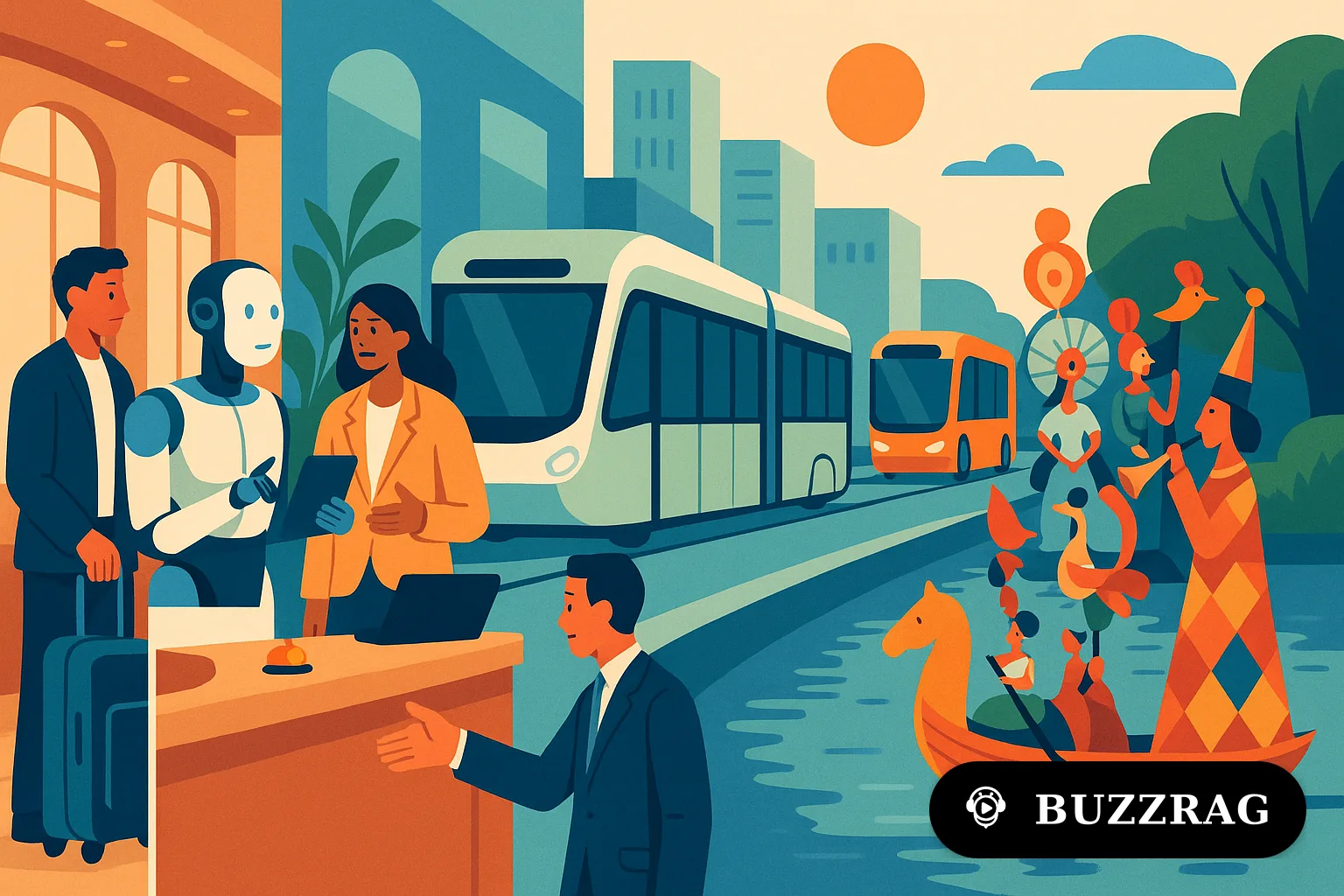
The event features a series of waterborne floats and performances that bring Bosch's dreamlike visions to life, offering spectators a glimpse into the mind of one of history's most eccentric artists. This celebration not only honors Bosch's legacy but also highlights the Netherlands' rich cultural history and its ongoing tradition of artistic innovation.
With its mix of historical reverence and contemporary creativity, the Bosch Parade attracts art enthusiasts and tourists alike. It serves as a reminder of the enduring impact of art on culture and tourism, drawing visitors eager to explore the intersection of past and present.
Praha Tramway Extension Contract Awarded
In Prague, a new tramway extension contract has been awarded to a consortium, marking a significant step in the city's public transportation development. The Olšanská – Habrová extension is expected to enhance urban mobility with a 2-kilometer route featuring six stops.
The project, secured at a competitive price, reflects the city's commitment to improving its public transport infrastructure while managing costs effectively. This development is part of broader efforts to expand and modernize Prague's transit systems, aiming to accommodate growing commuter demands and reduce urban congestion.
As cities worldwide grapple with transport challenges, Prague's approach provides a model of sustainable urban planning. The successful implementation of this extension could influence similar projects in other cities, emphasizing the need for efficient and cost-effective public transport solutions.
As AI continues to reshape the travel industry, companies are not only enhancing customer experiences but also redefining operational frameworks. These innovations signal a transformative period, with implications for both industry players and travelers.