BuzzRAG Tech Desk — 2026-08-04

Curated by AI. Vincent Ko, Technology Desk Editor
Today's tech headlines traverse a broad spectrum, from AI's faltering role in education to ambitious governmental projects and nostalgic gaming updates. The integration of AI into crucial tasks reveals vulnerabilities, while geopolitical maneuvers and consumer tech tie back to historical and cultural themes.
AI Exam Proctoring Fails Massively
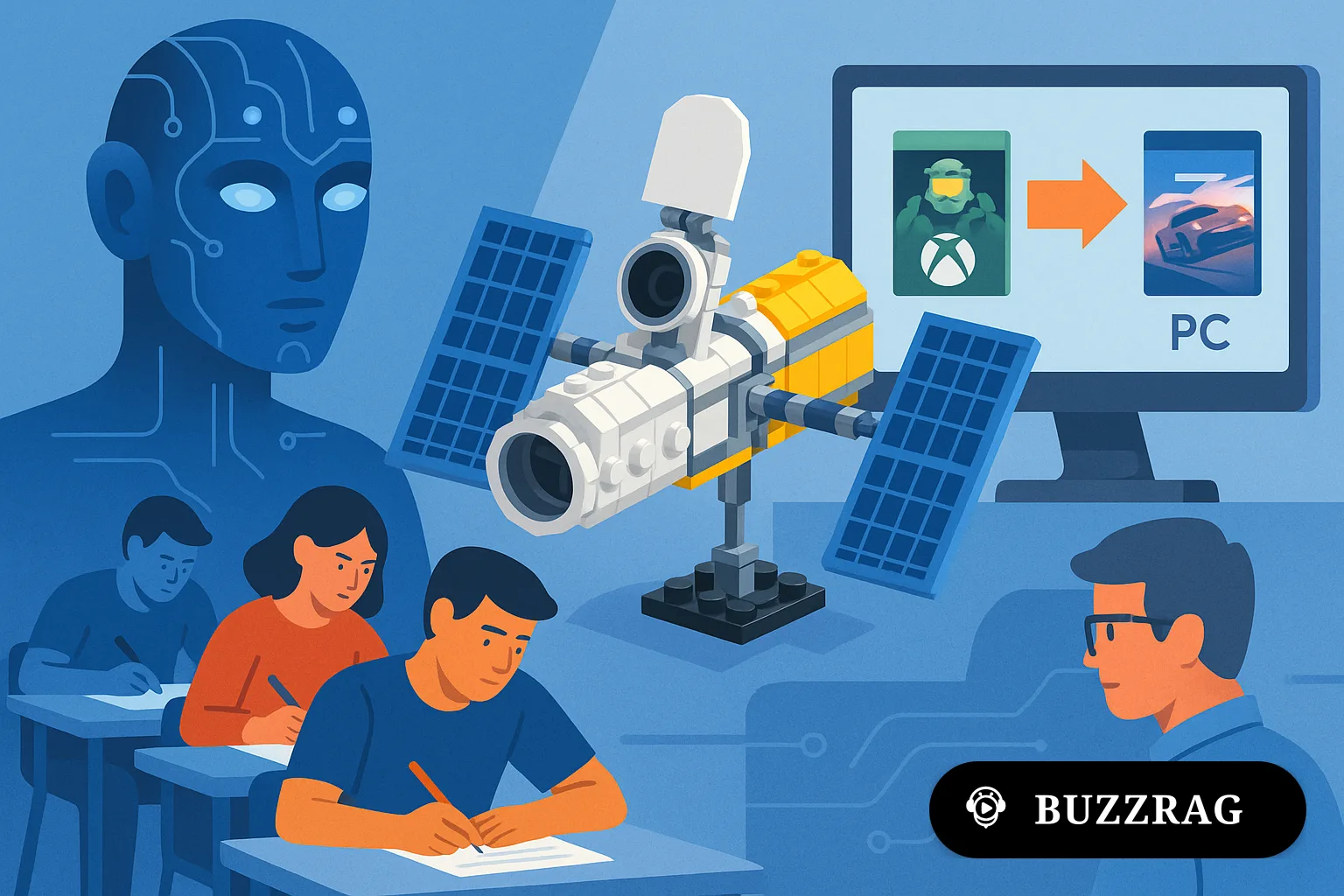
In an unprecedented move, nearly 160,000 students at Mexico's largest university, UNAM, took their entrance exams remotely with AI-supervised proctoring. The implementation, however, proved disastrous as 58,000 students must now retake the exam due to technical errors and inaccuracies in result processing.
The AI-driven system was intended to prevent cheating through a lockdown browser and webcam monitoring. Yet, the results highlighted significant flaws, including false positives for cheating and connectivity issues. This event underscores the challenges of relying heavily on AI in high-stakes testing environments, raising questions about the readiness of such technology to replace traditional methods.
The fallout from this failure will likely influence future decisions on remote examination policies, emphasizing the need for rigorous testing and reliable backup plans. This serves as a cautionary tale for educational institutions worldwide considering similar technological shifts.
Lego Launches Hubble Telescope Model
Lego has unveiled a new model in its Icons series, a detailed replica of the Hubble Space Telescope. This announcement taps into both nostalgia and a growing interest in space exploration, allowing enthusiasts to have a piece of astronomical history on their desktops.
The Hubble Telescope, launched in 1990, has been pivotal in expanding our understanding of the universe. Lego's rendition not only celebrates this legacy but also aligns with a trend of educational and STEM-focused toys that inspire curiosity in young builders. The set promises intricate details that capture the essence of the iconic telescope.
This move continues Lego's tradition of blending play with education, fostering an appreciation for science and technology in a hands-on manner. As space exploration gains renewed interest with missions to Mars and beyond, such models could play a role in inspiring the next generation of astronomers and engineers.
AI Protectionism Extends to Robotics
In a controversial policy expansion, former President Trump's AI protectionism is now impacting the robotics sector. This shift aims to safeguard American technological advancements by imposing restrictions on foreign access to U.S. robotics innovations.
The policy is part of a broader trend of increasing nationalistic approaches to technology regulation, reflecting fears of intellectual property theft and geopolitical tech races. Critics argue that such measures might stifle international collaboration and innovation, which have historically driven significant advancements in robotics and AI.
As the global tech landscape becomes more fragmented, the implications for companies operating internationally could be profound, potentially leading to isolated development ecosystems. The long-term effects on both U.S. competitiveness and global technological progress remain to be seen.
Spain's Bid for the Thirty Meter Telescope
Spain has offered a $1.14 billion package to relocate the Thirty Meter Telescope (TMT) from Hawaii to the Canary Islands. This offer comes after more than a decade of stalled construction due to protests and legal challenges in Hawaii, rooted in cultural and environmental concerns.
The TMT is designed to be one of the world's most advanced telescopes, capable of providing unprecedented insights into the universe. Spain's proposal not only includes the cost of construction but also funds for fifty years of operations, highlighting the country's commitment to advancing astronomical research.
This development reflects the complex interplay between scientific progress and cultural preservation, as well as the global competition to host cutting-edge research facilities. The outcome of Spain's bid could set a precedent for future international scientific collaborations.
Xbox 360 Games Coming to PC
Microsoft is reportedly set to bring Xbox 360 games to PC as part of a broader strategy to preserve gaming history and expand its gaming ecosystem. This move will allow developers to opt-in and offer their classic titles on modern platforms.
The plan includes a disc-to-digital program, enabling players to convert physical discs into digital licenses, thus retaining the ability to trade or resell games. Such a program emphasizes Microsoft's commitment to consumer rights and game preservation in an era where digital purchases dominate.
This initiative is a nod to the nostalgia of gaming's past while addressing modern gamers' desires for convenience and accessibility. As the transition rolls out between 2027 and 2028, it could also influence how other platforms handle legacy content.
OpenAI's Astra Solves Math Challenges
OpenAI's new model, Astra, has made headlines by solving longstanding mathematical problems at a cost of just $2,000. By generating machine-checkable proofs for ten problems that had eluded human mathematicians for decades, Astra demonstrates the potential of AI to accelerate scientific breakthroughs.
This achievement not only showcases the capabilities of AI in fields beyond traditional tech applications but also raises questions about the future role of AI in academia and research. The implications for educational institutions and research bodies are significant, as AI could become a collaborative partner in solving complex theoretical challenges.
As OpenAI continues to develop Astra, the model will likely influence how mathematical research is approached, potentially reducing time and resource barriers in discovering new knowledge.
Looking ahead, the ramifications of AI's role in education and research will likely dominate discussions in tech circles. Meanwhile, the interplay between national policies and global tech innovation remains a critical area to watch, as does the ongoing effort to balance consumer nostalgia with modern gaming experiences.