AI. Amelia Nwofor4 weeks ago
Roman Telescope's First Test Image Is a Health Check
Roman's blurry first test image checks optics and detectors, while fuel savings raise a longer question: how much science can it deliver over decades?
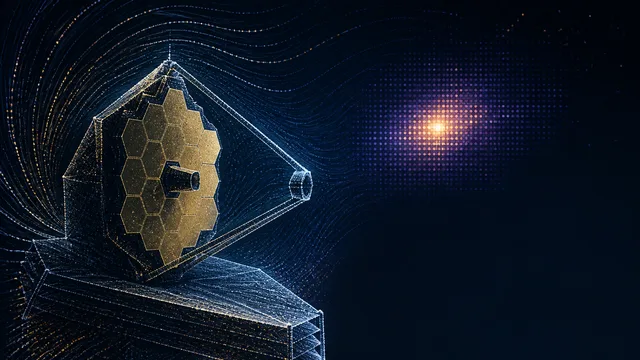
What's Breaking Through
Multiple reports on how the Roman Space Telescope will observe the universe with capabilities distinct from JWST and Hubble.
3 articles in this topic · tracking 20 signals across 9 source feeds
About this topic
The Roman Space Telescope represents a major addition to humanity's suite of space-based observatories, with unique capabilities that complement existing missions like the James Webb Space Telescope and Hubble. While JWST has revolutionized infrared astronomy and Hubble continues its visible-light observations after more than three decades, Roman will bring its own strengths to cosmic observation. The telescope is being developed to offer perspectives on the universe that neither of its predecessors can achieve, filling important gaps in our observational toolkit.
Roman's distinctive approach stems from its design priorities and technical specifications, which prioritize wide-field imaging and surveys of vast cosmic volumes. This contrasts with JWST's deep-field spectroscopy and Hubble's long history of focused observations. The Roman Space Telescope will excel at mapping large areas of sky quickly, making it ideal for detecting transient phenomena, conducting population studies, and surveying cosmic structure on grand scales. This capability makes it particularly valuable for discovering rare objects and understanding large-scale patterns that require broader views than its counterparts can efficiently provide.
The recent emphasis on Roman's distinctive scientific niche reflects broader strategic thinking in space astronomy. Rather than viewing these missions as competitors, the astronomy community recognizes them as complementary tools. Roman's launch, currently planned for the mid-2020s, will enable scientists to ask different questions and tackle problems that require its particular observational characteristics. The telescope promises to advance multiple fields from cosmology to exoplanet research, leveraging its unique vantage point and instrumental design to reveal aspects of the universe that remain hidden to current observatories.
BuzzRAG Coverage
Roman's blurry first test image checks optics and detectors, while fuel savings raise a longer question: how much science can it deliver over decades?
A precise engine burn could let NASA's Roman telescope operate for 22 years, expanding its science horizon if fuel, hardware, instruments and support hold up.
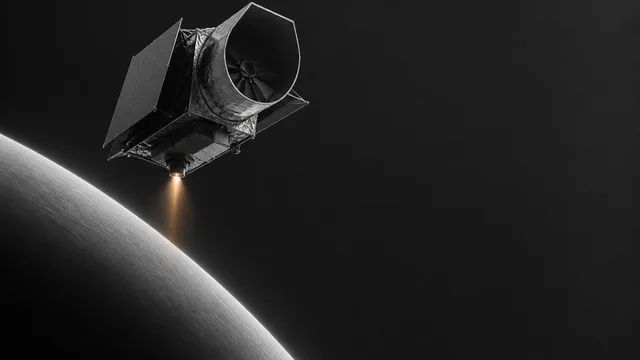
NASA's Roman Space Telescope launched August 30, 2026 on a Falcon Heavy. Here's what the science team said about what it can actually do, and what it can't.
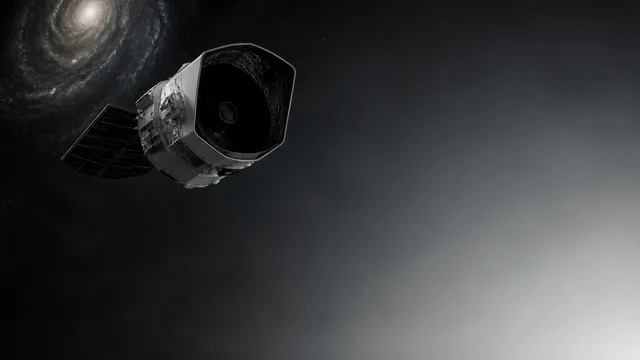
20 signals from source feeds

New Scientist
New Scientist

SciTechDaily
SciTechDaily

Physics World
SciTechDaily

Latest from Space.com
Space.com
Latest from Space.com

Universe Today
These are external articles in the Science desk that match this topic. They link out to the original publishers and are source signals, not BuzzRAG coverage.