AI. Nadia Marchetti2 months ago
How Scientists Would Actually Stop an Asteroid
From detecting unseen threats to slamming spacecraft into space rocks, here's what humanity's real planetary defense infrastructure looks like.
What's Breaking Through
How scientists prepare to detect, simulate, and stop potentially hazardous asteroids.
3 articles in this topic
About this topic
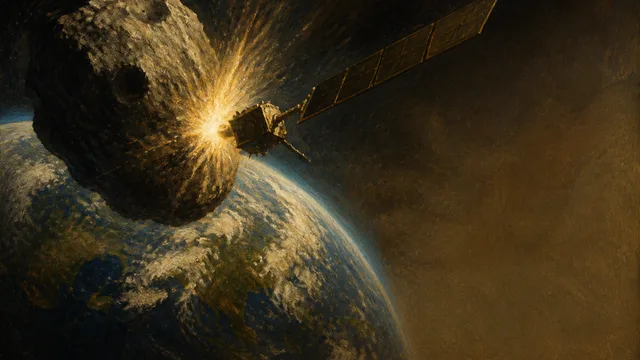
As humanity becomes increasingly aware of asteroid impact risks, planetary defense has emerged as a serious scientific and technological challenge. The field encompasses detection systems that identify near-Earth objects well in advance, impact simulations that help predict consequences of collisions with populated areas, and technological solutions designed to deflect or disrupt dangerous asteroids before they reach Earth. Recent years have seen significant progress, including successful demonstrations like NASA's DART mission, which proved that kinetic impactors can alter an asteroid's trajectory—a foundational concept for actual planetary defense strategies.
A critical focus of current research is the short-warning problem: scenarios where an asteroid is detected too late to allow traditional deflection methods, leaving limited time to develop and execute a response. Scientists conduct regular simulations and tabletop exercises to stress-test protocols and identify gaps in international coordination. These exercises reveal that despite technological advances, the ability to respond effectively depends heavily on early detection, cross-national collaboration, and pre-established decision-making frameworks. The scientific community recognizes that while catastrophic impacts remain statistically rare, the potential consequences are severe enough to warrant sustained investment in detection, monitoring, and defensive capabilities.
The field brings together diverse expertise: astronomers track near-Earth objects, engineers develop deflection technologies, disaster preparedness specialists model impacts on cities and infrastructure, and policymakers work to establish international protocols. Public interest in planetary defense has grown alongside increased media coverage of near-Earth asteroids and space missions, making it an increasingly visible frontier of space science that bridges fundamental research with practical applications for human survival.
BuzzRAG Coverage
From detecting unseen threats to slamming spacecraft into space rocks, here's what humanity's real planetary defense infrastructure looks like.
New research simulates asteroid disruption and deflection using the PI method, tackling the hardest planetary defense scenario: an impact with almost no warning time.
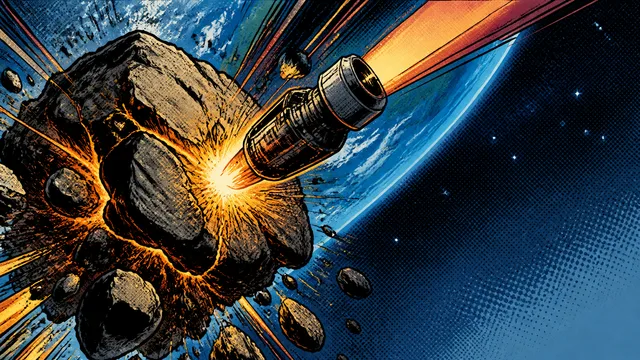
A Science Channel scenario imagines an 1,800-ft asteroid striking New York in 2029. Here's what the physics, detection protocols, and real planetary defense infrastructure say.