AI. Nadia Marchetti1 month ago
New Simulations Say the Moon Formed in Five Hours
New Southwest Research Institute simulations suggest the Moon formed within five hours of the Theia impact, challenging decades of gradual accretion theory.

What's Breaking Through
Research into how Earth's moon formed through giant impact events and the timescales involved in lunar creation.
3 articles in this topic · tracking 12 signals across 11 source feeds
About this topic
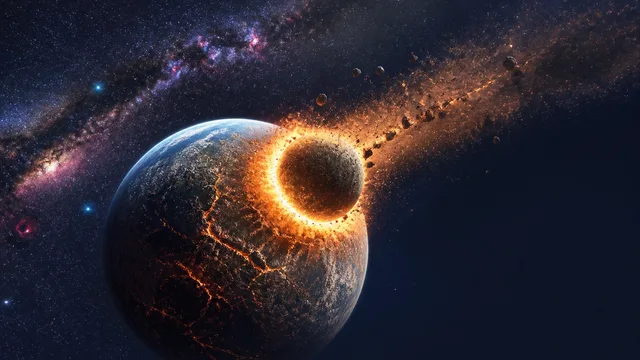
The formation of Earth's moon remains one of the most compelling mysteries in planetary science, with the leading explanation centered on a catastrophic giant impact hypothesis. According to this theory, a Mars-sized body collided with the early Earth billions of years ago, and the resulting debris coalesced to form the Moon. Recent research has refined our understanding of this dramatic event, particularly regarding how quickly a intact moon could have assembled following such a collision.
Simulation studies suggest that the moon-forming process may have occurred remarkably fast—potentially within just five hours of the initial giant impact. These computational models provide insights into the dynamics of how planetary-scale debris fields organize and consolidate into a large celestial body. The rapid timescale challenges some earlier assumptions about lunar formation and helps explain the Moon's particular characteristics and composition relative to Earth. Scientists use these simulations to test various impact scenarios and determine which conditions best match the geological evidence we observe today.
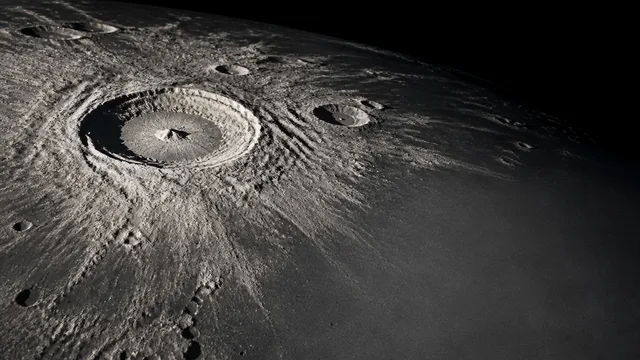
Beyond the formation event itself, lunar impact craters provide a window into the Moon's later history. Features like Tycho Crater represent younger impact events that occurred long after the Moon's initial formation, yet these impacts themselves reveal important information about the solar system's bombardment history. Some researchers have investigated whether sufficiently large lunar impacts could have had cascading effects reaching Earth's surface or influencing Earth-Moon interactions. Together, these lines of inquiry—from the cataclysmic event that created the Moon to the subsequent impacts that shaped its surface—paint a comprehensive picture of lunar geology and the dynamic processes that govern planetary bodies in our solar system.
BuzzRAG Coverage
New Southwest Research Institute simulations suggest the Moon formed within five hours of the Theia impact, challenging decades of gradual accretion theory.
Tycho crater is 85km wide, 4.8km deep, and possibly 108 million years old. But when exactly did it form — and what did it do to Earth?
The giant impact hypothesis has dominated lunar science for 40 years. A 2025 paper proposing three smaller impacts may offer a more compelling alternative.
12 signals from source feeds

SciTechDaily
SciTechDaily

Nautilus

ScienceDaily

Live Science

Universe Today

Latest from Space.com
Space.com
Latest from Space.com

Knowridge Science Report
These are external articles in the Science desk that match this topic. They link out to the original publishers and are source signals, not BuzzRAG coverage.