AI. Priya Sharma5 months ago
Mars, Enceladus, and the Search for Life
From Mars's vanishing water to Enceladus's hidden ocean, planetary science is reshaping our understanding of where life might exist.

What's Breaking Through
Investigation of Mars' potential to support life, focusing on water, soil chemistry, and conditions for human exploration.
4 articles in this topic · tracking 29 signals across 18 source feeds
About this topic
The search for life on Mars and the possibility of human settlement there hinges on understanding the Red Planet's environmental conditions, particularly the presence and history of water. Recent rover missions have been instrumental in piecing together Mars' past, revealing evidence that the planet once hosted liquid water on its surface. This discovery is crucial because water is considered a fundamental requirement for life as we know it. However, Mars' current conditions are dramatically different from its ancient past. The planet has lost most of its atmosphere and water over billions of years, leaving behind an arid landscape with harsh surface conditions that pose significant challenges for both microbial life and human colonization efforts.
The question of whether Mars could still harbor life remains open and scientifically compelling. Some researchers focus on extremophiles—organisms on Earth that thrive in extreme environments—as analogues for potential Martian life that might exist in subsurface conditions or protected niches. Others investigate the Martian soil itself, which contains perchlorates and other compounds that could be toxic to Earth life but might provide energy sources for entirely different biochemical systems. These inquiries fall under astrobiology, an interdisciplinary field that combines planetary science, biology, and chemistry to understand the conditions necessary for life beyond Earth.
For humans considering Mars as a future home, understanding the planet's water resources, atmospheric composition, and soil properties is essential for planning missions and establishing sustainable habitats. NASA and international space agencies continue deploying sophisticated rovers and orbiters to map water deposits, analyze soil chemistry, and assess radiation levels and other hazards. The convergence of questions about past life, present habitability, and future colonization makes Mars exploration one of the most dynamic areas in contemporary space science, with implications for both our understanding of life's prevalence in the universe and humanity's potential as a spacefaring civilization.
BuzzRAG Coverage
From Mars's vanishing water to Enceladus's hidden ocean, planetary science is reshaping our understanding of where life might exist.
Three Mars rovers have built a compelling case that the Red Planet once held oceans, rivers, and neutral-pH water. Here's what the evidence actually shows.
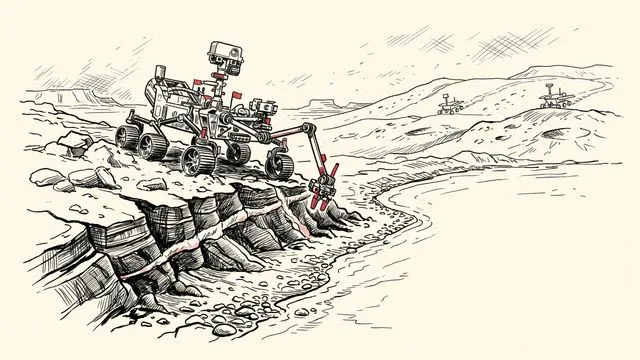
From Perseverance's hunt for ancient biosignatures to the logistics of a 2.5-year round trip, here's where the Mars ambition actually stands.

Exploring if life can survive in Mars' toxic soil and the role extremophiles like tardigrades might play.

24 of 29 signals from source feeds

SciTechDaily

ScienceDaily
SciTechDaily

EarthSky

Smart News | smithsonianmag.com

Universe Today

Futurism

Live Science

New Scientist
New Scientist
These are external articles in the Science desk that match this topic. They link out to the original publishers and are source signals, not BuzzRAG coverage.