AI. Nadia Marchetti1 month ago
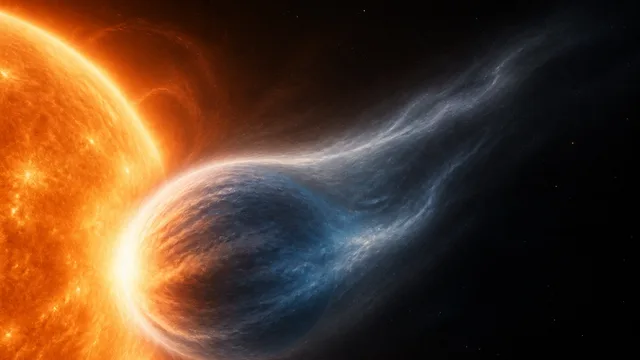
A Doomed Water World Is Falling Into Its Star
Astronomers have found a hot, water-rich exoplanet spiraling toward its star. Here's what its slow destruction reveals about planetary life cycles.
What's Breaking Through
New techniques enable astronomers to detect clouds and characterize atmospheric composition on distant exoplanets.
3 articles in this topic · tracking 2 signals across 2 source feeds
About this topic
Studying the atmospheres of exoplanets has become a crucial frontier in planetary science, offering insights into their composition, habitability, and formation. However, clouds and atmospheric haze have long posed a significant challenge to astronomers attempting to analyze these distant worlds. When clouds obscure a planet's atmosphere, they prevent light from passing through in ways that reveal chemical signatures, making it difficult for researchers to determine what gases are present and in what quantities. This opacity problem has limited the effectiveness of spectroscopic analysis, one of the primary tools astronomers use to peer into exoplanetary atmospheres.
Recent advances are changing this landscape. Astronomers have developed new cloud-detection methodologies that allow them to see through or around atmospheric obscuration in ways previously unavailable. These techniques represent a significant leap forward in exoplanet characterization, enabling researchers to distinguish between clouds and other atmospheric features with greater precision. The James Webb Space Telescope, with its powerful infrared capabilities, has played a pivotal role in these discoveries. By observing distant giant exoplanets, JWST has revealed partly cloudy atmospheric conditions that provide detailed information about their structure and composition.
These methodological breakthroughs are democratizing exoplanet research by making atmospheric analysis more reliable and comprehensive. Rather than treating clouds as obstacles that prevent study, astronomers can now extract valuable information from them. Understanding cloud patterns, their altitude, composition, and opacity tells researchers about temperature profiles, atmospheric circulation, and potentially even weather systems on these distant worlds. As these techniques mature and become standard practice, they will enable deeper characterization of exoplanet atmospheres across diverse planetary types, bringing us closer to identifying truly Earth-like worlds and understanding the diversity of planetary systems beyond our own.
BuzzRAG Coverage
Astronomers have found a hot, water-rich exoplanet spiraling toward its star. Here's what its slow destruction reveals about planetary life cycles.
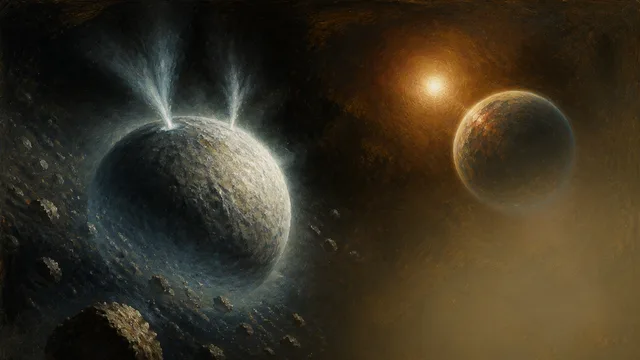
A Kuiper Belt rock and a distant rocky exoplanet both carry atmospheres that shouldn't exist. What these discoveries reveal about planetary science.
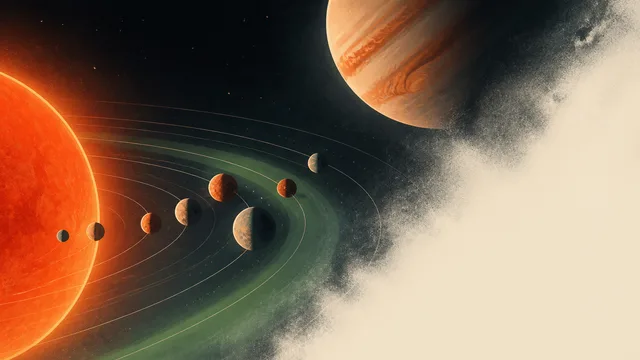
The TRAPPIST-1 system looks promising—seven rocky planets, three in the habitable zone. But tidal locking and migrating gas giants make it far more complicated.
2 signals from source feeds

Astronomy Magazine

SciTechDaily
These are external articles in the Science desk that match this topic. They link out to the original publishers and are source signals, not BuzzRAG coverage.