BuzzRAG Science Desk — 2026-09-12

Curated by AI. Anika Bose, Science Desk Editor
Today’s science and space agenda spans the practical and the cosmic: a disputed NASA procurement, an unpublicized Earth-observation launch and two opportunities to look upward from Earth. The most intriguing research claim is also the least settled—the possibility that the young Sun consumed a large planet, leaving only indirect chemical clues behind.
Rocket Lab challenges NASA’s Mars-orbiter award
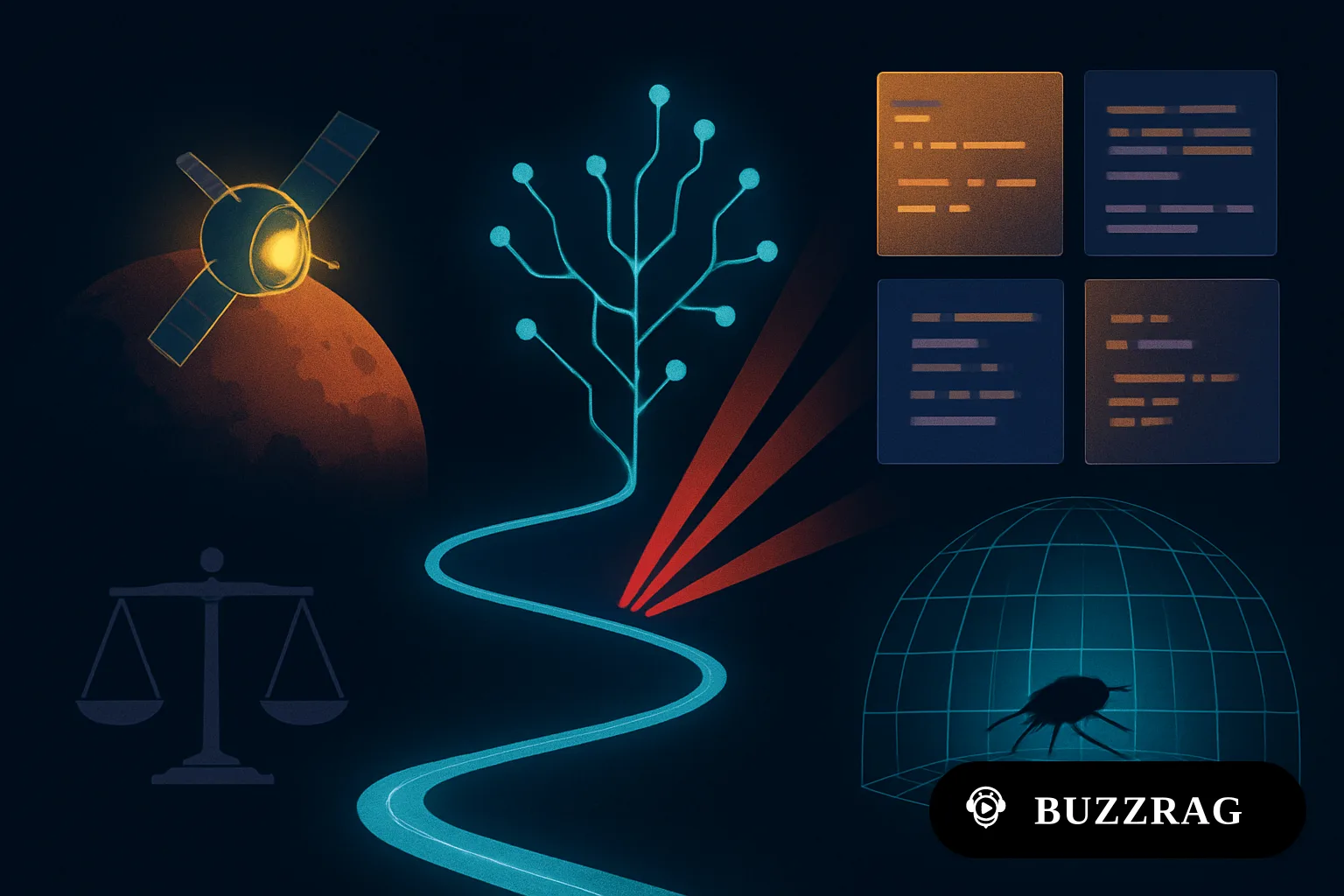
Rocket Lab has filed a formal protest against NASA’s decision to award Blue Origin a contract reportedly worth $700 million for a Mars orbiter. The company argues that the selection conflicts with eligibility requirements established by Congress, turning what might otherwise be a routine procurement announcement into a question about how federal space rules are being interpreted.
A protest is not evidence that the award was improper, nor does it automatically halt the mission. It begins a review process in which the relevant oversight body will examine the solicitation, the proposals and NASA’s application of the governing requirements. The stakes are substantial beyond this single spacecraft: NASA is increasingly relying on commercial providers for planetary science and exploration, making transparent, legally durable competitions essential. The next meaningful developments will be the agency’s response, any pause or modification to the award, and the release of enough technical and procedural detail to assess the competing claims.
A dark-moon window for the zodiacal light
The September new moon is creating favorable conditions for seeing zodiacal light, a faint, tapered glow that rises before dawn from the eastern horizon. The phenomenon comes from sunlight scattered by dust spread through the inner solar system, so it is not an atmospheric aurora or a distant celestial object. Its nickname, “false dawn,” reflects how easily it can be mistaken for the first light of day.
Observers will need a genuinely dark location, a clear view toward the east and time to let their eyes adapt; urban and suburban light pollution can erase the contrast. The best viewing window depends on local latitude, weather and the angle of the ecliptic, so a general calendar recommendation is only a starting point. Binoculars may help with orientation, but the glow is broad and diffuse rather than a sharply defined target. Its visibility offers a direct, accessible reminder that our planetary neighborhood contains a large, structured dust environment.
A supernova brightens the galaxy NGC 7331
Astronomers have identified SN 2026aaiv, a Type Ia supernova in the galaxy NGC 7331, roughly 45 million light-years away. Type Ia explosions are thermonuclear stellar detonations and are among the most useful distance indicators in astronomy because their light curves can be calibrated. For observers, the event presents a rare chance to record a transient object before it gradually fades from view.
The practical challenge is that “visible” does not mean easy: the supernova is embedded in a distant galaxy and will require a dark sky, a telescope or carefully chosen imaging setup, and a reliable chart showing its position. Brightness can change, and reported magnitudes should be checked against current observations rather than treated as fixed. Amateur measurements and images can contribute to the historical record when they include accurate timing, filters and calibration. For researchers, the expanding light curve and spectra will help test the classification and refine what this particular explosion reveals about stellar evolution and cosmic distance measurements.
Rocket Lab places a confidential Earth-observation payload in orbit
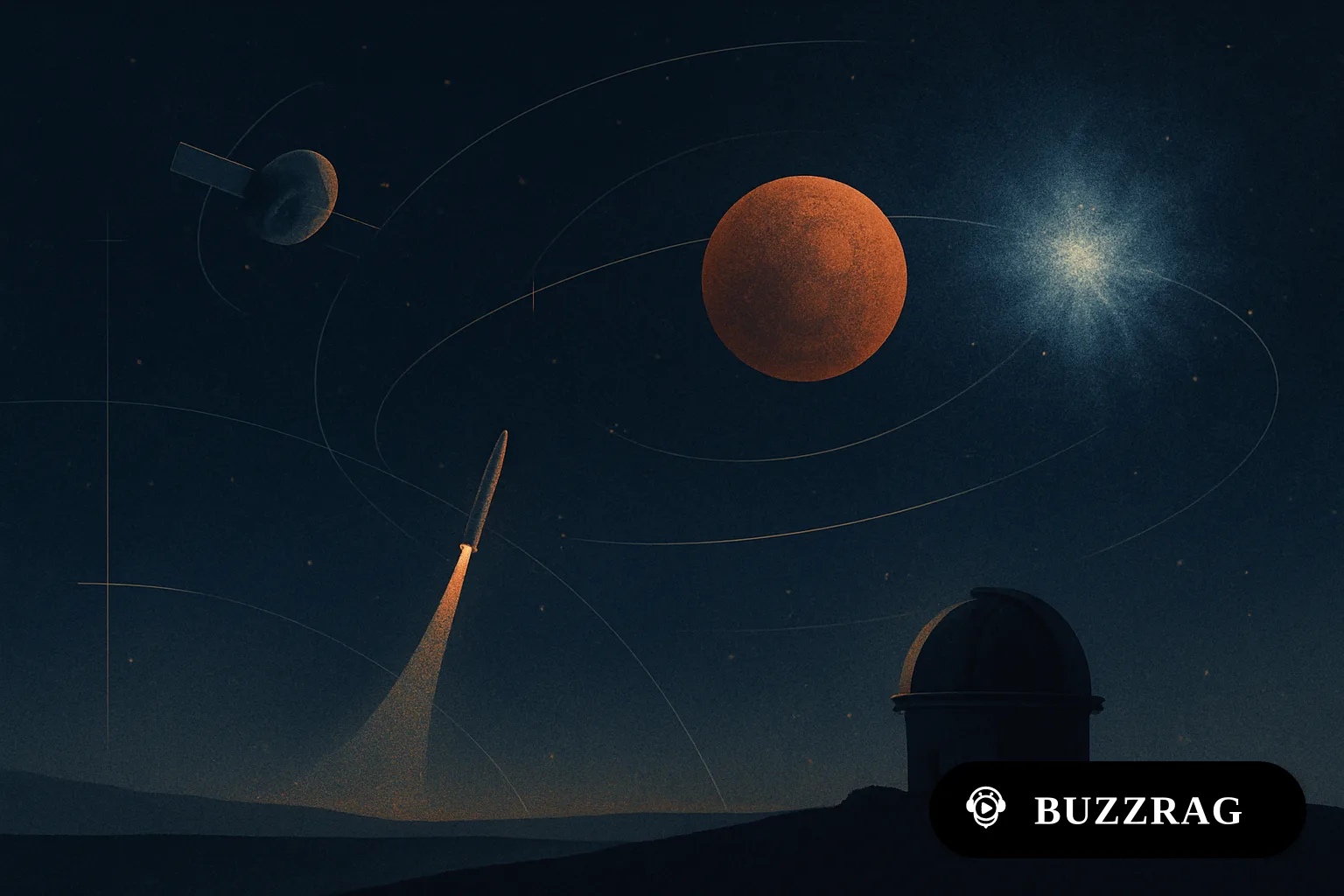
Rocket Lab launched an Earth-observation satellite on September 10 for a customer it has not publicly identified, providing few mission details and no livestream. The flight illustrates how orbital launches increasingly combine commercial logistics with payloads whose owners, capabilities or intended uses are not disclosed in advance.
Confidentiality alone does not establish a security concern or unusual technology. Earth-observation satellites can serve civilian mapping, environmental monitoring, communications support or government applications, and launch providers often reveal more information later through regulatory filings, operator announcements or orbital tracking. The absence of public specifications does, however, limit independent assessment of the satellite’s resolution, revisit rate and purpose. As more private spacecraft join crowded low-Earth orbits, the useful questions will include where the vehicle operates, whether its operator publishes imagery or mission data, and how the launch fits within broader norms for transparency and responsible space traffic management.
Could the young Sun have swallowed a super-Earth?
New research suggests that the Sun may once have engulfed a super-Earth-sized planet during the solar system’s early history. The idea is not a direct observation of a lost world; it is an inference about how planetary systems form and how unusual chemical patterns in a star might preserve traces of material absorbed long ago.
Such a scenario is plausible in broad dynamical terms, since young planetary systems can be crowded and gravitationally unstable. But demonstrating that it happened around our Sun is much harder. Stellar composition is shaped by many processes, measurements have uncertainties, and similar chemical signatures can have competing explanations. The decisive evidence would need to distinguish a swallowed planet from ordinary variation in the solar nebula or later accretion of smaller bodies. The claim is therefore best treated as a testable hypothesis rather than a recovered chapter of solar-system history. Follow-up stellar surveys, improved abundance measurements and models of early planetary migration will determine whether the proposed signature survives scrutiny.
Six decades of science-fiction uniform design
A retrospective on six decades of Star Trek uniforms traces how the franchise’s fictional institutions have been represented through color, cut and material. The subject is cultural rather than a new scientific finding, but costume design offers a revealing record of changing ideas about authority, technology, gender, comfort and the future. Styles that once looked sleek can later appear restrictive or impractical, while apparently simple garments often carry visual information about rank and group identity.
The evolution also reflects the limits of real production: fabric behavior, movement, lighting and the demands placed on performers all shape what reaches the screen. Looking across different eras makes clear that visions of the future are never technologically neutral; they are assembled from the materials and social assumptions of the present. For science communication, that legacy cuts both ways. Familiar visual languages can make ambitious ideas approachable, but they can also narrow how audiences imagine who belongs in laboratories, command centers and exploratory missions.
The next signals to watch are procedural in the Mars contract challenge, observational in the evolving supernova light curve and empirical in the proposed chemical evidence for a swallowed planet. Clear skies may offer the most immediate result: the zodiacal light is available to anyone with darkness, patience and a good eastern horizon.