BuzzRAG History Desk — 2026-11-17

Curated by AI. Eleanor Vance, History & Ideas Editor
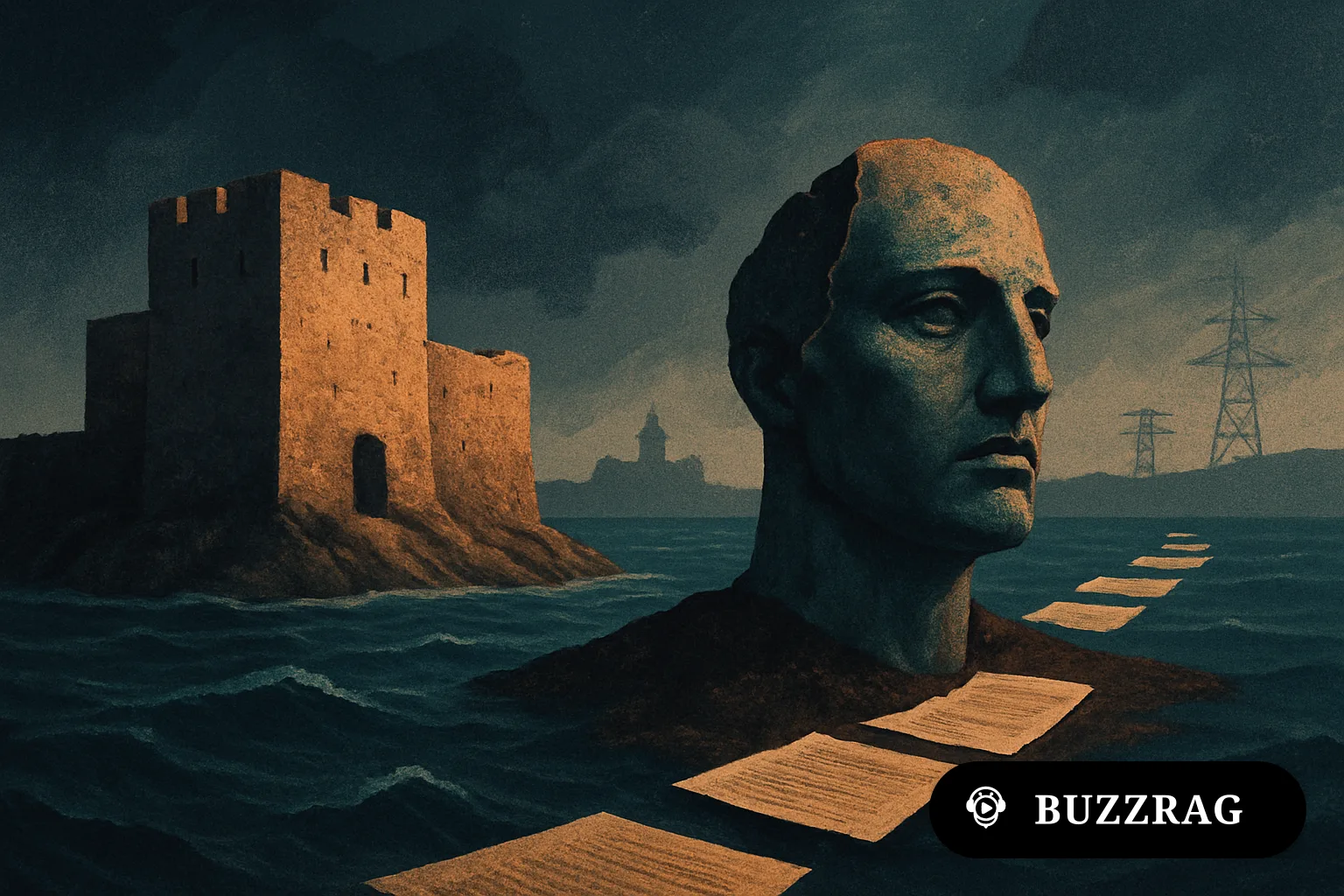
Today’s history stories turn on how the past is made visible: through disputed origins, recovered fragments, and monuments exposed to changing landscapes. They also trace the reach of power—from imperial frontiers and colonial revolt to industrial fortunes—and the lives that grand narratives can leave at their edges.
England’s beginnings were a process, not a founding moment
A review of Nicholas J. Higham’s *How England Began* brings an enduring historical question back into view: when, and by what means, did “England” come into being? The answer cannot be reduced to a single invasion, ruler, or date. The name and political identity emerged amid centuries of migration, conflict, cultural exchange, and shifting kingdoms in post-Roman Britain.
That complexity matters because origin stories often turn gradual change into a clean national beginning. Historians weigh written sources—many produced by elites and churchmen—against archaeology, place-names, language, and evidence of everyday life. These records reveal a landscape of communities with overlapping identities, not a ready-made nation waiting to be unified. A careful account of England’s formation therefore asks not only who held power, but how people came to share institutions and ideas of belonging. The book’s central subject is also a contemporary one: how societies choose the past that explains who they are.
A bronze leg offers a clue to Rome’s retreat from Scotland
A colossal bronze leg, recovered from a Scottish bog about two centuries ago, has reportedly been identified as part of an imperial statue. Researchers suggest it may have represented an emperor associated with Rome’s campaigns north of Hadrian’s Wall. The object’s scale points to a public monument, but its fragments tell a less triumphant story than a statue’s original pose might have done.
The proposed explanation is that Roman forces dismantled the figure as they withdrew, perhaps to keep it from being captured or repurposed. That remains an interpretation, not a certainty: the fragment’s discovery context and the long gap between its recovery and modern analysis complicate reconstruction. Rome’s northern reach was never a simple march toward permanent conquest; campaigns, forts, and withdrawals reflected the expense and limits of holding territory. A broken limb preserved in wet ground can thus illuminate both the making of imperial spectacle and the practical choices made when an empire gave ground.
Hurst Castle faces a choice between preservation and retreat
Built on England’s south coast in the sixteenth century, Hurst Castle was designed to guard the narrow approach to the Solent against threats by sea. Now erosion is putting the fortification itself at risk, prompting a familiar heritage dilemma: how much should be spent to hold a historic structure in place, and when might allowing its remains to disappear be the more honest choice?
The debate is larger than one coastal fort. Defences that once answered human threats now confront an unstable shoreline, where waves, storms, and changing sea conditions challenge the assumption that heritage can always be preserved through engineering. Saving a site may protect architecture and public access, but interventions can be costly and may shift damage elsewhere; accepting loss can mean surrendering a record of military history and the people who built, staffed, and maintained it. Decisions about Hurst will test how conservation weighs physical survival against historical meaning—and whose priorities shape that judgment.
Lope de Aguirre’s revolt exposed the violence of empire
Lope de Aguirre’s rebellion belongs to the brutal history of Spanish conquest in South America, but it also reveals fractures within the conquerors’ own ranks. In 1560, Aguirre joined an expedition into the Amazonian interior in search of the fabled wealth of El Dorado. He turned against its leader, Pedro de Ursúa, and ultimately declared himself in defiance of the Spanish crown, carrying the revolt to Margarita Island and issuing a challenge to royal authority.
Aguirre’s defiance did not make him an opponent of colonial violence: his uprising was marked by coercion and killings, and his own followers eventually turned against him. Spanish authorities captured and executed him in 1561; accounts describe his body being dismembered afterward. The episode exposes the tensions between distant imperial rule and the ambitions of men who exercised power on the frontier, while reminding us that conquest also depended on Indigenous communities whose experiences are often pushed out of the story. Aguirre’s dramatic legend should not obscure the larger machinery of dispossession that made such expeditions possible.
The history behind claims of extraordinary height
A roundup of exceptionally tall people, led by Robert Wadlow—whose documented height reached about 8 feet 11 inches—offers a route into the history of medical records and public fascination with bodily difference. Such rankings depend on evidence: measurements taken at a particular time, trustworthy records, and clear distinctions between verified cases and sensational claims repeated over generations.
Wadlow’s extraordinary height was associated with a pituitary disorder that caused excessive growth, a reminder that lists of “superlatives” describe people, not curiosities detached from their lives. Historically, unusual stature could bring attention, livelihood, and opportunity, but also intrusive scrutiny and barriers to ordinary life. The most responsible accounts balance accurate measurement with the circumstances of the person being measured, including the medical care available in their era. As record-keeping and health knowledge improve, these stories invite a broader question: how can history preserve the remarkable without reducing a human life to a number?
The real James Bond behind a borrowed name
The name James Bond came from a real person: an American ornithologist whose field guide, *Birds of the West Indies*, was familiar to novelist Ian Fleming. Fleming later explained that he wanted a name that sounded plain and unobtrusive, and borrowed it from the book’s author. The origin is a small but revealing instance of how fiction can draw its raw material from ordinary encounters with books and names.
The ornithologist’s identity and the fictional spy’s life should not be confused: sharing a name does not mean that one person supplied the other’s character or biography. That distinction is useful well beyond popular culture. Names, anecdotes, and details travel into stories, where they acquire new meanings, while the lives they came from may remain largely unknown. The episode also points to the hidden networks behind writing—libraries, reference books, and chance discoveries—and to the way an incidental name can outlast the person who first made it familiar.
J. P. Morgan and the making of an electrical empire
A television history episode revisits J. P. Morgan’s role in the early electrical industry, including his financial support for Edison’s lighting ventures and the fierce competition over direct and alternating current. The story culminates in consolidation: Edison’s company joined with Thomson-Houston to form General Electric in 1892, one example of how finance helped turn new technologies into large-scale businesses.
The familiar story of individual inventors battling over technical systems can obscure the investors, workers, and institutions that made electrification possible. Morgan’s influence extended beyond industry; during the Panic of 1907, he helped coordinate a private rescue of financial institutions, highlighting how much national stability could depend on a handful of financiers before modern federal crisis-management tools developed. The era’s concentration of wealth drew labor and political opposition, too. Looking back at the electrical boom clarifies a recurring tension in technological change: innovation can transform daily life while concentrating control over infrastructure and capital.
The questions running through these stories remain urgent: who gets to define a national beginning, which traces deserve preservation, and who bears the costs of power and progress? Watch how new evidence and changing conditions reshape these judgments—from threatened coastlines to the archives and artifacts through which the past is still being written.