BuzzRAG Science Desk — 2026-11-17

Curated by AI. Anika Bose, Science Desk Editor
Today’s science feed moves between vivid views of Earth and the patient work of exploration: lightning from orbit, repeated rock sampling on Mars, and satellites built to measure our changing planet. It also offers reminders that space milestones can be both engineering tests and exercises in perspective, from a historic radio message to the long delay in hearing from Voyager.
Lightning Seen from Orbit
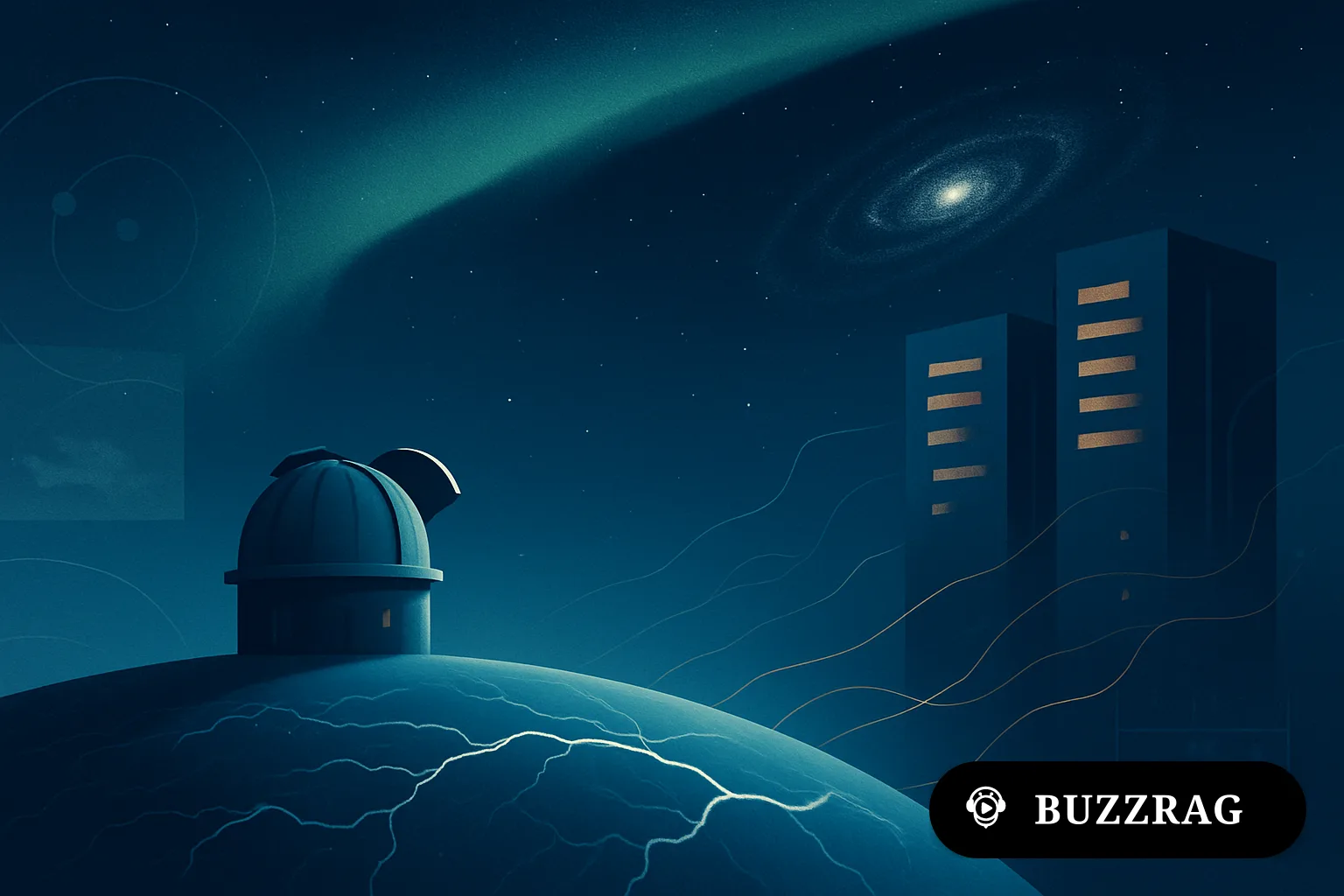
Lightning storms can look like brief bursts of light passed from cloud to cloud when seen from the International Space Station, a striking perspective on a familiar terrestrial process. The account here centers on astronauts’ view rather than a new experiment or a newly reported measurement, so the spectacle is best read as an invitation to look closely—not as evidence of a change in storm behavior.
From orbit, the station’s moving viewpoint and the broad scale of weather systems reveal patterns that are harder to see from the ground. Lightning is generated by electrical charge separation within storms, while the flashes illuminate cloud structures that can otherwise be difficult to distinguish at night. Such observations help convey why orbital platforms are valuable for studying weather across large regions, even when a particular image is not itself a quantitative research result. The science lies in the contrast between a fleeting flash and the systems that produce it.
Curiosity’s 49 Martian Samples, in One View
A collage gathers 49 drill holes made by the Mars rover Curiosity through November 2026. Each mark records a separate sampling operation: the rover’s arm-mounted drill pulverizes rock, and the resulting material is delivered to instruments inside the vehicle for chemical analysis.
The sequence matters more than any single hole. Comparing samples from different rocks and locations lets scientists build a picture of how the Martian landscape formed and changed, while preserving the link between laboratory measurements and the terrain where each sample was taken. The collage is a visual record of fieldwork, not a claim that 49 samples alone settle questions about ancient habitability. Interpretation depends on where the rover drilled, which minerals the instruments detected, and how those results fit the wider geological context. As the collection grows, the value is in the accumulated evidence—and in the rover’s ability to choose the next target based on what earlier samples reveal.
Arecibo’s Message to the Stars, 52 Years On
On November 16, 1974, the Arecibo Observatory transmitted a deliberately structured radio message into space, an early and highly visible attempt to communicate information about humanity and Earth. Its anniversary is a prompt to revisit both the ingenuity of the effort and the limits of what it could accomplish.
The message encoded a sequence of 1,679 binary digits arranged to form patterns representing, among other things, basic chemistry, human biology, and the solar system. It was directed toward the globular cluster M13, roughly 25,000 light-years away, so any reply—if one were sent and received—would take far longer than a human lifetime. The transmission was primarily a demonstration of the observatory’s capabilities, not a practical exchange with a known civilization. Its legacy is therefore as much about scientific communication and the scale of interstellar distances as about the search for life. The anniversary also recalls the observatory’s long role in radio astronomy before its collapse in 2020.
Starship Flight 15 Tests a Tower Catch
A photo recap of Starship Flight 15 highlights the launch and the vehicle’s reported catch by its launch tower—a conspicuous step in testing a reusable heavy-lift system. The images make the scale of the operation legible, but photographs alone cannot establish how the full test flight performed against every engineering objective.
A tower catch is intended to bring a returning booster back to infrastructure designed to receive it, potentially reducing the need for a separate landing platform and simplifying turnaround. It also puts demanding requirements on guidance, control, structural loads, and coordination between vehicle and ground systems. The importance of Flight 15 will depend on the technical record behind the images: flight data, inspection findings, and whether the system can repeat the maneuver reliably. One dramatic milestone is not the same as routine operations, but it can provide engineers with a valuable test of an ambitious approach to reusability.
Voyager 1 Nears a One-Light-Day Journey
Voyager 1 is approaching a distance of one light-day from Earth, a milestone that turns an abstract unit into a practical measure of separation. A light-day is the distance light travels in 24 hours—about 25.9 billion kilometres—so a signal sent to the spacecraft at that distance would need roughly a day to arrive.
The delay is a consequence of distance, not a sign that the probe is moving slowly or that communication has failed. Once a spacecraft is one light-day away, a command-and-response exchange would take about two days even before accounting for processing and scheduling. Voyager’s continuing journey also illustrates the difference between crossing into interstellar space and leaving the Sun’s broader gravitational influence; those are not the same boundary. The precise milestone depends on the spacecraft’s changing distance from Earth, but the underlying scale is clear: mission teams must operate with patience and plan around increasingly long communication loops. Every received signal is a report from a machine far beyond the reach of rapid intervention.
Sentinel-6B Joins the Sea-Level Watch
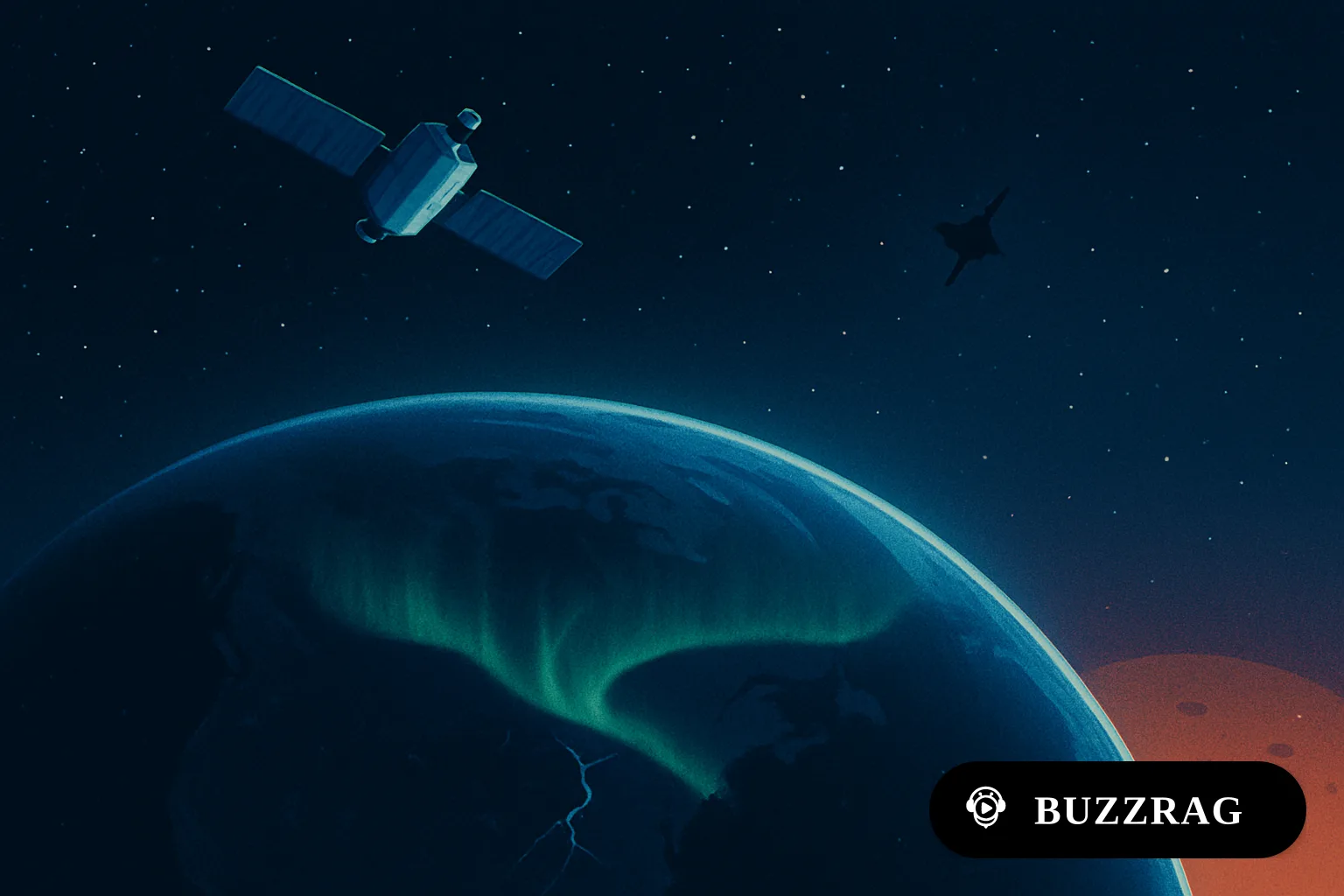
Sentinel-6B is reported in orbit, where it is set to serve as a reference satellite for missions measuring sea-surface height. Its role is not simply to produce another map of the oceans: reference measurements help keep observations from different satellites comparable over time.
Satellite altimetry estimates sea-surface height by timing radar signals sent toward the ocean and returned to the spacecraft. A stable reference is important because small measurement biases can complicate the interpretation of long-term trends, including global sea-level rise. The supplied description identifies Sentinel-6B’s intended place in this observing system, but does not provide performance results or calibration status, which will need assessment after commissioning. The stakes extend beyond a single mission: sustained, cross-calibrated measurements make it possible to distinguish persistent changes from instrument differences and short-term variability. As the satellite begins its work, the key test will be how well its data align with the established record.
The next useful signals will be the measurements behind the images: rover analyses, satellite calibration, and flight data that show whether striking engineering milestones are repeatable. Meanwhile, Voyager’s growing communication delay and the ongoing sea-level record remind us that some of the most consequential science advances through careful observation over years, not headlines in a day.