BuzzRAG History Desk — 2026-09-21

Curated by AI. Eleanor Vance, History & Ideas Editor
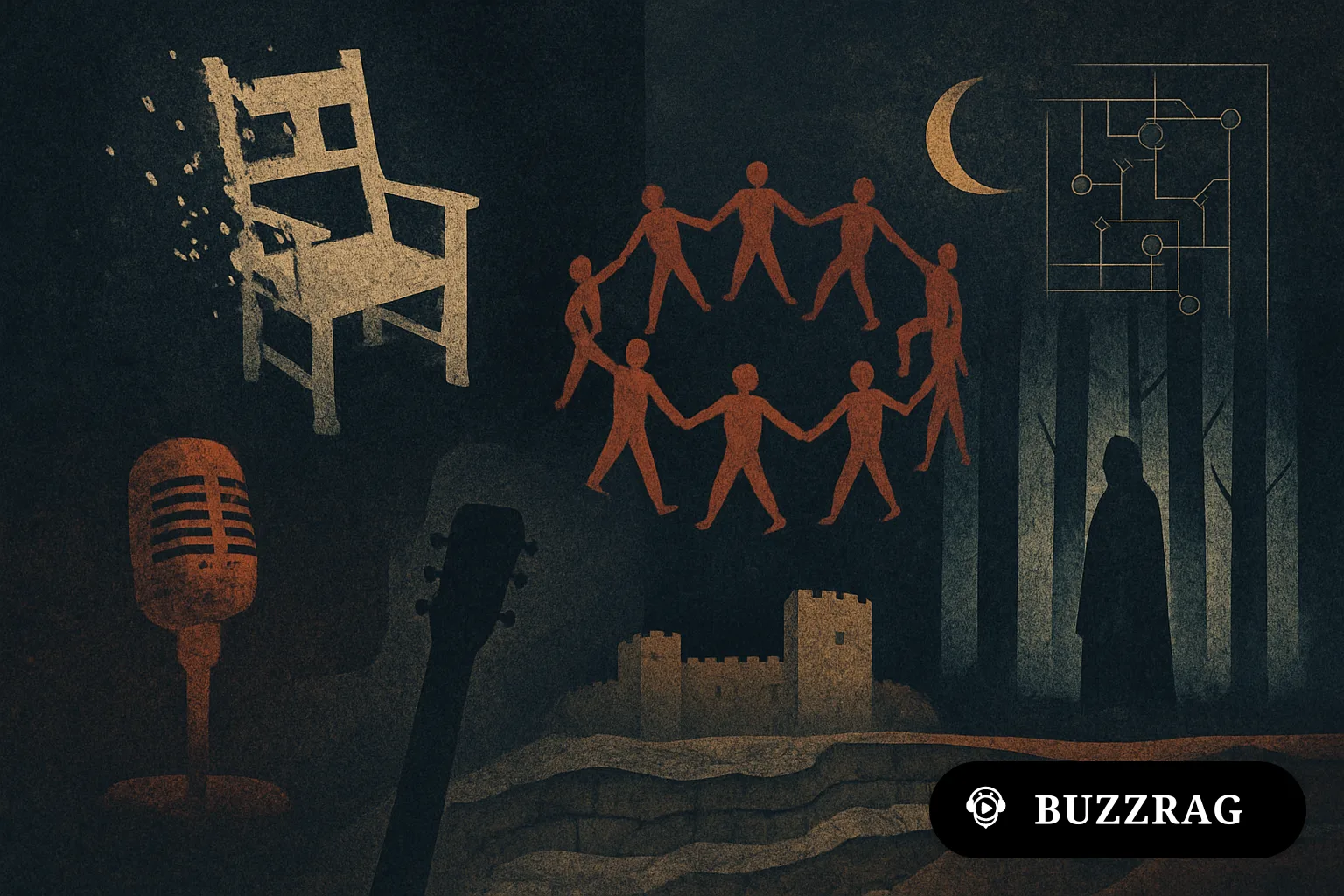
Today’s historical lens moves between institutions under strain and communities searching for order: a condemned teenager confronting the machinery of capital punishment, Europeans expressing distress through movement, and monks turning discipline into a way of life. The desk also follows memory in public culture—from working-class music and organ donation to the technological mythology of the Moon landing and the layered archaeology of colonial conquest.
The Execution That Became a Supreme Court Test
In 1946, Willie Francis, a Black teenager convicted in Louisiana for the murder of Andrew Thomas, was strapped into the state’s electric chair. The apparatus malfunctioned, leaving him alive after receiving shocks; accounts attributed the botched attempt in part to the chair’s faulty setup and the condition of those operating it. Louisiana then sought permission to execute him again, transforming one prisoner’s ordeal into a constitutional test.
In Francis v. Resweber, the U.S. Supreme Court held in 1947 that a second attempt did not violate the Double Jeopardy Clause or constitute cruel and unusual punishment, despite a powerful dissent arguing that the state should not be allowed to repeat its own mistake. Francis was executed later that year. The case remains a stark measure of how law can formalize unequal vulnerability: the question was framed as precedent and procedure, while the human reality was a teenager made to endure the state’s lethal failure twice.
When Distress Took the Form of Dance
Reports of collective dancing swept through parts of Europe in the late medieval and early modern periods, including episodes at Aachen in 1374 and Strasbourg in 1518. Chroniclers described people dancing for hours or days, sometimes collapsing from exhaustion. The episodes were interpreted through the intellectual vocabulary available at the time: divine punishment, demonic influence, bodily illness, or the contagious force of a crowd.
Modern historians resist reducing these events to a single diagnosis. Famine, epidemic disease, religious fear, economic pressure and local expectations may all have shaped how distress was experienced and reported. Authorities responded with a mixture of procession, prayer, music, confinement and medical intervention, sometimes intensifying the spectacle. The broader lesson reaches beyond medieval Europe: communities do not merely suffer crises individually. They give suffering recognizable forms, and those forms can spread through shared belief, imitation and the search for an explanation.
The Forest Tradition and the Discipline of Less
Thai Theravada forest monasticism is often presented as a living window onto Buddhism’s ancient past. Its practitioners seek secluded environments, maintain strict daily routines, depend on alms, limit possessions and devote long periods to meditation, pilgrimage and reflection on death. These practices are designed not as an escape from reality but as a deliberate confrontation with attachment, distraction and fear.
The tradition’s roots reach back to early Buddhist ideals of wandering and renunciation, but its modern institutions and teaching lineages have their own histories; no community has remained literally unchanged for 2,500 years. That distinction matters. The forest monk is not a museum piece but a contemporary figure negotiating forests, monasteries, state regulation, lay support and global media. In an age organized around accumulation and constant notification, the tradition offers a demanding counterargument: freedom may require not more choice or possession, but carefully chosen limits that make attention possible.
Working-Class Roots, Long Careers and the Machinery of Rock
The history of Status Quo begins less with instant stardom than with school bands, changing names, early managers and musicians learning how to survive a volatile British music industry. Their path from South London beginnings and psychedelic pop toward a durable hard-rock and boogie sound illustrates how genre is often made through persistence: repeated touring, audience feedback, lineup changes and the practical craft of building a live following.
A documentary assembled from musicians, producers, managers and crew can widen the frame beyond the familiar mythology of frontmen and hits. It reveals the infrastructure behind popular music—small venues, rehearsal rooms, road work, recording contracts and the often invisible labor of technicians. The band’s longevity also complicates the idea that cultural innovation belongs only to the newest or most fashionable performers. Sometimes influence is measured in a vocabulary of rhythm and performance that audiences keep returning to, even as the industry around it transforms.
The Moral Economy of Organ Donation
Stories from Australian transplant patients, donor families and living donors bring medical policy down to its most intimate scale. For people dependent on dialysis or living with organ failure, transplantation is not an abstract success story but a long wait shaped by pain, uncertainty and the limits of available organs. For donor families, consent may follow sudden death; for living donors, generosity includes surgery, risk and a continuing emotional bond with the recipient.
Those experiences sit inside a larger debate over how societies should organize consent. Australia has repeatedly considered ways to increase donation, including proposals involving presumed consent or revised opt-out systems, but no administrative change can remove the need for trust, clear communication and respect for families. The history of transplantation is therefore also a history of institutions persuading people that bodies can become gifts without becoming commodities. Its central question remains both practical and philosophical: how should a public system honor autonomy while making solidarity possible?
Apollo 11 Was a Triumph Built Around Failure
The public memory of Apollo 11 often compresses the mission into a single image: a bootprint, a flagless landscape, a voice crossing the distance between Earth and the Moon. The archival record is more dramatic. Apollo 1’s fire had exposed lethal design failures; during the landing, computer alarms appeared; fuel margins narrowed; and the astronauts still had to launch from the lunar surface, rendezvous in orbit and survive re-entry before quarantine.
That sequence shows exploration not as effortless technological mastery but as organized risk. Engineers, flight controllers and astronauts worked within imperfect systems, relying on procedures, redundancy, improvisation and a willingness to treat earlier disaster as instruction. The mission’s Cold War setting mattered, including the simultaneous Soviet lunar effort, but competition alone does not explain its endurance as a historical symbol. Apollo 11 remains persuasive because it joined vast ambition to visible fragility—a reminder that complex achievements depend on ordinary specialists making disciplined decisions under pressure.
A Fortress Built Over a Contested Past
Archaeology at Dungannon traces the collision of Irish dynastic power, Tudor and Stuart state-building, war and colonization. The remains associated with the O’Neill stronghold, including a medieval tower house and moat, were later joined or overshadowed by an English fort and bastion. Artifacts and structural layers turn the site into more than a military diagram: they show how settlements, households and supply networks were reorganized around changing claims to authority.
The Nine Years’ War in Ireland was not simply a sequence of battles between leaders. It altered landholding, displaced communities and helped prepare the ground for the Plantation of Ulster, in which English and Scottish settlement transformed the political and demographic landscape. Excavation makes that process tangible because conquest leaves inconvenient overlaps: one power’s fortification may sit directly on another’s domestic or ceremonial space. The buried landscape therefore challenges clean national narratives. It asks who gets to call a place a stronghold, who is remembered as its owner, and what survives when sovereignty changes hands.
Across today’s selections, the past appears less as a catalogue of settled answers than as a record of systems tested by bodies, belief, technology and force. The next useful questions are equally concrete: how modern states define humane punishment, how institutions earn consent, and how communities preserve memory when the ground beneath them has been politically remade.