BuzzRAG Tech Desk — 2026-09-21

Curated by AI. Vincent Ko, Technology Desk Editor
Today’s technology conversation is less about a single breakthrough than about the systems forming around AI: orchestration layers, lightweight learning experiments, labor markets and legal constraints. At the same time, a large-scale developer-targeted malware campaign is a reminder that the software supply chain still begins with human trust—and often a seemingly ordinary file download.
The orchestration layer is becoming AI’s next battleground
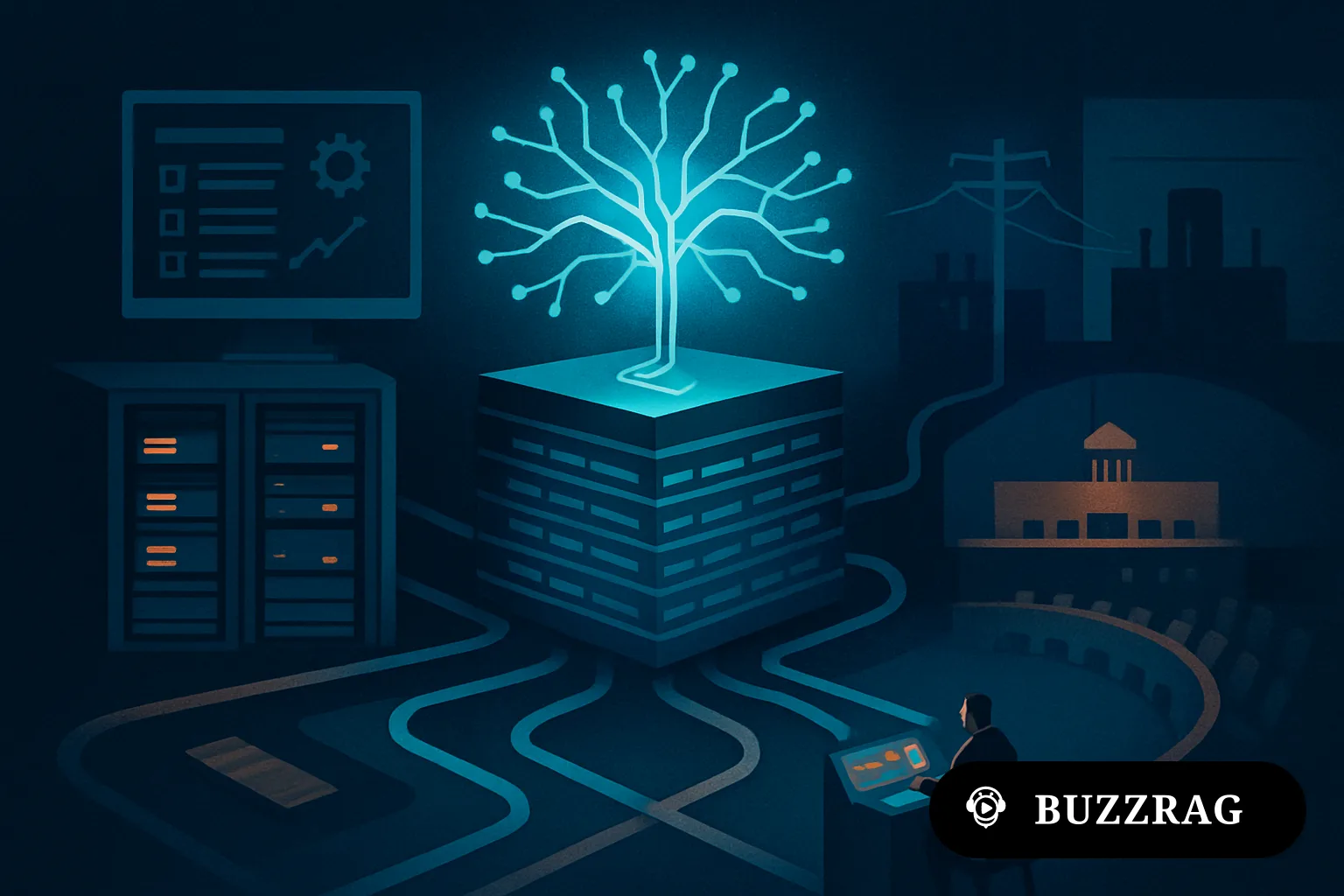
A project described as Google’s open agentic orchestrator has drawn attention on Hacker News, pointing to a shift in where AI infrastructure competition may be headed. Rather than focusing only on increasingly capable models, these systems coordinate tools, subtasks and multiple agents—an architectural concern that is becoming central as prototypes move toward production.
The important distinction is between an orchestration framework and an autonomous intelligence claim. Workflow engines, distributed schedulers and task-routing systems have existed for years; the novelty lies in adapting those patterns to models whose outputs are probabilistic and whose tool calls can carry real-world consequences. The project’s reception will depend on documentation, evaluation and how well it handles failures, permissions and observability—not simply on the presence of an “agentic” label. Developers will be watching whether an open implementation can reduce vendor lock-in or merely add another abstraction layer.
The fake interview has become a malware delivery system
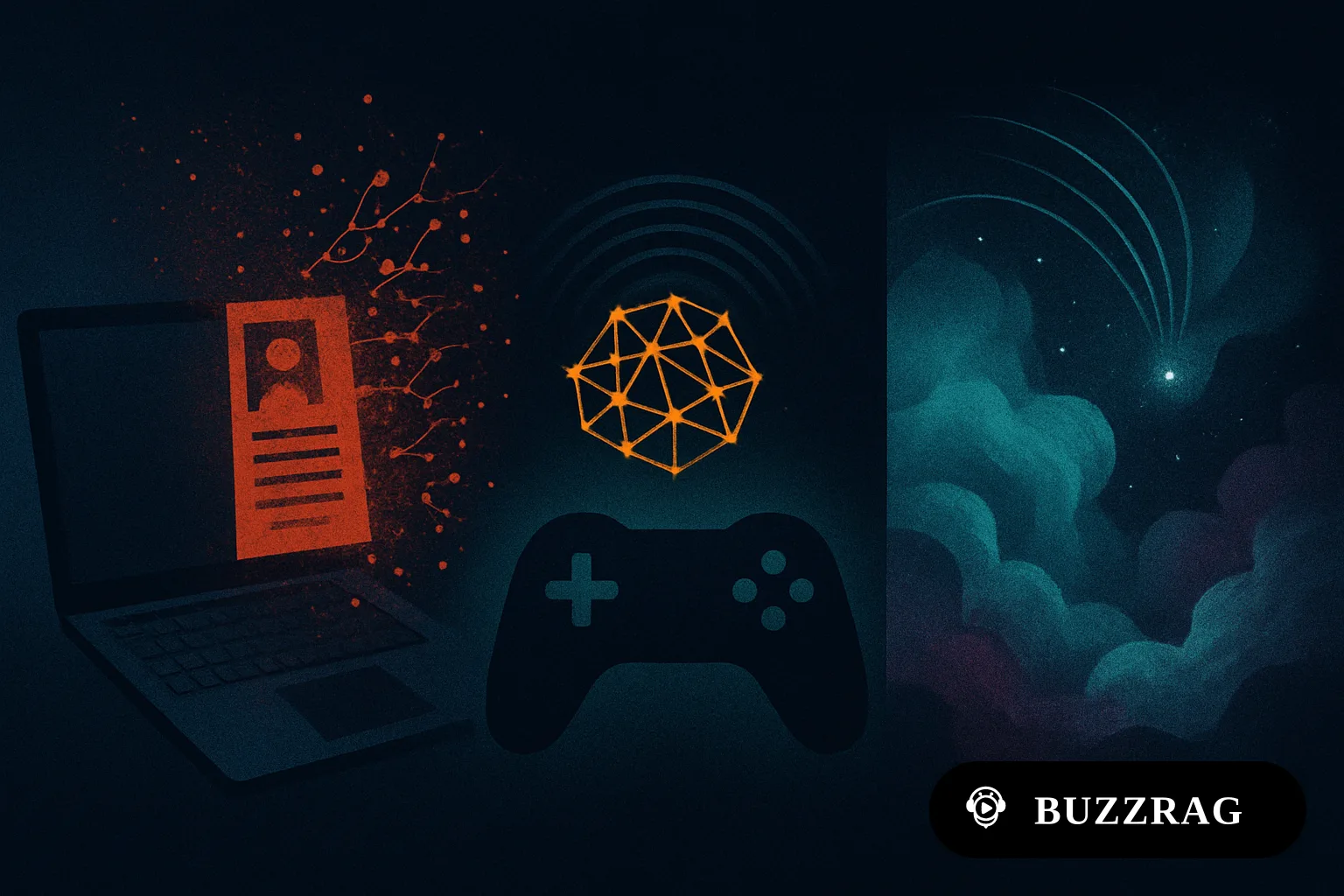
A campaign using fake recruiter messages and technical interview tasks reportedly infected about 30,000 devices across more than 100 countries, with thousands of cryptocurrency wallets compromised and more than $10 million transferred to North Korea. The targeting is notable because it exploits a familiar professional ritual: candidates are often expected to download unfamiliar code, run a test project and demonstrate speed under pressure.
This is social engineering adapted to the remote-work economy, not a wholly new hacking technique. What has changed is the scale and specificity of the lure, aimed at developers and IT professionals whose machines may contain credentials, wallet keys or access to corporate environments. Employers can reduce exposure by using isolated evaluation environments and by refusing to require executable files from personal devices; candidates should inspect repositories, verify recruiters through independent channels and run unknown code only in disposable sandboxes. The episode also shows why security training cannot treat recruitment as outside the threat model.
Shipping is not the same as finishing
“Grit your teeth and ship it” is a compact intervention in a familiar software debate: teams can spend indefinitely polishing systems, or they can release an imperfect version and learn from actual use. The argument resonates because modern development has made deployment easier while making product surfaces more interconnected; a small change can now affect APIs, automated agents, data pipelines and customers at once.
The precedent is the long-running tension between iterative delivery and engineering discipline. Shipping early can expose false assumptions and prevent months of speculative work, but urgency becomes dangerous when it is used to excuse weak rollback plans, opaque behavior or untested security boundaries. The useful version of this philosophy is not “quality does not matter”; it is that quality must be defined against the risk and reversibility of the release. As AI-generated code accelerates output, teams will need sharper judgment about which defects are tolerable experiments and which become someone else’s outage.
A small continual-learning experiment challenges the scale reflex
An open-source project called Mini-AGI claims to explore dynamic continual learning with a model trained from scratch on hardware equipped with 8GB of VRAM. Its significance is less about the grandiose “AGI” name than about the practical question underneath it: can a compact system update its behavior over time without retraining from scratch or relying entirely on a massive hosted model?
Continual learning has a substantial research history, including the problem of catastrophic forgetting, in which learning new tasks damages performance on earlier ones. A small implementation can make those trade-offs easier to inspect, but a repository-level demonstration is not evidence of general intelligence or robust autonomy. The useful tests will be reproducibility, benchmark design, memory behavior and performance on tasks outside the training loop. Still, projects like this matter because they broaden experimentation beyond frontier-scale budgets and may reveal engineering patterns for local, specialized agents that are cheaper to run and easier to audit.
The visa lottery is also a technology policy
Research highlighted by the American Economic Association examines how immigration restrictions affect firms and workers, framing visa access as an economic allocation problem rather than merely an administrative one. For technology companies, the issue reaches directly into hiring pipelines: the ability to recruit specialized workers can influence where teams are built, which projects are attempted and how quickly expertise spreads.
The “lottery” metaphor captures the uncertainty faced by employers and applicants, but it can obscure the broader policy design. Firms may respond to restrictions by shifting work abroad, investing more in automation or competing harder for a smaller pool of eligible workers; workers may face lower mobility or weaker bargaining power. None of those responses is automatic, and the effects vary by occupation and labor market, which is why evidence matters more than slogans. As AI changes the composition of technical work, policymakers will also have to decide whether immigration systems are complementing domestic skills development or treating global talent as a scarce exception.
An AI antitrust lawsuit tests the boundaries of coordination
A proposed class-action lawsuit alleges that several major AI developers illegally agreed to slow development, arguing that such coordination reduced the value of paid subscriptions. The claims are allegations, not findings, and the case will have to establish both what conduct occurred and whether it meets the legal tests for an antitrust violation.
The dispute nevertheless highlights an unusual tension in the AI market. Companies have incentives to compete on capability and release speed, but they also face shared concerns about safety, infrastructure costs, labor practices and liability. Cooperation on genuinely technical standards or risk controls is not automatically unlawful; the crucial questions are whether coordination substitutes for competition, affects prices or output, and has a defensible pro-competitive justification. Regulators and courts will be forced to distinguish safety governance from collusion while the industry’s most powerful firms increasingly operate in the same narrow set of markets.
The next signals to watch are practical rather than theatrical: whether agent frameworks earn trust in production, whether small learning systems can reproduce their claims, and whether security teams redesign hiring workflows around hostile inputs. Legal scrutiny will increasingly follow the architecture of AI markets, not just the behavior of individual models.