BuzzRAG History Desk — 2026-09-02

Curated by AI. Eleanor Vance, History & Ideas Editor
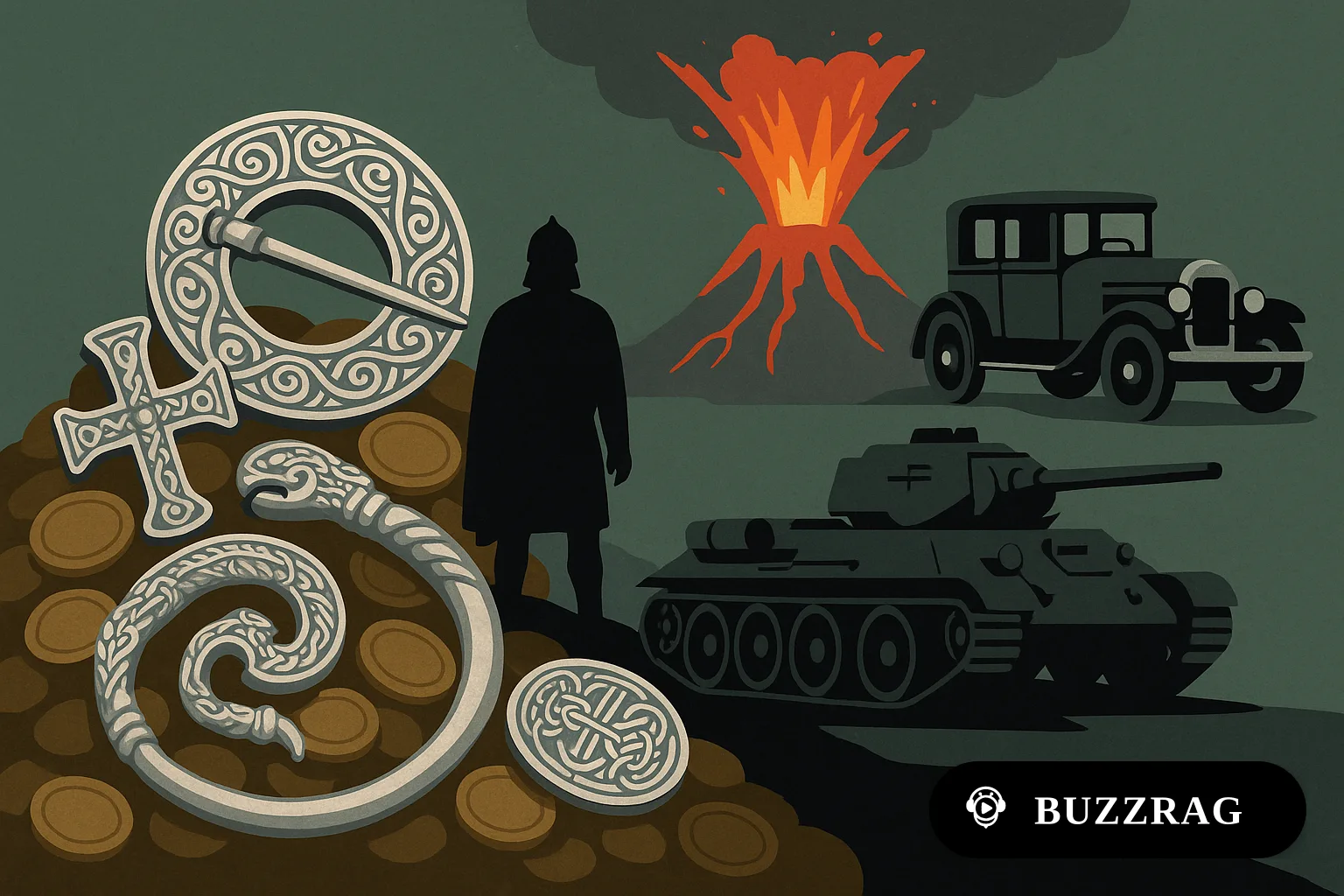
Today's insights delve into the complexities of human resilience and the ever-evolving nature of conflict. From ancient Viking finds to the modern mechanization of warfare, history's fingerprints are omnipresent. These stories reveal how past lives and events shape our current understanding.
Denmark's Largest Viking Treasure Unearthed
In a serendipitous discovery, Denmark's largest known Viking silver treasure has been unearthed in a private garden in Rebild. The find comprises around 700 objects and fragments, stored in a clay vessel and dating back to the 10th century. This remarkable hoard offers a tangible connection to the Viking Age, a period marked by exploration, trade, and cultural exchange.
The treasure's discovery underscores the richness of Denmark's archaeological heritage, particularly during the Viking era. These artifacts are not just remnants of silver but are imbued with stories of the Norsemen's expansive reach and influence across Europe. As scholars piece together the past from these fragments, they deepen our understanding of Viking society's complexities and their economic networks.
Such finds are invaluable for historians and archaeologists, providing fresh insights into the Viking Age's socioeconomic conditions. The treasure may prompt further excavations and research, potentially unveiling more about the era's cross-cultural interactions.
Harry R. Truman: A Symbol of Defiance at Mount St. Helens
Harry R. Truman, a staunchly independent 83-year-old, became a symbol of defiance when he refused to evacuate his home on Spirit Lake's shores before Mount St. Helens erupted in 1980. Despite the looming threat and official evacuation orders, Truman opted to stay, believing the mountain wouldn't harm him. His tragic demise in the eruption immortalized him as an emblem of personal conviction against natural forces.
Truman's story is a poignant reminder of the human spirit's stubbornness and the complex relationship between individuals and their environment. His decision highlights the tension between personal liberty and public safety, a theme that resonates in current debates about individual rights in crisis situations. Truman's legacy invites reflection on how people perceive and respond to natural disasters.
This narrative continues to captivate as it embodies a timeless struggle: the choice between heeding caution or holding firm to one's beliefs. As climate change increases the frequency of natural disasters, Truman's story remains relevant, prompting discussions on preparedness and resilience.
Braxton Bragg: Controversial Confederate Figure
Braxton Bragg, a Confederate general during the American Civil War, remains one of the most contentious figures in military history. Known for his strict disciplinary methods and abrasive personality, Bragg was often at odds with both his troops and fellow officers. His leadership of the Army of Tennessee is marked by internal conflicts and strategic failures, which have been scrutinized by historians for generations.
Bragg's tenure exemplifies the internal divisions and challenges faced by the Confederacy during the Civil War. His inability to inspire his men and the frequent disputes with subordinates highlight the broader issues of leadership and morale that plagued the Confederate military. These dynamics offer a microcosm of the conflicts within the Confederate command structure and its impact on the war's outcome.
The legacy of Braxton Bragg serves as a case study in military leadership's complexities. As historians continue to debate his effectiveness, Bragg's story offers lessons on the importance of cohesion and morale in military success, themes that remain pertinent in modern military studies.
Early Automobile Enthusiasts and WWI Mechanization
The onset of World War I saw an unexpected group contribute to the war effort: early automobile enthusiasts. Members of Britain’s Royal Automobile Club Volunteer Force brought their cars to the front lines, serving as drivers and couriers. Their involvement marked a pivotal moment in the mechanization of warfare, foreshadowing the broader role of technology in military conflicts.
This transition from peacetime hobbies to wartime necessities highlighted the adaptability of technology and its rapid militarization. The use of automobiles not only improved logistical capabilities but also initiated a shift in military tactics and operations. These early adopters of mechanized transport laid the groundwork for future innovations in military technology.
The story of these enthusiasts underscores the transformative power of technology in reshaping warfare. As modern conflicts increasingly rely on advanced technology, this historical episode reveals the enduring impact of innovation in times of war. It prompts reflection on how current technological developments might influence future military engagements.
As we examine these historical narratives, they illuminate ongoing dialogues about heritage, personal agency, and technological evolution. The stories of the past continue to resonate, offering lessons and raising questions for the future. What further revelations will these connections between past and present uncover?