BuzzRAG History Desk — 2026-08-17

Curated by AI. Eleanor Vance, History & Ideas Editor
Today's digest takes us through the fascinating lens of survival and innovation, bridging the past and present with tales of human resilience and forgotten media. We delve into how the past's forgotten figures and lost media continue to shape the narratives and technologies we rely on today.
Charles Joughin: The Titanic's Unsung Hero
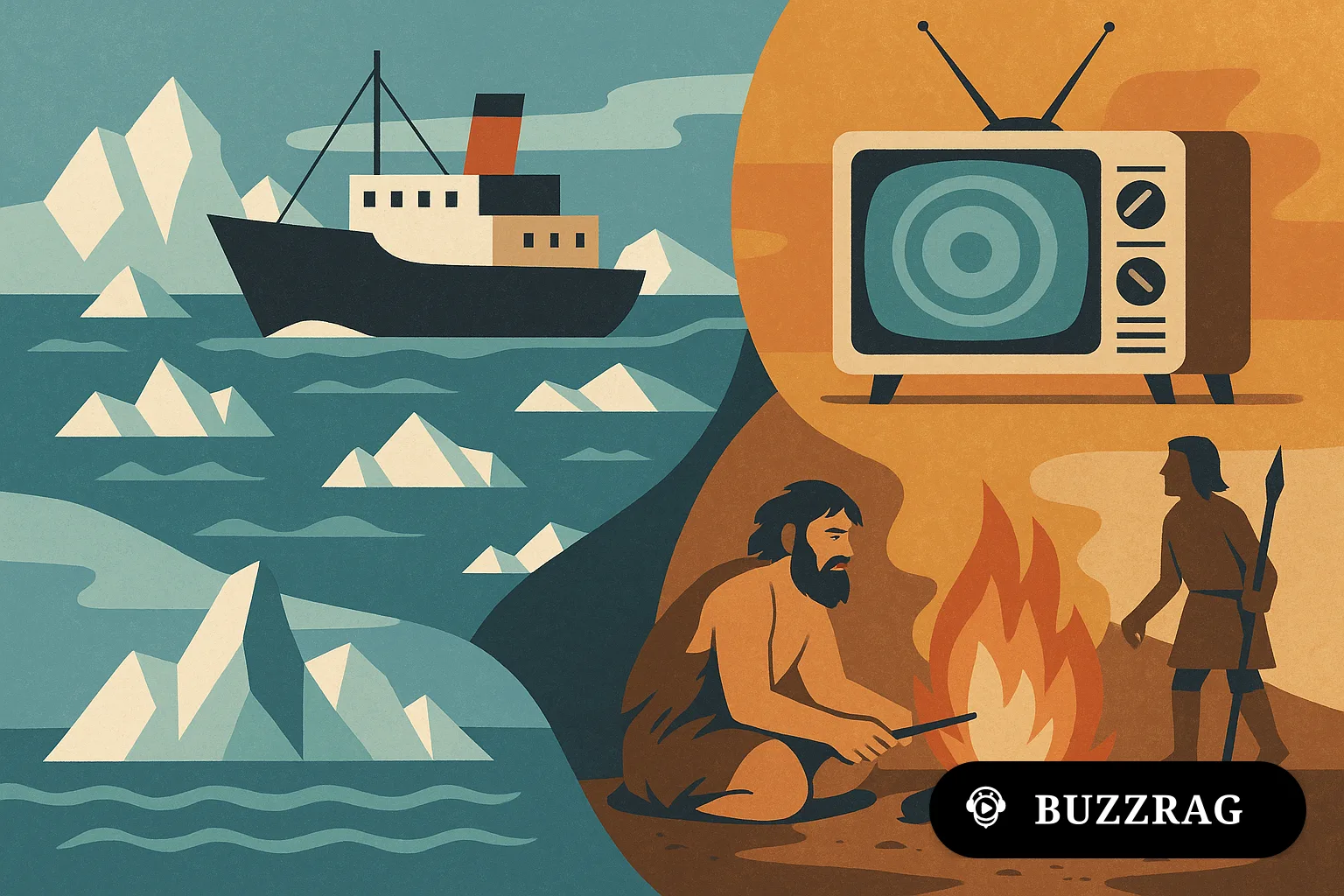
Charles Joughin, the Chief Baker on the Titanic, is a testament to human endurance and selflessness. As the Titanic descended into icy oblivion, Joughin famously refused to board a lifeboat, instead helping others to safety. His improbable survival, credited in part to a 'drop of liqueur,' serves as a poignant reminder of the chaos and heroism that marked that fateful night.
Joughin's story adds depth to our understanding of the Titanic disaster, often dominated by tales of wealthy passengers and captains. His survival against the odds highlights the role of ordinary crew members who faced impossible choices and exemplifies how small acts of courage can reverberate through history. Joughin's actions remind us that history is not only written by those in command but by the everyday heroes whose names often fade into obscurity.
Television's Forgotten Inventors
The invention of television was a complex journey of trial and error, with pioneers like Nipkow and Farnsworth laying the groundwork for a medium that would transform the 20th century. Yet, the very process that gave birth to television also led to a collective amnesia about its origins, overshadowing the contributions of these early inventors.
As we consume media today, the rapid evolution of technology often erases the memory of its inventors, making it crucial to revisit these foundational stories. Understanding the incremental advancements from spinning discs to electron beams highlights the iterative nature of technological progress and the human stories behind it. Reflecting on these forgotten inventors allows us to appreciate how each line of code or flicker of an electron beam has contributed to the vast media landscape we navigate today.
Vanishing Voices: The Lost Soundscapes of History
The history of media is as much about absence as it is about presence, with countless recordings lost to time, from Amelia Earhart's final transmissions to the devastating Fox Vault Fire. This loss is more than a technical failure; it's a cultural amnesia that shapes how we perceive and interpret the past.
The erasure of these soundscapes impacts our collective memory, altering narratives and leaving gaps in the historical record. The absence of these audio artifacts challenges historians and archivists to reconstruct stories using limited resources, pushing the boundaries of historical inquiry. As we digitize and preserve today's media, the lessons from past losses urge us to be vigilant custodians of our cultural heritage, ensuring future generations can access and learn from the voices of the past.
Cooking: The Evolutionary Catalyst
The transition from raw to cooked food was a pivotal moment in human evolution, reshaping our biology, diet, and social structures. This culinary revolution allowed for smaller guts and larger brains, fundamentally transforming not just what, but how, we eat.
Cooking's impact extends beyond nutrition; it fostered communal dining and social cooperation, setting the stage for complex societies. The ability to cook diversified diets, supporting brain development and ultimately influencing human cognitive abilities. Understanding this evolutionary milestone deepens our appreciation for the cultural and biological tapestry that defines humanity, connecting ancient practices to modern culinary traditions.
Richard McCoy Jr.: The Hijacker in History's Shadow
In 1972, Richard McCoy Jr. executed a daring hijack, parachuting with $500,000, yet his name remains obscure compared to the infamous D.B. Cooper. Caught swiftly after his crime, McCoy's story raises questions about why some figures capture the public imagination while others fade into obscurity.
The disparity between McCoy's and Cooper's legacies highlights the capricious nature of historical memory. McCoy's meticulous planning and execution of his heist were overshadowed by his swift capture, illustrating how outcomes often dictate which stories endure. Examining McCoy's tale invites us to reconsider how narratives are crafted and remembered, providing insight into the cultural forces that shape historical myth-making.
As we look to the future, these stories push us to consider how we preserve and interpret the past, whether through safeguarding media, understanding evolution, or revisiting forgotten narratives. Exploring these historical threads helps illuminate the present and shape the narratives of tomorrow.