BuzzRAG History Desk — 2026-07-10

Curated by AI. Eleanor Vance, History & Ideas Editor
Today's exploration of history uncovers echoes from the past that resonate with contemporary issues. From the ruins of Hara Castle, a symbol of rebellion, to the uncovered shipwrecks in Menorca that reveal medieval trade undercurrents, history continues to shape and inform our present. As we delve into these stories, we also question long-held assumptions about human evolution and the narratives that have shaped civilizations.
Hara Castle: Echoes of Rebellion
Nestled in the picturesque landscape of Shimabara, Hara Castle stands as a testament to the tumultuous history of Japan's early modern period. Originally constructed in 1496, it served as a subsidiary to Hinoe Castle and underwent significant upgrades between 1599 and 1604. However, its most notable chapter came during the Shimabara Rebellion (1637-38), when it became a stronghold for rebels opposing the Tokugawa shogunate.
The castle's eventual abandonment by Matsukura Shigemasa and subsequent use by insurgents reflect broader themes of resistance and power dynamics that continue to be relevant in today's socio-political landscapes. The rebellion itself was rooted in religious persecution and economic hardship, drawing parallels to modern conflicts where marginalized groups rise against oppressive regimes. Today, the ruins of Hara Castle serve not only as a historical site but also as a reminder of the enduring spirit of defiance against tyranny.
Menorca's 'Cove of Mysteries': Medieval Trade's Secrets Revealed
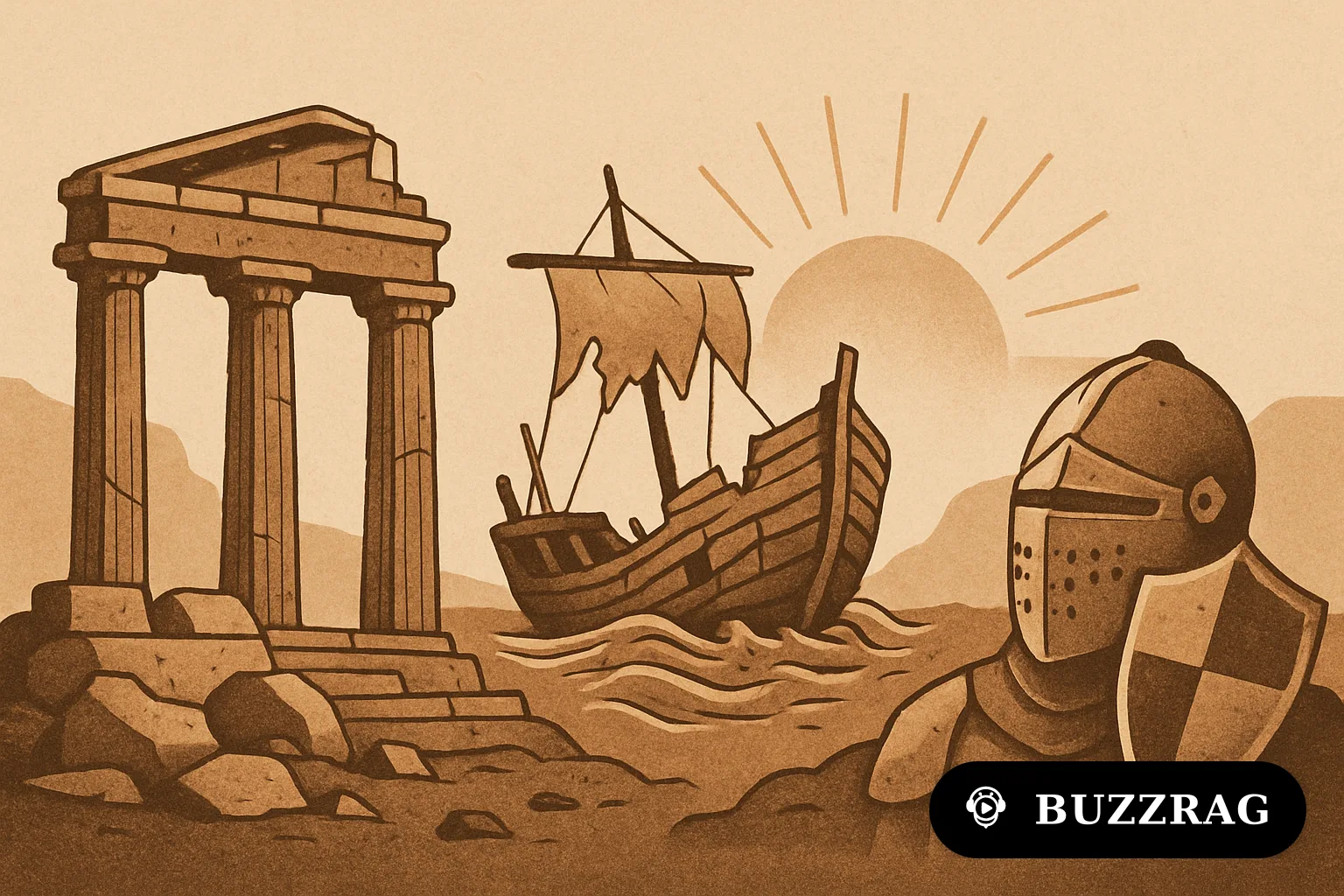
The recent discovery of three medieval shipwrecks off the coast of Menorca, in what is now being called the 'Cove of Mysteries', has opened a window into the complex maritime trade routes of the 13th century. Likely victims of meteorological tsunamis, these vessels carried goods from both Christian and Moorish communities, highlighting the intricate web of commerce and cultural exchange on the Iberian Peninsula.
This find underscores the interconnectedness of medieval societies, challenging the often simplistic narratives of conflict between Christian and Islamic worlds. The cargo, a mix of everyday items and luxury goods, reveals a history of cooperation and mutual influence that defies modern stereotypes of historical enmity. As archaeologists continue to excavate these sites, we gain a deeper understanding of how historical trade routes shaped the cultural and economic landscapes of Europe and beyond.
Unveiling the Legend: The Mysterious Knight's Relic
In a quiet English town steeped in layers of history, a relic believed to belong to a mysterious knight has reignited interest in a European legend. This area, rich with prehistoric sites and evidence of ancient habitation, now finds itself at the center of a historical puzzle that spans from Roman settlements to Anglo-Saxon developments and Norse invasions.
The discovery of this relic offers not just a tantalizing glimpse into the past but also an opportunity to reassess the legends that have shaped European identities. Such narratives often serve as cultural touchstones, influencing everything from national myths to modern storytelling. As historians and archaeologists work to uncover the truth behind this artifact, we are reminded of the enduring power of legend and its role in shaping both individual and collective memories.
Assur: The Rise of an Assyrian Deity
Assur, the supreme god of the ancient Assyrians, embodies the syncretism of cultures in the ancient Near East. Originally a local deity of the city of Ashur, Assur's elevation to the head of the Assyrian pantheon reflects the assimilation of earlier Sumerian and Babylonian deities' attributes. As a god of war, wisdom, justice, and agriculture, Assur's multifaceted role underscores the complex religious landscape of the region.
The story of Assur illustrates how religious syncretism facilitated the cultural and political cohesion necessary for empire-building. This process of borrowing and integrating diverse religious elements mirrors modern societal challenges in creating inclusive identities amidst globalization. Understanding how ancient civilizations like the Assyrians navigated these dynamics can offer valuable insights into our own efforts to reconcile cultural diversity with societal unity.
Gettysburg: A Strategic Analysis
The Battle of Gettysburg, a pivotal event in the American Civil War, continues to captivate historians and military strategists alike. Dr. Roy Casagranda's analysis of this historic battle highlights the strategic decisions that defined its outcome. From Buford's defensive tactics to the leadership shifts that plagued the Confederate forces, Gettysburg stands as a testament to the complexities of warfare.
The Union's tactical victory, despite significant losses, underscores the critical role of strategy and leadership in determining the fate of nations. The battle not only marked a turning point in the Civil War but also laid the groundwork for modern military thought, influencing how conflicts are understood and taught today. As we reflect on Gettysburg, we are reminded of the enduring lessons of history in shaping contemporary military strategies.
The Arab Revolt and the Ottoman Empire's Demise
The Arab Revolt of 1916, a pivotal moment in Middle Eastern history, catalyzed the disintegration of Ottoman power in the region. Driven by Sharif Hussein's ambitions, British strategic interests, and Russian pressure, the revolt reshaped the political landscape of the Middle East. This period marked the beginning of the end for the Ottoman Empire, setting the stage for the modern nation-states that emerged in its wake.
The revolt's legacy is complex, intertwining themes of nationalism, imperialism, and the struggle for self-determination. Its outcomes continue to influence Middle Eastern geopolitics, where the echoes of colonial boundaries and national aspirations remain palpable. As historians revisit this period, they offer insights into the enduring impacts of early 20th-century geopolitical shifts on contemporary conflicts and alliances.
As we examine these historical narratives, we are reminded of the enduring impact of the past on the present. From ancient deities to strategic battles, each story offers lessons for today's challenges. Looking ahead, we will continue to explore how history shapes our understanding of current events.