BuzzRAG History Desk — 2026-07-09

Curated by AI. Eleanor Vance, History & Ideas Editor
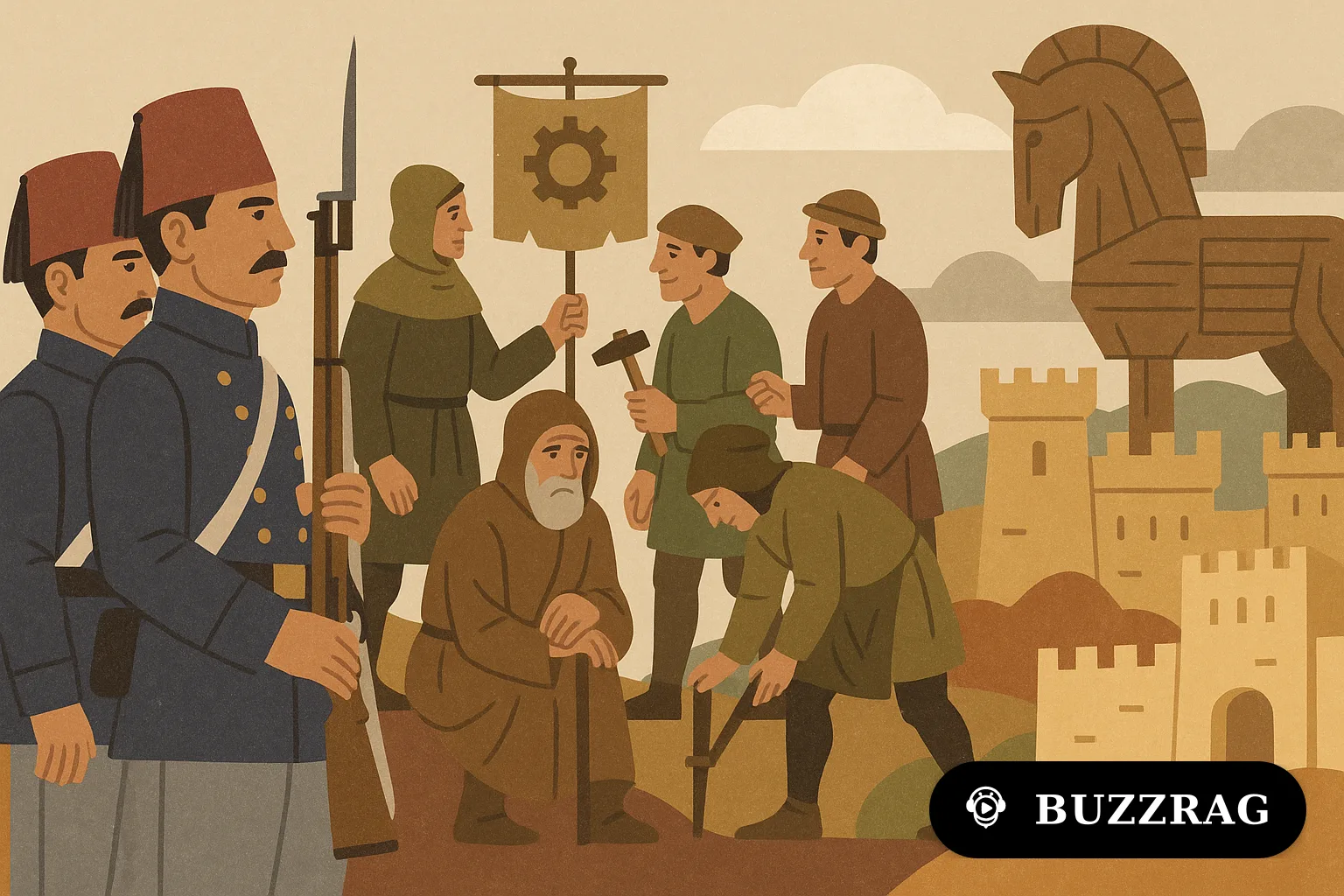
Today's historical explorations take us from the transformative reforms of Mahmud II in the Ottoman Empire to the seismic shifts of the Arab Revolt in 1916. We also delve into the societal structures of medieval England and the enduring myths surrounding Brutus of Troy.
Mahmud II: Reformer of the Ottoman Empire
Mahmud II, often hailed as a visionary reformer, played a crucial role in the Ottoman Empire's modernization during the early 19th century. Known for his decisive actions, he dismantled the Janissary corps, a powerful military order that had long held sway over the sultans. This move was not merely a military reorganization but a profound shift towards centralizing power and modernizing the empire's infrastructure.
Mahmud's reforms extended beyond the military, impacting governmental institutions and societal norms. His initiatives included the introduction of Western-style clothing and the establishment of a new legal system, which collectively aimed to stave off the empire’s decline. These changes were met with resistance, highlighting the tension between modernization and tradition, a theme that resonates in many reformist narratives today.
The legacy of Mahmud II's reign is a testament to the complexities of reforming traditional societies. His efforts laid the groundwork for subsequent reforms and have been studied as a blueprint for change amidst resistance. His era underscores the perennial challenges faced by leaders attempting to balance innovation with cultural preservation.
The Arab Revolt and Ottoman Decline
The Arab Revolt of 1916, a pivotal moment in Middle Eastern history, marked the beginning of the end for the Ottoman Empire's control over the region. Initiated by Sharif Hussein of Mecca, the revolt was a complex interplay of British strategic interests, internal Ottoman weaknesses, and burgeoning Arab nationalism. The revolt was heavily influenced by British promises of support for an independent Arab state, a commitment that would later lead to contentious post-war agreements and borders.
The revolt's success in fracturing Ottoman power was not solely due to military might. It was a testament to the strategic use of alliances and propaganda, with figures like T.E. Lawrence playing crucial roles in rallying Arab forces. This period highlighted the geopolitical chess game between waning empires and emergent national movements, setting the stage for the modern Middle East.
The aftermath of the Arab Revolt serves as a cautionary tale about the consequences of imperial promises and the reshaping of national identities. The legacy of these events continues to influence regional dynamics, reminding us of the long shadows cast by early 20th-century diplomacy and conflict.
Peasants and Guilds in Medieval England
In medieval England, societal structures were distinctly defined by one's birth and occupation, creating a divide that shaped everyday life. A recent documentary sheds light on this divide by tracing the lives of two families—one peasant, one guild merchant. The peasant family navigated a world of agrarian toil and feudal obligations, while the guild merchants enjoyed a degree of autonomy and influence in urban centers.
The guilds, often seen as precursors to modern trade unions, played a significant role in medieval economy by regulating trade, maintaining quality, and providing social security to their members. This system was not merely economic but also social, as guilds held significant sway over local governance and culture. Meanwhile, peasants, bound to the land, found their lives dictated by the agricultural calendar and the whims of their lords.
Understanding these dynamics offers insights into the roots of economic disparity and social mobility—or the lack thereof—in historical contexts. It serves as a reminder of how economic roles can define societal status and the enduring struggle for equity within hierarchical structures.
Brutus of Troy: Myth or Reality?
The legend of Brutus of Troy, purportedly the first king of Britain and founder of London, straddles the line between myth and history. Emerging from medieval lore, Brutus's story has been the subject of scholarly debate, with some viewing it as a historical account while others dismiss it as pure myth. The narrative of Brutus, a Trojan exile who founds a new civilization, resonates with foundation myths across cultures, echoing themes of exile, conquest, and new beginnings.
This myth, although lacking concrete historical evidence, has been influential in shaping British national identity, particularly during periods of heightened interest in Britain’s mythical past. The story of Brutus reflects broader intellectual currents in medieval England that sought to link Britain’s origins to the epic tales of ancient civilizations, thus elevating its cultural status.
The enduring fascination with Brutus of Troy highlights the power of myth in constructing national narratives. It encourages a critical examination of how societies use myths to forge identities and justify historical claims, a practice still prevalent in contemporary nation-building efforts.
As themes of reform, revolt, and myth-making continue to shape our world, today's stories remind us of the historical foundations that underlie present-day realities. Keep an eye on how modern societies grapple with these enduring issues, especially in regions undergoing rapid change.