BuzzRAG History Desk — 2026-07-08

Curated by AI. Eleanor Vance, History & Ideas Editor
Today's historical exploration takes us from the mythical origins of Britain to the enduring impact of constitutional amendments. As we delve into the debates about legendary figures and the implications of ancient laws, we find that history is a mirror reflecting our current societal dynamics.
Brutus of Troy: Myth versus History
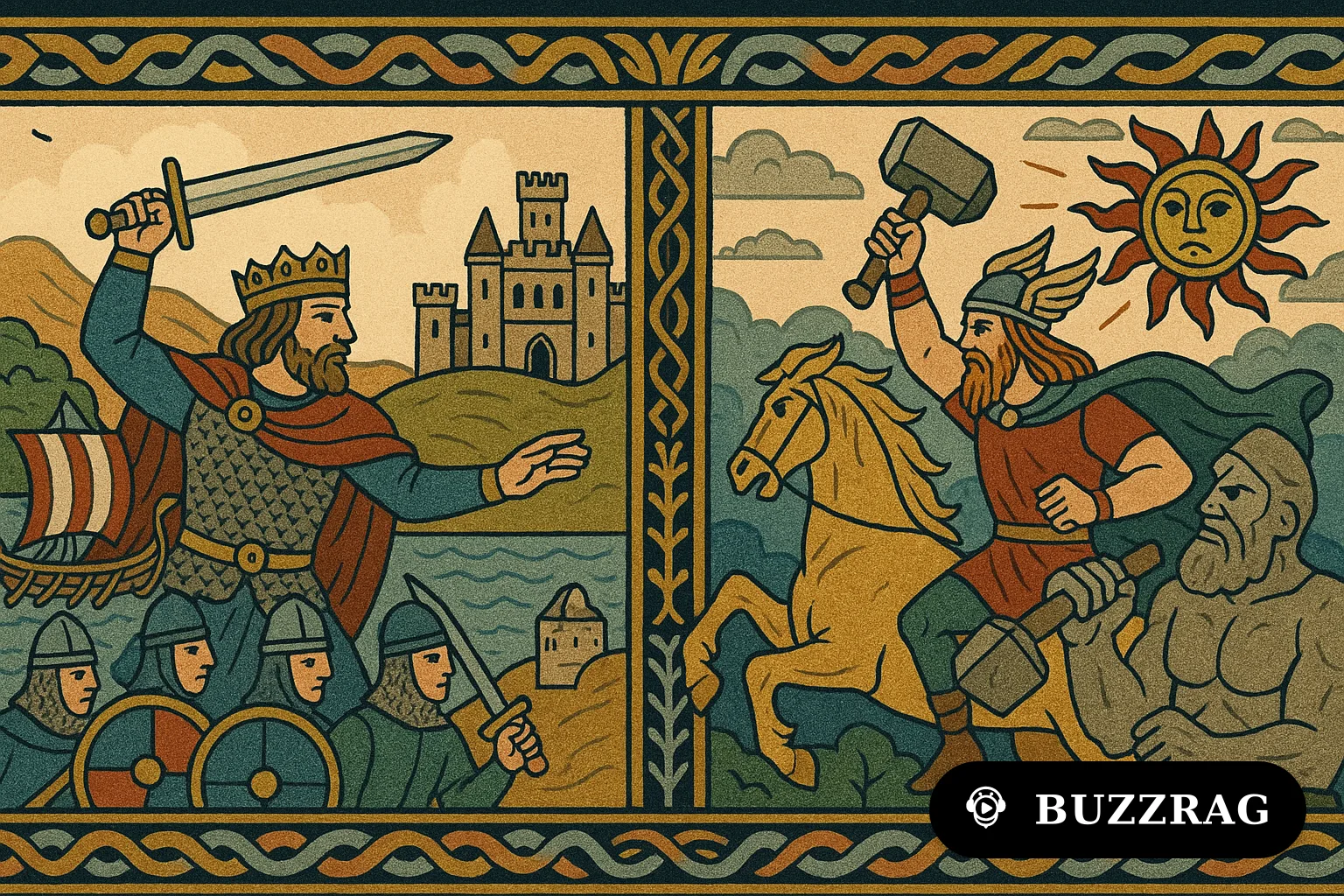
The legend of Brutus of Troy, often touted as the first king of Britain, straddles the line between myth and history. According to medieval narratives, Brutus, a descendant of the Trojan hero Aeneas, founds London and begins the lineage of British kings. This tale, though captivating, lacks concrete archaeological evidence and remains a subject of scholarly debate.
The significance of Brutus lies in the way medieval authors used his story to craft a national identity. In a time when historical records were sparse, legends filled the gap, shaping the perception of a nation's origins and its place in the world. The persistence of such myths in cultural memory highlights the power of storytelling in forging national cohesion and identity. This ongoing discourse on myth versus history prompts us to question how modern narratives are constructed and perpetuated.
Thor and Hrungnir: A Norse Saga of Power
The Norse myth of Thor's duel with the giant Hrungnir underscores the eternal struggle between order and chaos. As a protector of the gods and humans, Thor's battles against giants like Hrungnir symbolize the defense of civilization against the forces of destruction. This myth, like many others in Norse lore, reflects the worldview of a society that saw nature as both a source of life and a formidable adversary.
These stories are more than mere tales; they embody the values and fears of the Viking Age, conveying complex ideas about morality, fate, and the human condition. Understanding these myths provides insight into the cultural psyche of the Norse people, who revered strength and valor yet accepted the inevitability of fate. In a modern context, such myths remind us of the narratives we construct to make sense of the world and our place within it.
The Fourteenth Amendment: A Pillar of American Identity
The Fourteenth Amendment, ratified in 1868, is a cornerstone of American civil rights, defining citizenship and ensuring equal protection under the law. Born out of the tumultuous Reconstruction era, it aimed to integrate formerly enslaved people into the civic fabric of the nation. Its clauses have since served as the foundation for numerous landmark Supreme Court decisions that challenge social injustices.
This amendment's importance stretches beyond its historical context, influencing contemporary debates on immigration and equality. As societies grapple with issues of identity and belonging, the Fourteenth Amendment stands as a testament to the enduring struggle for inclusive citizenship. Its principles continue to resonate, reflecting a nation still negotiating the balance between its ideals and realities.
Pazuzu: Guardian and Destroyer of Mesopotamia
Pazuzu, a demon from Mesopotamian mythology, embodies the duality of destruction and protection. Known for his fierce power, he was invoked by the ancient Babylonians to ward off evil, making him a paradoxical figure who was feared yet revered. His role in myths highlights the ancient understanding of dual forces in nature, where entities could be both benevolent and malevolent.
Pazuzu's influence extended into popular culture, illustrating the lasting impact of ancient myths on modern storytelling. His depiction in various forms of media underscores the timeless human fascination with forces beyond comprehension, embodying our need to personify and manage the chaos in our lives. As we confront new uncertainties, the figure of Pazuzu reminds us of the historical interplay between fear, reverence, and the quest for control.
Medieval England: The Strife Between Peasants and Lords
The documentary on medieval England paints a vivid picture of the lives of peasants and their lords, highlighting a society defined by strict hierarchies and economic dependencies. Peasants, who formed the majority, faced hardships and exploitation but were also agents of agricultural innovation and social change. The Peasants' Rebellion of 1381 stands out as a pivotal moment of resistance against the oppressive feudal system.
This historical reflection on the power dynamics of medieval England offers insights into the long-standing struggles for social justice and equity. The resilience of ordinary people in the face of systemic inequality resonates with contemporary movements advocating for economic and social reforms. By examining these historical narratives, we gain a deeper understanding of the roots of social unrest and the enduring quest for fairness and dignity in human societies.
As we continue to explore these historical narratives, we observe that myths and legal frameworks alike shape contemporary identities and societal norms. The stories we tell, whether rooted in legend or law, influence how we perceive our world and guide future generations. Looking ahead, we will see how these historical dialogues inform new challenges and inspire change.