BuzzRAG History Desk — 2026-07-07

Curated by AI. Eleanor Vance, History & Ideas Editor
Today's trending stories transport us from the sands of ancient Egypt to the sweatshops of early 20th-century Britain. We explore the enduring influence of powerful historical figures and ideas, examining how these narratives continue to shape our world.
Untouched Tombs Reveal Secrets of Ancient Egypt
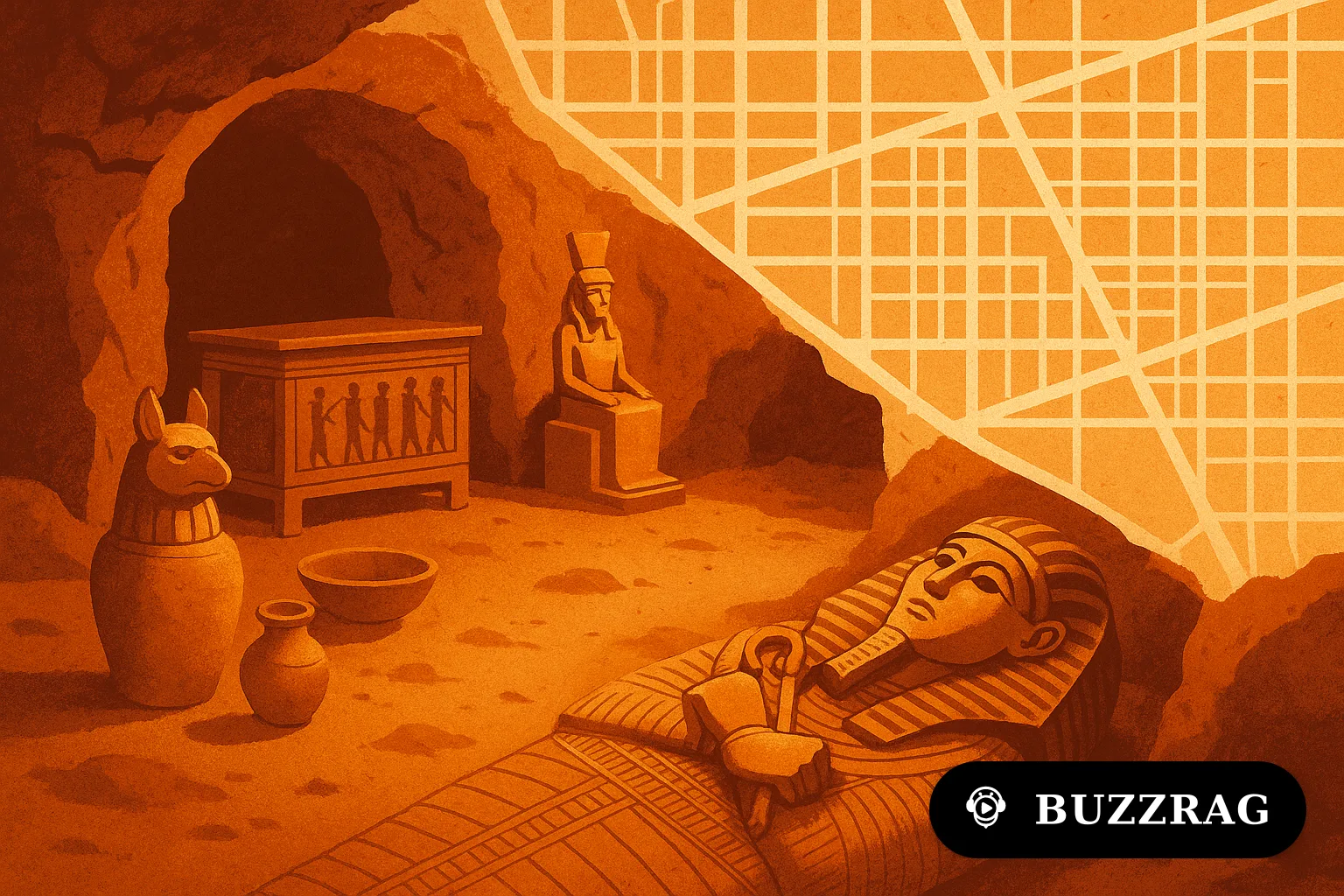
In a remarkable archaeological find, 18 sealed tombs have been unearthed at Marina El Alamein in Egypt. These tombs, untouched since antiquity, contain sarcophagi, surface burials, and a collection of artifacts that shed light on the cultural and historical significance of one of Egypt's key coastal cities. The discovery offers a fresh window into the lives of ancient Egyptians and their burial practices.
Marina El Alamein, a site rich with history, has long been a focal point for understanding Egypt's past interactions with the Mediterranean world. The latest findings underscore the city's importance, revealing new facets of its role in ancient trade and cultural exchange. Such discoveries continue to challenge and enrich our understanding of ancient Egyptian civilization, offering a more nuanced view of its complexity and reach.
This discovery has sparked interest among historians and archaeologists alike, as these untouched tombs provide invaluable data for ongoing research. The artifacts and burial customs observed here could redefine existing historical narratives about the region, prompting further exploration and study.
The Munitionettes: Women Behind the War Effort
The story of the Munitionettes, women who worked in munitions factories during World War I, highlights a crucial yet often overlooked aspect of history. Known as 'canaries' for their yellow-stained skin, a result of handling toxic chemicals, these women played a vital role in supporting the war effort while enduring hazardous conditions. Their contributions were foundational to both the war and the early movement towards gender equality in the workplace.
The Munitionettes' story is emblematic of a broader narrative about the industrial contributions of women during times of conflict. It underscores the shift in societal roles during World War I, as women took on jobs traditionally held by men. This shift not only supported the war effort but also laid the groundwork for future advancements in women's rights and labor conditions.
As we reflect on these historical narratives, the Munitionettes serve as a reminder of the resilience and adaptability of ordinary people in extraordinary circumstances. Their legacy continues to inspire discussions on gender roles and workplace equality, proving that their impact extends far beyond their immediate contributions.
Nergal: Mesopotamia's God of War and Destruction
Nergal, the Mesopotamian god of death, war, and destruction, stands as a formidable figure in ancient mythology. Originating from the Babylonian city of Kutha around 2900 BCE, Nergal's cult persisted through the Neo-Babylonian period, reflecting his enduring significance in Mesopotamian culture. His temple, E-meslam, was a testament to his feared yet respected role in the pantheon of gods.
Nergal's narrative offers profound insights into the values and fears of ancient Mesopotamian societies. As a deity associated with both agriculture and destruction, he embodied the dual nature of life and death, a concept central to understanding ancient worldviews. The stories of Nergal highlight the societal importance of war and mortality, themes that continue to resonate in contemporary discussions about the human condition.
The enduring legacy of Nergal and other mythological figures prompts us to consider how ancient beliefs shape modern cultural and social structures. By examining these myths, we gain a deeper appreciation for the continuity and change in human thought across millennia.
Fionn mac Cumhail: The Hero of Irish Legend
Fionn mac Cumhail, a legendary figure of Irish folklore, commands a storied place in history as the leader of the Fianna, a band of elite warriors. Celebrated for his wisdom and bravery, Fionn's tales are woven into the fabric of Ireland's cultural heritage, dating back to the 3rd century AD during the reign of High King Cormac mac Airt. These legends, passed down through generations, continue to captivate audiences with their blend of myth and history.
The narrative of Fionn and his Fianna encapsulates the themes of heroism and leadership that are central to many cultural myths. His exploits, often involving supernatural elements and moral lessons, reflect the societal values and historical experiences of ancient Ireland. These stories serve as a lens through which we can explore the intersection of history, myth, and identity.
Today, Fionn mac Cumhail's legend remains influential in both popular culture and academic study. His stories offer valuable insights into the ways myths shape national identity and inform cultural memory, reminding us of the power of storytelling in preserving and interpreting history.
Philadelphia's Enduring Quaker Grid
William Penn's 1682 grid plan for Philadelphia stands as a testament to the enduring influence of urban design. Conceived by a Quaker with aspirations for a 'Greene Country Towne,' Penn's vision has shaped the city's development for centuries. This grid, characterized by its rectilinear streets and public squares, reflects the Quaker values of order and community, principles that have continued to influence urban planning.
Throughout its history, Philadelphia has seen numerous transformations, yet Penn's original grid has persisted as a foundational element. This resilience speaks to the powerful impact of early urban planning on modern cityscapes. The grid has facilitated growth and adaptation, allowing Philadelphia to evolve while maintaining its historical character.
Understanding the legacy of Penn's grid helps us appreciate the complexities of urban planning and its social implications. As cities continue to expand and modernize, the balance between historical preservation and innovation remains a critical consideration, with Philadelphia offering a model of how these forces can coexist.
The Mathematical Revelation of the Square Root of 2
The discovery of the square root of 2 profoundly shook the foundations of ancient Greek mathematics. For the Pythagoreans, who believed in the supremacy of whole numbers, the existence of irrational numbers was a disruptive revelation. This realization, reportedly leading to the death of its discoverer, highlighted the limitations of their mathematical worldview.
The story of the square root of 2 illustrates the transformative power of mathematical inquiry. It challenged established beliefs and paved the way for more complex mathematical theories, underscoring the importance of questioning assumptions in the pursuit of knowledge. The Pythagorean crisis serves as a vivid reminder of the dynamic nature of intellectual progress.
Today, the legacy of this mathematical breakthrough continues to influence modern mathematics and philosophy. By examining such pivotal moments in intellectual history, we gain insight into how new ideas emerge and reshape our understanding of the world, reminding us of the ongoing dialogue between past and present.
As we consider these diverse historical narratives, it becomes clear that the past remains a powerful force in shaping our present and future. The stories of ancient tombs, legendary heroes, and transformative ideas urge us to continue exploring and understanding the profound connections between history and contemporary life.