Fixing AI Agent Hallucinations at the Architecture Level
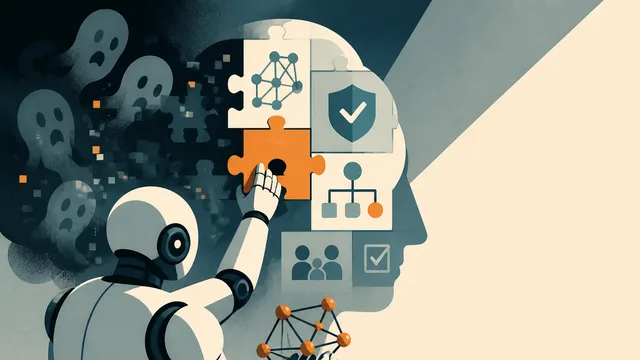
AWS developer advocate Elizabeth Fuentes demos 5 structural techniques to stop AI agent hallucinations—and raises real questions about open-source governance and vendor lock-in.
What's Breaking Through
Emerging security vulnerabilities and attack vectors targeting AI systems, APIs, and infrastructure.
51 articles in this topic
About this topic
As artificial intelligence systems become increasingly integrated into business operations and critical infrastructure, they've simultaneously become prime targets for sophisticated attacks. The cluster of emerging threats reveals a concerning gap between the rapid deployment of AI technologies and the security measures protecting them. Hackers are exploiting multiple vectors—from stealing API credentials to compromising the underlying models themselves—while organizations struggle to keep pace with the evolving threat landscape.
One of the most immediate concerns centers on API security and credential theft. As companies integrate large language models and AI services into their applications, they necessarily expose API keys and authentication tokens. Attackers have developed techniques to extract these credentials, a practice sometimes called API key jacking, which grants them unauthorized access to expensive AI services and sensitive data. This threat has become sufficiently prevalent that security researchers are now tracking it as a distinct attack category. The financial and reputational damage can be substantial, particularly when stolen credentials enable attackers to exfiltrate data or run up significant cloud computing bills.
Beyond direct theft, the broader attack surface surrounding AI systems has expanded dramatically. Vulnerability scanners designed specifically for AI applications are emerging, though their effectiveness remains uncertain. While vendors tout these tools as essential defenses, security professionals continue debating whether they deliver meaningful protection or primarily generate hype. The challenge is compounded by the speed at which AI systems are deployed—companies often prioritize rapid innovation over thorough security testing, creating windows of vulnerability that attackers can exploit. Legal pressures, including lawsuits against AI companies over security practices and dataset licensing, are beginning to force the industry toward more rigorous security standards, but the pace of enforcement lags behind the pace of innovation.

BuzzRAG Coverage
AWS developer advocate Elizabeth Fuentes demos 5 structural techniques to stop AI agent hallucinations—and raises real questions about open-source governance and vendor lock-in.
AI finds more vulnerabilities than ever—but without organizational context, it still can't tell you which ones actually matter. Here's what that gap costs.
LangChain's dcode pairs with NVIDIA's Nemotron 3 Ultra for enterprise agent engineering—but the real tension is who controls the observability layer.
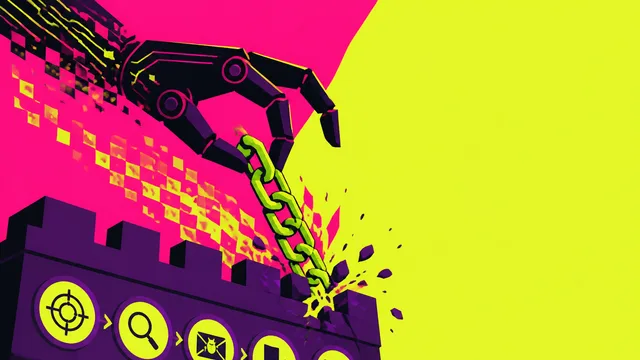
Nebulock CEO Damien Lewke maps how AI has automated the cyber kill chain—and what defenders must do before the window to act closes.
Prompt injection attacks on AI agents follow a structured kill chain — and existing legal frameworks have almost nothing to say about who's liable when it works.
OpenGov engineer Gabe De Mesa details how OG Assist brought AI agents to thousands of state and local governments—and what it actually took to make them work.
Claude Fable 5 promises to handle whole jobs autonomously. Before you hand it your CRM export, ask who controls what it learns about you.
Anthropic's Claude Tag introduces a new access model where the AI acts under its own identity in Slack—not yours. Here's what that means for security teams.
Claude Code's new Artifacts feature auto-publishes live web pages from coding sessions. Here's what enterprise compliance teams need to ask before deploying it.
Fusion Agents and Abacus AI can now deploy live infrastructure on request. That's not just a productivity story—it's a security story worth understanding.
IBM's Shailaja Patel-Pranav breaks down why AI agents fail in production—and the coordination patterns that make them actually reliable in enterprise workflows.
Google DeepMind's new paper treats AGI as a starting point, not a finish line. Here's what it actually argues—and what it leaves unresolved.
Mateo Torres's framework for constraining AI agents maps directly onto what the EU AI Act and FTC guidance are demanding. Enterprise deployments should pay attention.
Nvidia's Skill Spector scans AI agent skills for hidden threats before installation. Here's what it catches, what it misses, and why the gap matters.
GLM 5.2, Kimi K2.7, and N2 are generating real buzz. Before routing your workflows through them, here's what to check first.
A Brainqub3 video argues you can safely ship 100k-line AI-generated codebases without reading them. The framework is sound. The business model behind it is worth examining.
Kagenti tackles the confused deputy vulnerability in multi-agent AI with SPIFFE, AuthBridge, and chain-aware delegation. Here's how it actually works.
Anthropic added nested subagent support to Claude Code. If you're already using subagents in your workflows, here's what changes—and what new risks come with it.
Developers are designing autonomous AI loops that merge code without human review. The engineering logic is sound. The accountability framework is nonexistent.
As AI agents gain the ability to hold millions of tokens in context, Rach Kovacs examines what that means for user privacy, data retention, and security exposure.
AI agents can now build, run, and repair web scrapers without human input. Here's what that pipeline looks like—and what it means for everyone online.
Top AI leaders signed a letter urging synthetic biology screening, while Anthropic published a stark assessment of recursive self-improvement and why a pause mechanism matters.
When AI systems encode stale or incomplete institutional knowledge, who's liable? A workflow technique surfaces a regulatory blind spot nobody's addressing.
Anthropic's new paper on recursive self-improvement reveals an oversight gap that existing AI regulation—EU AI Act, executive orders—was never designed to address.
AI agents that write their own UI code are impressive. But LLM-generated code running in your browser has a trust problem most demos skip past.
Former Congressman Brad Carson argues AI isn't unstoppable — and warns that using AI to compile surveillance dossiers on Americans is currently lawful.
Claude Code's dynamic workflows can run 50+ agents through legal and compliance documents in 30 minutes. The harder question is who's liable when they're wrong.
Neo4j's context graphs give AI agents institutional memory. That's powerful—and a threat surface. What happens when that memory gets poisoned?
A Cursor agent wiped a production database in 9 seconds. The scarier part? Most analytics dashboards would have shown everything was fine.
Gemini voice cloning, Claude's persistent agent memory, and warehouse robots—June's AI leaks look exciting until you ask who's watching the watchers.