Claude Fable 5 and the Data You Hand Over
Claude Fable 5 promises to handle whole jobs autonomously. Before you hand it your CRM export, ask who controls what it learns about you.

Written by AI. Rachel "Rach" Kovacs

Photo: AI. Rio Sanchez
Here's the thing nobody in the AI productivity conversation wants to stop and say out loud: before you hand a model your full CRM export, your 500-page board packet, your 40,000 customer records — you should ask where that data goes when the job is done.
That's not a rhetorical question. It's a practical one, and it's the one that keeps surfacing for me as I work through Nate B. Jones's recent review of Claude Fable 5 on his AI News & Strategy Daily channel. Jones's core argument is genuinely sharp — sharper than most of what gets published in this space — and I think he's right about the capability shift. But the more I sat with his framework, the more I noticed what it takes for granted.
Jones describes a model that, during his testing, did something he hadn't seen before: instead of silently cleaning up bad data, it flagged the anomalies and built a review queue. Specifically, he says it "found the fake credentials and inventoried them without leaking them" and then surfaced uncertain calls to a human reviewer unprompted. He frames this as a trust signal — evidence that Fable 5 "behaved like it expected to be checked."
From a security standpoint, that is interesting behavior. But "quarantine" is doing a lot of work in that sentence, and I want to pull on it. When a model quarantines garbage in your data, that means it has processed the garbage. It has read the fake credentials. It has touched the sensitive records. The question of where that information lives after the job completes — in logs, in training pipelines, in inference caches — isn't answered by the model's behavior during the task. It's answered by the vendor's data processing agreements, and those agreements vary enormously depending on whether you're using an API endpoint, an enterprise tier, or a consumer product.
Jones's review was recorded while Fable 5 had limited or no public availability, so some of these specifics remain moving targets as access expands. But the underlying question is durable: the bigger the job you hand a model, the more sensitive the material you have to feed it, and the more consequential the data governance terms become.
This matters for how you interpret Jones's central pitch.
His argument, stripped to its frame, is this: we trained ourselves to ask small because small was all these models could handle. That training is now obsolete. The new bottleneck isn't the model's capability — it's our ability to imagine tasks large enough to justify it. "It is the first model I've used," Jones says, "where the limit I kept hitting was not the model running out of ability. It was me running out of big things to ask for."
That's a real observation. Anyone who has spent time with the agentic capabilities in recent Anthropic models has felt the gap between what the model can carry and what we've been trained to give it. The prompt engineering era — short, structured, verify-everything — made sense as a survival strategy when models hallucinated confidently at step six. Jones is right that clinging to that era now is a kind of learned helplessness.
Where I diverge from his framing is on what the new skill actually is. He calls it "task imagination" — the ability to see whole jobs that AI could handle if given the right context and a clear picture of what done looks like. I'd add a layer: the skill is also knowing what a given job contains, data-wise, before you hand it over. Because the data pack Jones recommends building — the three or four hours of preparation work to assemble the right inputs — that pack is almost certainly going to include information you can't afford to treat carelessly.
Think about what a "Fable-sized job" looks like in practice. Jones's examples: merging 2 million customer records across a full CRM export, fact-checking a 500-page board packet, reviewing 40,000 customer records for duplicates and staleness. Every one of those examples is a data governance event. Customer PII, confidential financial projections, credentialing data — this is the kind of material that triggers breach notification laws in most jurisdictions if it's mishandled. Before you build the data pack, you need to know which tier of service you're operating under and what the vendor does with it.
That's not a reason not to use the model. It's a reason to spend 20 minutes of your prep time on the data processing terms, not just on assembling the inputs.
The jobs conversation is where I have a more specific concern about how Jones's framing might land.
His position on job displacement is measured — more measured than the panic takes, and probably closer to accurate. He argues that the only roles genuinely at risk are "strict execution" jobs with "zero judgment," and that everyone else becomes a "model manager": directing, feeding, aiming, and reviewing the AI's output. Jones himself notes this is demanding work: "the people I know working in AI, working with AI models not at hyperscalers are working harder than they've ever worked in their lives."
Here's what I'd want you to watch for, especially if you're not in a leadership role: "model manager" can be a genuine upgrade, or it can be a rebranding of the data curation work that someone has to do before the impressive demo happens. Building the data pack, cleaning the inputs, managing the review queue, checking the output — Jones is honest that "every single run still ended with review work that had to land on my desk." The question of whose desk that review work lands on in your organization, and whether that person gets credit for it or just absorbs it as invisible overhead, is not answered by the model's capabilities.
The developer-era framing from Anthropic's own platform messaging tends to emphasize the leverage gains. That's real. But leverage is distributed unevenly, and the people doing the data preparation and quality review are often not the same people who get to announce that "months of engineering work" were compressed into days, to borrow Jones's Stripe example.
If your manager starts using "model manager" as a job title, the questions worth asking are: What does the data prep work look like? Who owns the review queue? Is this a role with decision authority, or a role that executes someone else's task imagination?
None of this is an argument against what Jones is describing. The capability shift is real. The economics — he reports Fable 5 at $50 per million output tokens, his stated figure from testing, at a price point Anthropic hasn't publicly confirmed — do push toward larger, more substantive tasks. The observation that we've been systematically underusing these models because we learned to ask small is one of the more useful things anyone has said about the current moment.
But "imagine bigger" and "hand over whole jobs" are pieces of advice that carry implicit trust assumptions. Bigger jobs contain more sensitive data. Handing over whole jobs means the model sees the full context, not a sanitized slice. The model's ability to quarantine bad data within a task is genuinely promising — but it's a quality signal, not a privacy guarantee.
The preparation Jones recommends — writing down what done looks like, building a proper data pack, reviewing output like you're checking a senior stakeholder's work — is good practice. Add one more item to that checklist: read the data processing terms for the service tier you're actually using, not the consumer product, before you feed it your customer records.
That three-to-four hours of prep work Jones describes? Budget fifteen minutes of it for that.
More Like This
Why Your AI Agent Sits Idle After Installation
Installing an AI agent takes 10 minutes. Making it actually useful takes 40 hours. Here's why the industry keeps solving the wrong problem.
Claude Mythos Found Zero-Days in Minutes. Your Stack Next?
Anthropic's leaked Claude Mythos model found zero-day vulnerabilities in Ghost within minutes. Security researchers call it 'terrifyingly good.'
Claude Opus 4.7's Hidden Cost: When AI Gets Smarter and Pricier
Anthropic's Opus 4.7 fixes major bugs but ships with a tokenizer that costs 35% more. AI researcher Nate Jones tests whether the upgrade justifies the price.

AI Is Reshaping Services Jobs—Are You Ready?
Y Combinator thinks AI-native startups will rewrite tax, law, insurance, and healthcare. Here's what that means if you're early in your career in those fields.

5 Levers That Decide Your AI Investment's Fate
Nate B. Jones's workflow-first framework for AI investment decisions—plus the security questions every leader is forgetting to ask before deploying agents.
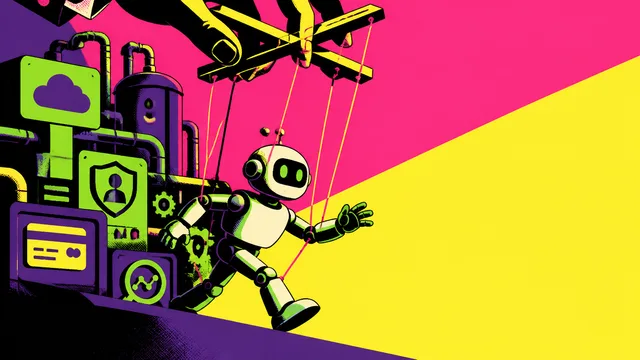
The Hidden Companies That Control AI Agents
OpenAI and Anthropic get the headlines. But Cloudflare, Stripe, and Okta may actually decide whether your AI agent ever ships to production.

Mapping the Claude Ecosystem: Four Products, One Platform
Claude has grown from a chatbot into a layered ecosystem of products and automations. Here's what each piece actually does—and what questions it raises.

Claude Tag Gives AI Its Own Identity in Slack
Anthropic's Claude Tag introduces a new access model where the AI acts under its own identity in Slack—not yours. Here's what that means for security teams.