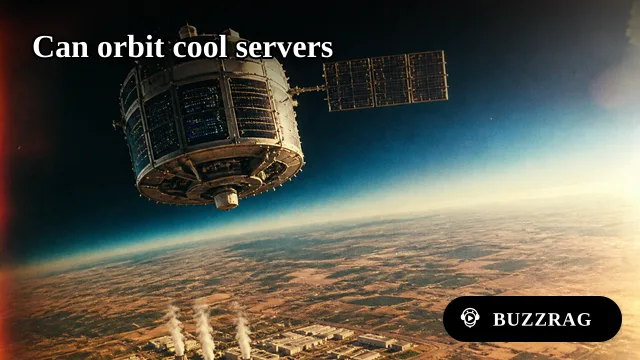
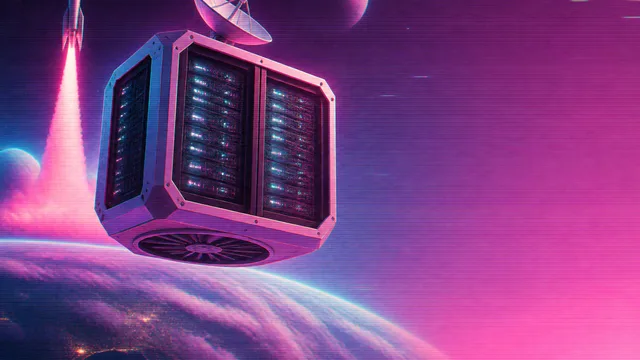
As demand for AI computing drives the construction of ever-larger data centers, companies and investors are exploring whether some of that infrastructure could operate in space. Orbital facilities might draw on abundant sunlight and avoid competition for land, grid connections, and local resources that has fueled opposition to terrestrial data-center projects. Starcloud is among the startups pursuing the concept, bringing orbital computing back into focus as a possible answer to the constraints facing Earth-based expansion.
But moving servers off the planet does not make their engineering problems disappear. Space offers a difficult environment for equipment: radiation can damage electronics, hardware is harder to reach or replace, and launching heavy infrastructure is expensive. Data centers also produce substantial heat. In a vacuum, that heat cannot be carried away by moving air, so systems must radiate it into space through carefully designed hardware. Reliable power, communications, cooling, and long-term maintenance all add complexity, while delays and launch costs could undermine the economics. The cluster therefore captures both the appeal and the skepticism surrounding orbital data centers: they could provide another way to supply computing capacity, but practical limits in physics and engineering may be as decisive as funding or demand. The idea remains tied to a broader debate about where AI infrastructure should be built and who bears its costs.