
Social Media Automation Is Convenient—and Complicated
Rachel "Rach" Kovacs·2 months ago
Artificial intelligence, machine learning, LLMs, and AI tools transforming development.
Jonathan Acuña's custom content automation system CAM looks effortless. Here's what to weigh before handing over your social media credentials.

Superwhisper's S1-mini is a 462 MB open-weights model that strips fillers and fixes self-corrections in speech-to-text output—entirely on your device.

A Semrush tutorial walks through building a search-optimized website using Lovable and AI prompts. Here's what the workflow actually delivers—and where it falls short.

Micron's CEO says AI has broken the memory industry's boom-bust cycle. Here's what that structural shift actually means—and who pays for it.

At a recent YC Paper Club session, three AI researchers made the case that training data—not models or chips—is where the real work of building AI happens now.
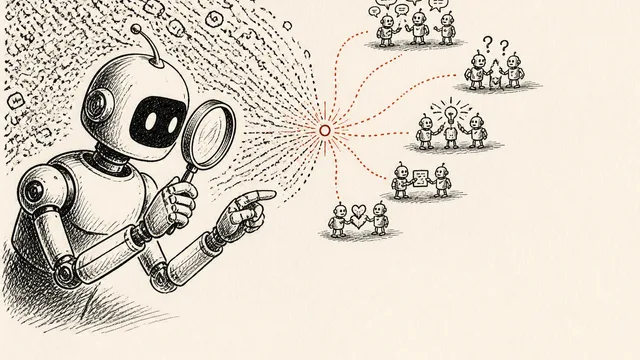
Mastra's Trace Intelligence clusters millions of AI agent traces into behavioral themes. Here's how the pipeline works and why it matters for agent development.

Matthew Berman demos Grok Bot handling email, meetings, food orders, and file cleanup. Here's what the workflow actually looks like — and where the limits are.

Alex Lieberman and Dan Zakon of 10X explain their agentic engineering setup, where markdown context files may matter more than the code itself.

Astrophysicist Adam Becker argues that the singularity, Mars colonies, and AI doom share one flaw: they all assume exponential growth never ends. It always does.

OpenAI CFO Sarah Friar confirmed a 2027 IPO target at an all-hands meeting, even as losses widen and rival Anthropic edges closer to its own public debut.

Rillet raised $100M in a Series C led by ICONIQ, hitting a $1B valuation. Here's what that means for AI in accounting—and for the people doing the books.

Anthropic's Claude now watermarks every text output. Here's how the mechanism actually works—and why determined users can already route around it.

Harsh Bhatt's freeCodeCamp course builds a full RL library in C—autograd engine, Snake environment, and REINFORCE—without any ML frameworks.

Claude's new text watermark is triggering SEO panic. Here's what Anthropic's documentation actually says—and why the fear may be worse than the feature.

Toyota's AI engineering director says LangChain-powered agents are already saving six figures per line per year. Here's what the numbers actually tell us.

Docker Sandboxes use micro VMs to isolate AI coding agents, locking down file access, network traffic, and API keys without slowing your workflow.

GitHub Trending Weekly #45 surfaces 30 open-source projects revealing how developers are wrestling control, trust, and oversight back from AI agents.

Jonathan Acuña breaks down Mac Mini self-hosting vs cloud platforms like Railway and DigitalOcean for AI agents—and why code workflows beat always-on agents on cost.

Ten open-source AI tools—from Tesseract OCR to OpenHands—that run locally, protect your data, and eliminate SaaS subscriptions. Here's what works and what doesn't.

Ayush Bhardwaj built AI for a hedge fund, then a pharma startup—and hit the same wall both times. His diagnosis is more interesting than most AI talks.