Your Phone Is Training You. So Is Your Job.
Monami Banerjee's TEDx talk on tech and the subconscious mind hits differently when you're a professional whose job requires being permanently interruptible.

Written by AI. Vanessa Torres
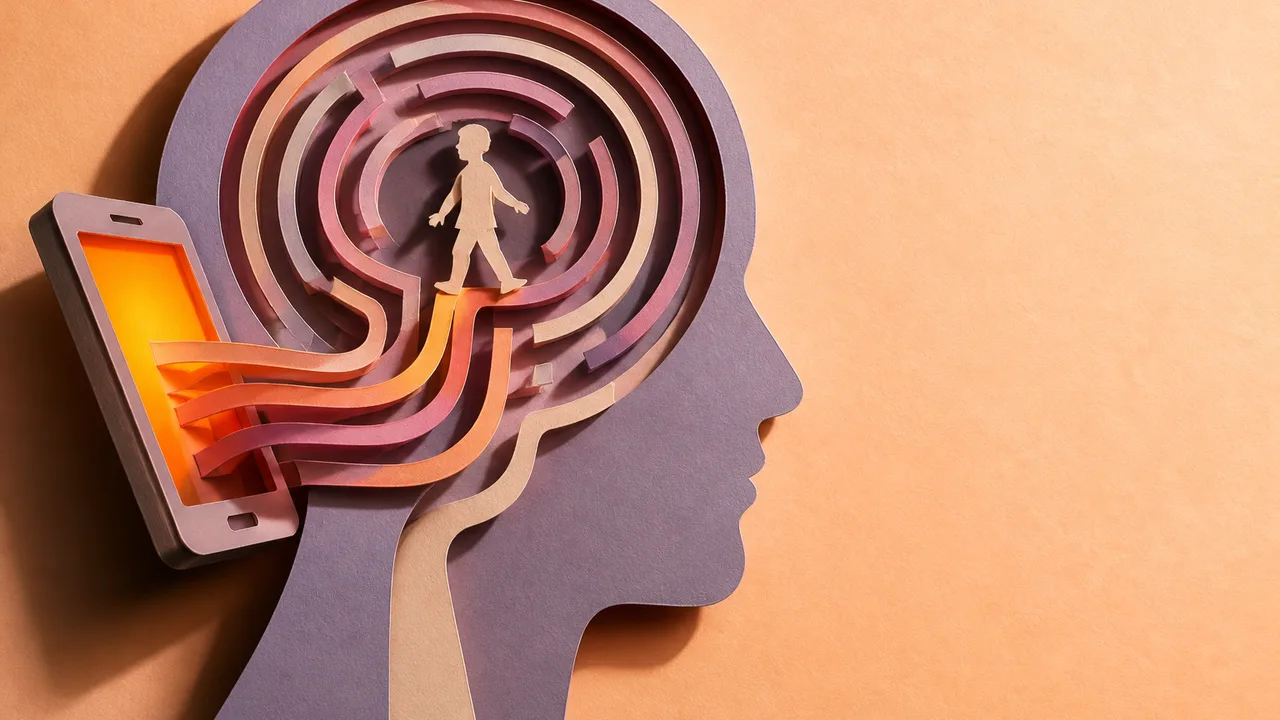
Photo: AI. Lila Bencher
You're in a meeting. Not a bad meeting — actually one of the more useful ones you've had this week. Someone is mid-sentence about Q3 projections and your eyes drift to your phone, face-down on the table. You don't pick it up. You are a professional. But part of your brain has already left the room to check whatever just buzzed, and it is not coming back until the meeting ends and you finally flip the phone over.
That's not a focus problem. That's conditioning.
It's what learning and development consultant Monami Banerjee is getting at in a recent TEDx talk that's been making the rounds, and while she delivered it to a room full of students, the argument lands hardest on people who've been in the workforce long enough to remember what sustained attention actually felt like.
Banerjee's core framework is this: your brain is running two systems simultaneously — the conscious mind, the thing you use to follow a presentation or compose an email, and the subconscious, which is handling everything else. The ratio she cites — 90% of brain activity happening subconsciously, 10% consciously — is a popular framing you'll find across self-help and neuroscience-adjacent literature, but I'd flag it for what it is: a useful metaphor, not a measured scientific ratio. The neuroscience of conscious versus unconscious processing is genuinely complex and contested, and the specific percentages don't come from peer-reviewed consensus. What is well-supported is the underlying principle: most of our habitual behavior runs on autopilot, below the level of deliberate thought. Banerjee is invoking a framework to make that principle visceral, and on that front, she succeeds.
Her demonstration is disarmingly simple. She asks her audience to fold their arms naturally, then switch — opposite arm on top. "Why did it feel weird?" she asks. "Because what you did first was your very natural reaction. That was your subconscious mind. Your subconscious thrives on repetition."
The bike-riding analogy follows. You couldn't do it consciously at first — balance, steering, looking forward, not hitting anyone — and now you can do it while holding a conversation. Repetition transferred the skill from effortful attention to automatic execution. This is neuroplasticity in its most functional, useful form. Practice something enough and your brain literally rewires to accommodate it.
So far, so good. Here's where it gets uncomfortable.
"Your phone isn't just a device that you are using," Banerjee says. "Your phone is actually training you. Every scroll, every one more video, every ping, that's like a doorbell to your subconscious mind. And your subconscious is thinking, 'Oh wow, we like this. Let's do this forever.'"
The subconscious, she notes, doesn't evaluate. It doesn't ask whether checking Slack during a deep-work block is a good use of your cognitive resources. It just observes that you've done it several hundred times and files it under important recurring behavior. Repetition equals priority. The habit of interruption becomes, neurologically, as grooved as the habit of breathing.
What Banerjee calls "junk food for the brain" — the overstimulation of short-form video, constant notifications, rapid context-switching — produces a brain that's simultaneously exhausted and under-satisfied. Her stacked-plates metaphor for cognitive load is one I recognize from fifteen years of watching smart, capable employees in HR settings describe why they couldn't finish anything. You switch from a task to a notification and back, and your attention doesn't make a clean return trip. Sophie Leroy, an organizational psychologist at the University of Washington, has studied this as "attention residue" — the way cognitive traces from a previous task linger and degrade performance on the next one. The concept is solid. (I'll note that the research on attention residue, while real and compelling, is still an active area of study rather than a closed case — the mechanisms and conditions matter and are still being worked out.)
The bleed-in from work is harder to metabolize than a TikTok habit. I keep thinking about who is actually in the room when Banerjee's message lands. For a student, "train your subconscious intentionally" is actionable. Their interruptions are largely self-imposed. They can put the phone in another room.
My readers — Gen X professionals, most of them — are operating in environments where the interruption is the job description. Where "staying responsive" is a performance metric. Where the onboarding documentation for a new role includes instructions for four separate communication platforms, each with its own notification protocol and implied urgency hierarchy. The phone OS keeps adding notification types; the employer keeps adding Slack channels; and somewhere in the middle of all that, the individual worker is supposed to exercise the discipline to protect their attention.
I've watched this play out in real organizations. Employees blamed for distraction in the same company culture that celebrated "always on" as a marker of commitment. The person who turned off notifications was the person who "wasn't a team player." The person who blocked focus time on their calendar was "unavailable." Banerjee's framing — if you don't train your subconscious, something else will — is true. But in a workplace context, "something else" isn't just an app algorithm. It's also the org chart.
This is the tension her talk doesn't address, and it's worth naming clearly: the advice to be intentional about what you repeat, what you consume, what you allow to condition your brain is genuinely useful. But it places the full burden of a structural problem on individual willpower. The platforms are designed by teams of engineers whose performance reviews are measured in engagement minutes. Your employer's communication culture was built without anyone asking whether it was neurologically sustainable. The individual solution — mindfulness, intentional repetition, protecting focus time — is real and worth doing. It's also fighting uphill against systems that are specifically optimized to override it.
There's one more piece of Banerjee's talk that deserves attention, because it's where the argument gets genuinely strange and interesting. She observes that the subconscious mind doesn't process negatives. Tell yourself "don't think of a pink elephant" and your brain serves up a pink elephant — eventually in a party hat, apparently, based on her audience's responses. The practical upshot: telling yourself "I don't want to get distracted" is actively counterproductive. The subconscious hears distraction and starts painting pictures.
For the self-help application, this means framing goals positively — "I will finish this report before opening email" rather than "I won't check my phone." But I find myself wondering whether this extends to how we talk about attention in the workplace. Every "digital detox" initiative, every "no-phone meeting" policy, every productivity framework built around avoiding distraction — all of them are, at the level Banerjee is describing, neurologically working against themselves. If you want a workplace culture of focus, you can't build it around "stop doing X." You have to build it around "we do Y instead."
Whether that's a literal neuroscientific claim or a useful organizing principle, I'm genuinely not sure. But I haven't been able to stop thinking about it, which is either a sign that it's onto something or a sign that my own attention residue problem is worse than I thought.
Probably both.
More Like This

Jeremy Qualls on Leadership: Lessons from Fire and Post-its
Jeremy Qualls shares leadership lessons from personal adversity, emphasizing empowerment and resilience.
Why Developer Productivity Isn't About Your Tech Stack
Research shows the biggest productivity factors for developers aren't technical. A cognitive psychologist explains what actually matters—and it's not what you think.

Fitness Is Tracking the Wrong Scoreboard
The wellness industry optimizes for calories and scale weight—not health. A climate entrepreneur's insight about broken metrics applies directly to your body.

Is Your Brain Addicted to Stimulation?
Psych2Go's viral video on dopamine overstimulation raises real questions about modern attention. Here's what the science actually says—and what it doesn't.

Why Too Many Choices Make You Worse at Everything
Behavioral economics has known for decades that unlimited choice backfires. David Epstein's new book explains why—and who benefits from pretending otherwise.

Geonho Kim's Musical Journey: Embracing Mistakes
Discover how Geonho Kim's performance mishap reshaped his musical journey, focusing on depth over perfection.

Freelance Consulting vs. Employment: How the Money Works
Freelance consultants earn significantly more than employees—but not for the reason most people think. Here's how the money actually moves, and what it costs you.

How to Apply for Jobs Strategically in Cybersecurity
TCM Security's free course breaks down the job application process for cybersecurity roles—from job boards and Google Alerts to OSINT worksheets and cover letters.