Is Your Brain Addicted to Stimulation?
Psych2Go's viral video on dopamine overstimulation raises real questions about modern attention. Here's what the science actually says—and what it doesn't.

Written by AI. Ellis Redmond

Photo: AI. Atticus Ferenczi
Picture this: you sit down with every intention of reading for twenty minutes. Maybe it's a book you actually want to read. You get through a paragraph. Then your phone buzzes—or maybe it doesn't buzz, you just think it might have—and suddenly you're somewhere else entirely. The book is still open. You're not in it.
If that's familiar, you've probably encountered the argument that Psych2Go makes in their recent video, Why You Can't Enjoy Normal Life Anymore. It's a five-minute explainer on dopamine, overstimulation, and why ordinary life increasingly feels like bad TV. It's racked up attention quickly, and the reason isn't hard to see: the argument it makes is one a lot of people feel in their bodies even if they've never had words for it.
Worth examining closely. Because this is one of those ideas that's partially true, genuinely useful in spots, and also—if you're not careful—can become another stick to beat yourself with.
What Psych2Go Is Actually Arguing
The core claim is neuroscience-adjacent and not without basis. Dopamine isn't the "pleasure chemical" most people think it is—that's a useful correction the video makes early. As the video puts it: "It's not just about pleasure. It's about anticipation, motivation, the feeling of wanting something before you even get it." This tracks with the actual research. Neuroscientist Kent Berridge's work on "wanting" versus "liking" systems in the brain has been making this point for decades, though it rarely makes it into pop psychology discussions.
The video's next move is to argue that modern tech environments—short-form video, unpredictable notifications, the infinite scroll—have essentially trained our brains to require higher and higher stimulation thresholds just to feel baseline okay. The analogy they use is tolerance to drugs: "Your brain starts needing more just to feel normal." The research they cite—Volkow et al.'s 2012 work on addiction circuitry, and Anna Lembke's Dopamine Nation—is legitimate. Lembke in particular has been one of the more credible voices on behavioral overstimulation; she's a Stanford psychiatrist, not a wellness influencer.
The five signs the video lists—struggling with slow activities, compulsive checking behaviors, anhedonia toward previously enjoyed things, restlessness in silence, and the "just one more" loop—are presented as diagnostic markers. And here is where I'd ask you to slow down a little, because this is where the frame matters.
The Part That's Actually Supported
Unpredictable reward schedules are genuinely among the most powerful behavior-shaping mechanisms we know of. B.F. Skinner demonstrated this with pigeons in the 1950s; casino designers have known it ever since. The video's observation that "notifications that might or might not be there are especially powerful—it's the same mechanism used in slot machines, except now it's in your pocket" isn't hyperbole. Variable ratio reinforcement is precisely why the "check" behavior feels compulsive rather than chosen.
The anhedonia piece—the sense that things that used to bring pleasure now feel flat—is also well-documented in the context of reward system dysregulation. When you spike dopamine artificially and repeatedly, you get receptor downregulation. Your brain adapts. The baseline shifts. This isn't unique to digital stimulation; it's how tolerance works across the board, from sugar to cocaine to, apparently, 90-second videos of people tripping over things.
The practical suggestions offered—taking breaks from stimulation, tolerating boredom, reintroducing slower activities even when they don't feel immediately rewarding—are actually reasonable. Exposure to lower-reward environments does, over time, allow the reward system to recalibrate. The research on this in the context of digital behavior is still relatively early-stage, but the underlying neuroscience is sound.
The Part Worth Questioning
Here's my honest friction with this kind of content—and I want to be precise about where it is, because it's not with the science.
The framing of these five signs as evidence of "dopamine addiction" individualizes something that might be better understood structurally. The reason your phone is engineered to be impossible to put down isn't because of anything wrong with your dopamine system—it's because teams of engineers with access to behavioral data have spent years optimizing for exactly that outcome. Nir Eyal literally wrote a book called Hooked explaining how to design products that exploit these mechanisms. The variable reward schedule in your notifications wasn't an accident.
Calling it dopamine addiction—with you as the addict who needs to reset—locates the problem in the individual. Which, sure, the individual has to live with the consequences either way. But there's a meaningful difference between "your brain is broken/dependent" and "the environment you're in has been deliberately designed to produce this effect." One implies you need to fix yourself. The other implies you're responding normally to an abnormal environment.
The video does gesture at this near the end—"It's just your brain adapting to the world around it" and "this is why the modern world and technology can sometimes suck"—but these acknowledgments are brief, and the overall architecture of the piece is still: here are five things wrong with you, here's how to fix them.
There's also a worthwhile caveat the video handles better than most in this genre: it explicitly calls out that if you have ADHD or another condition where dopamine dysregulation is a genuine clinical feature, the above calculus is different. That's a more responsible move than most pop neuroscience makes, and worth noting.
What's Actually Useful Here
If you recognize yourself in these five signs, the more interesting question isn't "am I addicted to dopamine?" It's: what am I actually getting from this constant stimulation, and what is it costing me?
For some people, the answer to the first question is genuine relief from anxiety, loneliness, or boredom that has nowhere else to go. For others, it's habit with no particular emotional payoff. For others still—and this is real—it might actually be functional. Not everyone who doom-scrolls is dysregulated; some people are genuinely processing information or connecting with communities that matter to them.
The cost side of that equation is where the more actionable material lives. The research on fragmented attention is real and accumulating: Gloria Mark's work at UC Irvine on task-switching costs has consistently found that interruptions—even self-interruptions—carry significant cognitive overhead. If you're trying to do something that requires sustained thought and you're constantly interrupted, you will be less effective. That's not a character flaw. It's just how cognition works.
The video's practical prescription—boredom tolerance, slower activities, intentional breaks—maps onto what the research actually supports. Jonathan Smallwood's work on mind-wandering suggests that unstructured mental time isn't wasted; it's when the brain does consolidation and creative association work. We've been squeezing it out.
Psych2Go's video is a five-minute distillation of ideas that have whole books written about them—Lembke's Dopamine Nation, Johann Hari's Stolen Focus, Cal Newport's various arguments about deep work. It's not going to give you the full picture, and it isn't trying to. What it does do is name something a lot of people are experiencing without language for it, which has real value.
Whether the thing being named is "addiction" or "a normal response to a relentlessly overstimulating environment" might seem like a semantic question. I don't think it is. Because what you call something shapes what you think the solution is—and whether you blame yourself for the problem in the first place.
The question worth sitting with: if you put your phone down right now and let the next twenty minutes be quiet, what do you notice? Not as a diagnostic. Just as information.
More Like This
The Power of Starting Conversations with 'What'
Discover how asking 'what' instead of 'why' can transform communication and influence.

How Childhood Trauma Shapes Adult Relationships
Explore how childhood trauma influences adult relationships and discover pathways to healing.

When Self-Help Becomes Self-Harm: Looksmaxxing
Dr. K's breakdown of looksmaxxing is sharp—but the line between self-improvement and self-destruction is more physiological than he lets on.

Thoughtful Leadership: Stoute's Key Principles
Explore Steve Stoute's three principles of leadership: core values, embracing conflict, and fearlessness.
Dopamine & AI: Parenting in a World of Abundance
Exploring dopamine addiction, AI's impact, and parenting challenges in today's tech-driven world.
Why Statistics Matter: Beyond the Numbers
Unravel the importance of statistics in decision-making, focusing on randomness and data-driven insights.

Why Being Complicated Might Be the Point
Yahia Ghaleb's TEDx talk argues we should stop flattening ourselves into simple labels. Here's what the psychology actually says about living in the gray.
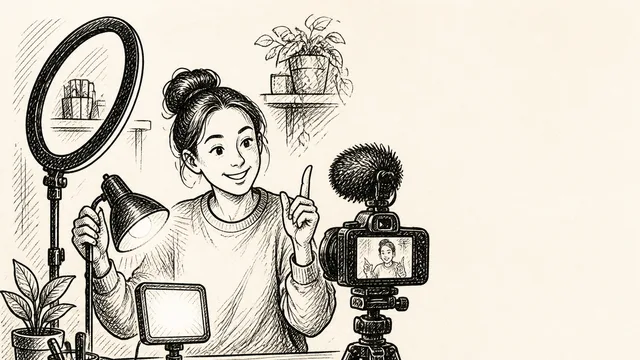
YouTube Lighting for Beginners: What Actually Matters
Before you buy a new camera, fix your lighting. A practical breakdown of what beginner YouTubers get wrong—and how to fix it for under $50.