Xbox Price Hikes and GTA 6's Netflix Reveal Reshape Gaming
Xbox console prices rise up to 50% in Europe while Rockstar gates the GTA 6 reveal behind Netflix. Here's what it means for how people actually game.

Written by AI. Jordan Mercer
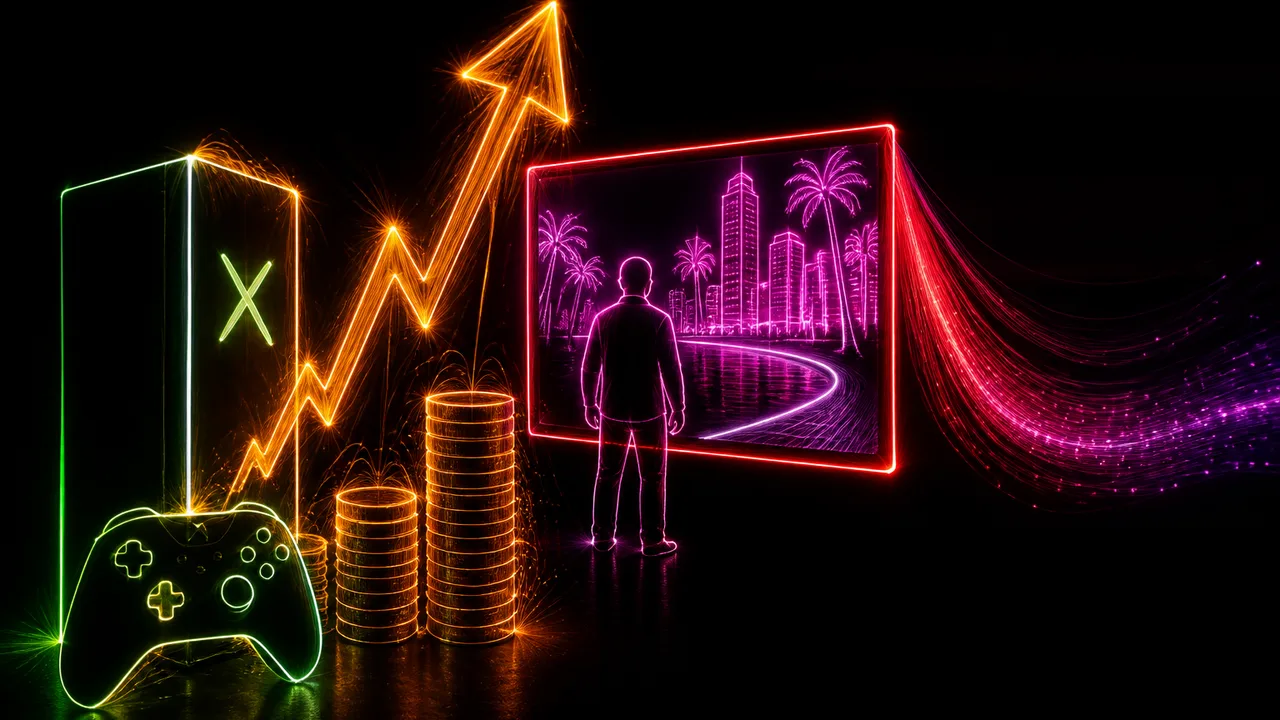
Photo: AI. Phaedra Lin
Here's the thing nobody covering console gaming wants to say out loud: the people who were supposed to be locked out of "real gaming" because they only had a phone? They're watching this week's news and feeling pretty good about their life choices.
Rockstar just announced the GTA 6 gameplay deep dive will drop exclusively on Netflix on August 27th — paywalled for six hours before it hits YouTube. Meanwhile, Xbox Series S prices in Europe jumped 50%. And Sony's CFO stood in front of investors and explained, with the confidence of someone who has never waited for a payday, that killing physical media is simply the natural march of digital progress.
The console ecosystem is doing everything it can to make mobile look like the rational choice. Let me walk you through exactly how.
The Netflix Paywall Nobody Should Be Surprised About
Skill Up's This Week in Videogames opened with the GTA 6 reveal news and framed it plainly: "We're officially in the territory of paywalling trailers behind subscription services." The deep dive will live exclusively on Netflix from noon PT until 6 PM PT on August 27th, after which it'll hit YouTube for everyone else.
Six hours of exclusivity isn't going to break anyone's life. That's not the point. The point is the precedent. Subscription-gated content is already the water mobile gamers swim in — Netflix Games exists, Apple Arcade exists, Google Play Pass exists. Mobile audiences have been navigating "you need a sub to access this" for years. Console players are only now getting their first taste.
The part worth paying attention to is Rockstar's copyright enforcement posture. According to Skill Up, Rockstar is the only developer known to claim YouTube revenue on videos that use their trailers even if you mute the audio. That's an aggressive IP stance that will almost certainly extend to GTA 6 content broadly — fan videos, breakdown videos, reaction content. The Netflix window is just the most visible expression of a control-first philosophy that's been baked into Rockstar for a long time.
For GTA Mobile players — and there are tens of millions of them — the question is what this signals about how Rockstar treats mobile as a platform going forward. If they're willing to wall off a trailer, the terms around mobile content and mobile monetization aren't going to get more generous.
Sony's Numbers Tell a Story Their CFO Won't
This is where I think the most interesting stuff happened this week, and it connects directly to the larger question of who gaming is actually for right now.
Sony reported Q1 FY26 earnings. PlayStation generated over 937 billion yen (~$5.88B) in the games and network services segment, with operating income up 37%. Those numbers sound healthy until Sony explains that game sales were essentially flat — hurt by lower hardware sales and weaker third-party performance. They shipped 1.6 million PS5 units to retailers (not consumers — a meaningful distinction), and 82% of the 66 million games sold were digital.
Sony's CFO used that 82% figure to justify discontinuing physical media. When asked directly whether the decision was about next-gen planning or profit margins, the CFO responded through a translator: "There are various reasons we made this decision. The biggest being the digitization of content overall has been progressing. That's the big factor."
Skill Up's read on this was blunt and accurate: that's not an answer, it's a deflection dressed up in corporate grammar. The 82% digital rate reflects a trend that was going to climb regardless — younger players who've never bought a disc, developers increasingly skipping physical runs, digital storefronts being genuinely convenient. Sony isn't wrong that the direction of travel is digital. They're just using a structural trend to avoid answering a pointed question about whether they're also extracting margin from a captive audience.
That 37% operating income jump? Sony itself attributes it largely to US tariff refunds and favorable exchange rates — not game sales growth. And the company is currently facing a consumer class action lawsuit accusing it of double-dipping: raising PS5 prices to account for tariffs, then pocketing the refunds when those tariffs were lifted. Nintendo faces similar accusations.
None of this is obscure. It's just what happens when companies price hardware for a console-or-nothing market. People whose primary gaming device is a phone — which costs the same whether gaming exists or not — aren't paying PS5 tariff surcharges. They're just playing.
Marathon Is Not Fine, and Sony Knows It
The Bungie situation is its own chapter. Sony's CFO claimed Marathon "maintained a high user retention rate while also acquiring new players." According to SteamDB data cited by Skill Up, that claim does not hold up to scrutiny.
Per SteamDB's tracking, Marathon launched to a peak of 88,000 concurrent players on Steam — well below what Bungie would have needed to justify the resources poured into it. By the end of Season 1, daily concurrent players had fallen to around 11,000. A free weekend tied to Season 2's launch spiked the number back to just over 40,000 — less than half of launch peak — before it settled back down again. The PvE mode Vault Breaker, pitched as a mass-appeal alternative to PvP, brought a spike of under 15,000. At time of writing, Marathon's 24-hour peak on Steam sits below 5,000 players.
According to Game Developer, at least 292 Bungie employees are being laid off by Sony. That restructuring cost is already weighing on Sony's financials — the CFO acknowledged it directly in the earnings call.
Skill Up's take: Sony is managing shareholder optics, not confronting reality. The math on Marathon's player counts doesn't support the "high retention" framing in any meaningful way. Meanwhile, Destiny 2 exists, is playable, and apparently has more daily concurrent players by a wide margin. The least complicated path forward for Bungie is sitting right there.
Xbox's Price Hike Is a Gift to Every Platform That Isn't Xbox
Let's be concrete about what happened on August 1st.
In Europe, the Xbox Series X 1TB went from €600 to €800 — a 33% increase. The Series S 512GB went up 42%, from €350 to €500. The Series S 1TB went up 50%, from €400 to €600. In Australia, the Series X broke the $1,100 AUD barrier. These are the third round of price increases since the consoles launched.
Skill Up put it directly: this makes the Xbox Series X over 20% more expensive than the PS5, with no compelling hardware or software advantage over its competitor at these prices. The audience for a €800 Series X in Europe is genuinely narrow — someone who doesn't have a capable PC or a PS5, is specifically interested in a small handful of upcoming Xbox exclusives, and has ruled out everything else. That's not a market, that's an edge case.
From where I sit, covering the platform that billions of people actually game on every day, this is clarifying. A flagship phone — which does about a hundred things besides game — costs less than an Xbox Series S in multiple markets right now. The calculus for anyone on the fence about where to spend has shifted again, and not in Xbox's favor.
The one genuinely good news story for Xbox this week: per a report from The Verge citing a leaked developer document, Xbox 360 backwards compatibility is coming — not just to PC but to next-gen Project Helix hardware, with a gradual rollout planned between 2027 and 2028. Original Xbox titles on PC are expected in October this year. Developers won't need to do engineering work; Microsoft's emulator handles it. Microsoft Gaming's VP of NextG Jason Ronald has talked publicly about "breaking down the barriers between console and PC games," and the backwards compatibility push fits that framing.
A strong legacy library is real value. Whether it's enough to overcome pricing that positions Xbox as a premium product in a generation where they've already lost market share is a different question — and the honest answer is probably not.
The Week's Actual Good News
Project Zomboid hit a new Steam concurrent peak of 121,000 players off a massive content update — after 13 years in early access. Crafton reported record half-year profits driven by Subnautica 2, which has already sold over 5 million units. The Subnautica 2 development team at Unknown Worlds finally received their $250M earnout after a legal battle with Crafton's CEO. And on mobile specifically: Luminous Remastered dropped on iOS and Android as a surprise release, and Palworld Online — a mobile MMO — was announced out of Singapore-based studio Greener.
Big Walk, the co-op puzzle game from Australian studio House House (Untitled Goose Game), landed at 87 on OpenCritic and 93 on Metacritic. It's co-op only, no matchmaking, no solo mode. Kotaku's coverage made a strong case that this is a feature, not a bug — the communication constraints are what make the game work. Whether you can find three friends with synchronized schedules is a separate, entirely valid obstacle.
The thread connecting all of this week's big stories isn't really about Xbox or Sony or Rockstar individually. It's about who gets to decide what gaming looks like and who gets priced out of it. When console hardware gets more expensive, when trailer reveals get paywalled, when physical media disappears without warning to retailers — the people holding phones aren't the ones being asked to absorb the cost.
The console ecosystem keeps making decisions that assume their audience has nowhere else to go. That assumption is getting harder to defend every week.
More Like This
Gaming Hardware Costs Are Rising and Relief Is Far Off
Micron, Microsoft, and Apple signal gaming hardware prices will keep climbing through 2028 or beyond. Here's what's driving the squeeze and what it means.
Diablo IV: Lord of Hatred Expansion Review
Explore Diablo IV's Lord of Hatred expansion. New classes, zones, and a thrilling campaign await.
AI Frontier Breaks Open as Apple Sues OpenAI
Four major AI models dropped in seven days. Apple sued OpenAI over trade secrets. China landed an orbital booster. Here's what it all means for the compute race.

Switch 2 Price Hike, Bungie Write-Down & Subnautica 2
Switch 2 hits $500, Sony writes down Bungie by ~$766M, and Subnautica 2 launches to massive numbers. Here's what it all means for players.
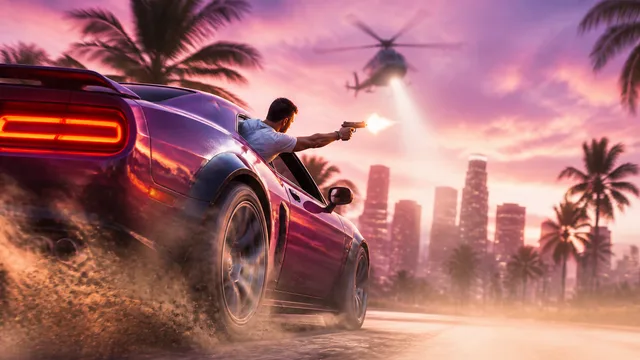
GTA 6's $100 Ultimate Edition Is Outselling the $80 Version
GTA 6's $100 digital-only Ultimate Edition is topping PS Store charts in nine markets. Here's what the pre-order data actually tells us—and what it doesn't.

Forza Horizon 6 Review: Beautiful Map, Frozen Formula
Forza Horizon 6's Japan map is stunning, but its stale progression and hollow storytelling reveal a franchise too scared to evolve. Here's where it stands.
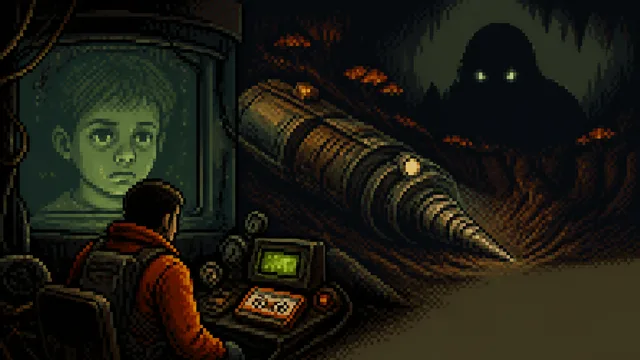
Mole Is a PC Horror Game Mobile Devs Should Study
Jacksepticeye's nearly 3-hour Mole playthrough reveals a psychological horror game built around grief, cassette tapes, and Soviet-era dread.
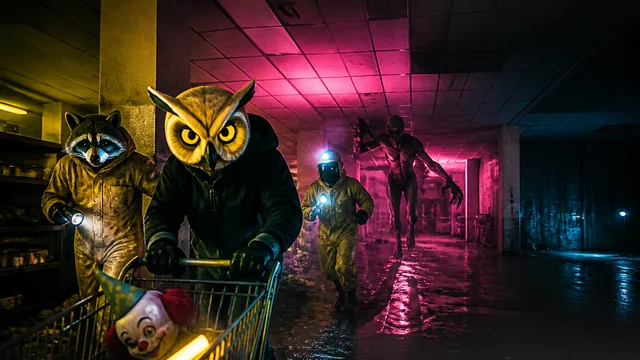
VanossGaming Plays Backrooms Escape Together
VanossGaming and crew tackle Backrooms Escape Together's horror-supermarket mashup. Here's what the co-op chaos actually demands from its players.