Xbox AI Remarks Put Game Studios' Disclosure in Focus
An Xbox manager says AI is used in game development. Studios face harder questions about disclosure, generated content, labor, consent and creative control.

Written by AI. Mike Sullivan
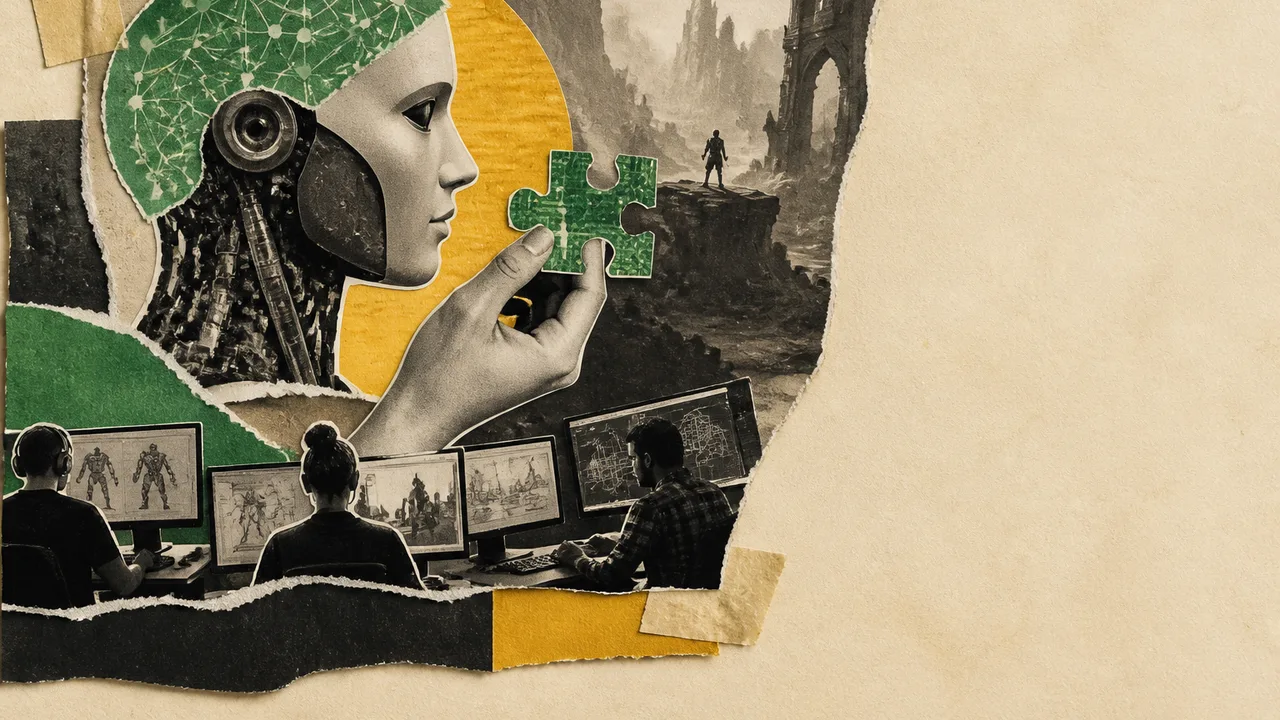
A strategy manager at Microsoft’s Xbox division says AI is already being used to develop games, both at Xbox and across the industry. Brandon Stirrup’s remarks about game development have put a familiar industry claim under an unusually bright light: if these tools are already in the production pipeline, what should studios tell the people who make and buy games?
Stirrup suggested that people claiming otherwise are “pretending,” He deactivated his social media account soon afterward, though the posts were archived. His broad claim does not identify particular games, tools or assets, so it cannot establish what players have encountered in any given release.
That leaves a useful question in place of a sweeping one. When a studio says it uses AI, does it mean a developer asked a chatbot to explain an error message? Did an artist generate images for internal brainstorming? Did a model produce dialogue, textures or code that made it into the finished game? All fit beneath the same two-letter label. The people affected, and the disclosures they might reasonably expect, vary considerably.
Games Have Always Used Shortcuts
The games business has a long history of getting computers to do repetitive creative work. Rogue used randomized dungeons decades ago; No Man’s Sky built a universe around procedural generation. Developers also rely on software to automate routine production tasks. Nobody needs a warning label because a designer used a tool to place trees across a landscape instead of clicking on each one until retirement.
Generative AI introduces a different set of questions. A system that produces an image, a line of dialogue or a block of code can leave its mark on material players see, hear or use. It can also draw on training material whose creators did not expect their work to serve that purpose. The concern is about the output, the inputs and the decisions a studio makes between them. A procedural map built from rules written for a game and an image generated by a model trained on outside artwork create different attribution and consent problems.
Even those categories blur during production. A generated character sketch might remain on an internal mood board, shape a human artist’s final design or appear almost intact in a game. Each step changes whose contribution is visible and who can ask for credit. Asking whether a title is “AI-made” compresses that chain of decisions into a storefront-sized slogan. It may work as an argument online; it gives a buyer little to go on.
The Disclosure Question Starts Inside the Studio
Nearly nine in ten game industry workers surveyed believe generative AI use should be disclosed on storefronts. That figure describes the surveyed workers’ views, not every developer’s. Still, it makes the transparency question hard to wave away as a complaint from people who never build games.
A storefront notice has an obvious attraction. Buyers can take a studio’s methods into account before paying, and workers can see their employer acknowledge a practice that may affect their craft. A notice that simply says “AI used,” however, would put an internal writing assistant alongside generated character art with no indication of how either contributed to the finished product. That label would satisfy a checkbox while withholding the information people asked for.
A useful disclosure could name the stage of production and the type of output: internal reference work, draft code reviewed by developers, promotional art or material appearing in the game. It could also distinguish assets produced by a model from work made by employees who used AI during an earlier step. Those are examples of what a studio could explain, not claims about Xbox projects. The goal would be to let a reader understand what was done without requiring a guided tour of every software subscription in the building.
Disclosure also needs an audience. A player may chiefly care whether a character’s voice or artwork was generated. An artist hired to work on that character may care whether their own work could be fed into a tool, reused later or used to reduce future commissions. A developer reviewing generated code may care who is responsible when it fails. One public label cannot answer every workplace question, and a private policy cannot tell a buyer what appears in the product.
Why Studios Might Choose Vague Language
There is a business case for using these tools. Games require large amounts of art, text, code and testing. A system that helps a team produce drafts or handle routine tasks can free people for work that needs judgment. Smaller teams, in particular, can find value in trying ideas before committing substantial time to them. Treating every experiment as evidence of creative surrender would leave no room to assess a tool on its results.
Studios also have reasons to describe adoption in the broadest terms. Executives can signal efficiency to people watching costs. Developers can avoid promising that a technique will survive into the final release. Marketing teams can steer clear of a dispute over whether a generated image replaced a paid artist. The phrase “we use AI” accommodates all three purposes. That flexibility helps a company manage a conversation, while making it harder for anyone outside the company to understand the work.
The labor tension is sharper than the old argument over whether software makes production easier. If a tool speeds up an artist’s repetitive tasks, the artist may gain more time for design and revision. If management uses the same tool to reduce paid assignments, the benefits flow elsewhere. Those outcomes depend on decisions about staffing, contracts, credit and review, not on the mere presence of a model. A studio can be transparent about player-facing content while leaving its workers unsure how their contributions will be used in the next production cycle.
Consent raises another question. A developer can review a generated image for quality and still be unable to explain how the model’s training material was obtained. A studio choosing a system can ask its vendor about those inputs and set rules for what employees may upload. Players will rarely see those decisions, although they can affect the artists and writers whose work helped make the tool possible. Here, disclosure works best when it describes a practice the company can stand behind, rather than acting as a substitute for one.
A Better Question than “Do You Use AI?”
Stirrup’s challenge lands because blanket claims of nonuse are increasingly difficult to interpret in a complex production pipeline. It also risks turning a practical discussion into a loyalty test. Someone can accept that developers use generative tools and still object to an undisclosed generated voice, an unclear credit arrangement or a plan to replace paid creative work. Someone else can welcome an internal assistant and want to know whether its outputs ever reached players.
The next useful question for any studio is narrower: what did the tool produce, where did that output go, and who agreed to its use? A clear answer could give developers room to experiment and give workers and customers grounds to judge the result. “Everybody’s doing it” may settle an argument about whether AI has entered game development. It does very little to explain the game in front of you.
More Like This

Do You Really Need an $80 HDMI Cable? Maybe Not
Tech reviewer Adam tests a premium HDMI 2.1 cable. We examine what you're actually paying for and whether most users need it.

Atlas Can Lift a Fridge. Now What?
Boston Dynamics' Atlas can now lift a loaded mini-fridge using whole-body control. Here's what the demo actually tells us—and what it doesn't.
AMD EPYC 8005 Sorano: A Genuine Generational Leap
AMD's EPYC 8005 Sorano upgrades SP6 with Zen 5 cores, 84-core density, and 96 PCIe Gen 5 lanes—but the ecosystem remains niche and memory costs sting.
Can Unreal Engine 5 Run on a $500 MacBook? Sort Of.
Testing Unreal Engine 5.7 on the MacBook Neo reveals what happens when professional software meets budget hardware—and why friction matters.
M5 MacBook Pro for 3D Work: Where Apple's Hardware Hits Its Limits
The M5 MacBook Pro excels at 3D modeling but crashes with Unreal Engine. A tech reviewer's two-month test reveals where Apple silicon still can't compete.
Age of Empires' 25-Year Pathfinding Bug Had a Wild Cause
How a compiler flag change accidentally broke Age of Empires pathfinding for years—and why the community was right all along about the units walking through walls.
Designing GUIs for AI Agents: An Unsolved Problem
AI agents need interfaces humans can actually understand and control. The design choices made now will shape whether AI goes mainstream or stays a developer toy.
US Foreign Robot Ban: Who Gains and Who Pays
The US has banned foreign-made humanoid and quadruped robots, targeting China on security grounds. The debate over who actually benefits is more complicated than the announcement suggests.