World Cup 2026 Is Reshaping US Tourism's Global Image
The 2026 World Cup is reversing a slump in international visits to the US—but the real story is what travelers are discovering beyond New York and LA.

Written by AI. Mariel Fontaine

Photo: AI. Tomoko Hayashi
There is a particular kind of image problem that no tourism board campaign can fix: the kind built from years of accumulated geopolitical noise, cultural caricature, and algorithmic bad news. The United States had developed a pronounced version of this problem going into 2026. International arrivals had softened. The discourse abroad about visiting America had curdled into a mix of genuine concern and reflexive mockery. Then the World Cup arrived, and something shifted.
Mark Wolters and his co-host Chevs, the hosts of the Honest Travel Podcast, have spent the summer watching this shift happen in real time — Wolters from inside the US, Chevs from a vantage point that included Switzerland, Armenia, Lithuania, and the UK. Their seventh episode makes the case that the tournament has functioned as a kind of live-action correction to a narrative that had drifted badly from reality.
It's a credible argument. And it's worth thinking through carefully, because the mechanisms at work here are more interesting than a simple "sporting event lifts tourism" story.
The Gap Between Reputation and Reality
The pre-tournament anxiety was real and, to a degree, manufactured. Early headlines about $150 train tickets and four-figure ticket prices spooked international fans before they'd booked a single flight. As Wolters explains, the fear-mongering had a measurable dampening effect: "Those high prices — the hotels and stuff — were saying it was kind of a non-entity about the bump they'd get in the World Cup, because they'd scared enough people off with the high prices." What actually happened, he says, is that market pressure did its work. Prices moderated as venues and operators recognized that gouging travelers who had alternatives was a losing strategy. Some game tickets dropped to the low hundreds. Hotels pulled back from the more aggressive projections.
This pattern — dire pre-event warnings followed by a more navigable reality — is familiar to anyone who has covered major sporting tournaments. It played out before Qatar, before Brazil, before Germany. The scaremongering is structurally incentivized: it generates clicks before the event, and the good-news correction afterward tends to be quieter and shorter. What made the US iteration notable is what the correction revealed.
Once fans arrived, the conversation shifted almost entirely away from logistics and toward people. Social media posts from international visitors, Wolters notes, focused heavily on American hospitality in a way that caught even longtime observers off guard. "People are so surprised — Americans really are incredibly friendly," he says. "When abroad, a lot of people think it's fake. They're like, oh, that American service, you just want money for the tips. Well, yes, but also we're really friendly people. And now that they see it in situ, they realize wow, these people really are really nice people."
That phrase — in situ — is doing a lot of work here. There is a well-documented gap between how countries are perceived from a distance and what travelers actually encounter. The US version of this gap had grown unusually wide, fed by years of international news coverage that, not unreasonably, concentrated on American political dysfunction. The World Cup gave millions of foreign visitors a different dataset.
The Infrastructure Advantage Nobody Talks About
One of the more structurally interesting points in the podcast concerns what the US didn't have to build for this tournament. In Brazil and Qatar, enormous sums went into constructing stadiums and support infrastructure that, in some cases, now sit underused or repurposed. The US had no such problem.
"We already have stadiums that hold 80,000 people just for the local football team," Wolters points out. A university town where he lives has a 60,000-seat stadium — "and we're just like a normal university." Houston, Miami, Los Angeles, New York: all had hotel stock and transit systems already calibrated to handle Super Bowls, Final Fours, and political conventions. The investment for the World Cup was marginal by comparison — incremental transit improvements, cosmetic upgrades, operational refinements.
This is worth flagging not just as a curiosity but as a genuine differentiator in how mega-events function economically. The "white elephant" critique that followed the Athens Olympics or certain World Cup venues in Brazil applies precisely when infrastructure is purpose-built for an audience that never returns. When the infrastructure already exists and serves a domestic audience year-round, the calculus is different. The World Cup becomes an overlay rather than a construction project.
The long-term tourism question is whether any of those transit improvements — more frequent service, extended routes — will persist once the tournament is over. Wolters is measured here: he doesn't claim a new train line. The US rail network remains what it was. But he does suggest the event has accelerated some incremental improvements that will benefit ordinary movement around host cities.
Kansas City, and the Geography of Discovery
The more durable tourism story may be geographical rather than infrastructural. The World Cup's host cities span the country in a way that forced international visitors to reckon with American geography in an unusually direct fashion.
Kansas City is the example Wolters returns to most pointedly. "Most people think, oh, it's in the middle of the US, nobody cares, there's nothing there. But all of a sudden, people see — wait, that's kind of cool." He mentions the Nelson-Atkins Museum, which does hold a significant international reputation among art scholars, as well as the city's jazz heritage. These are not marketing fabrications; Kansas City genuinely punches above its weight culturally. The problem has always been that nobody who hadn't already been there knew to tell you this.
The World Cup provided the occasion. Portuguese TV, Wolters notes, was running multiple channels of World Cup coverage simultaneously — and much of it was not match footage but reporting from host cities. Journalists in Kansas City visiting the Negro Leagues Baseball Museum. Reporters talking about the jazz scene. This is the kind of earned media that tourism boards cannot purchase at any price, because it comes filtered through the credibility of independent editorial voices rather than sponsored content.
The Barcelona 1992 comparison Wolters raises is instructive, if slightly overstated. Barcelona's transformation was more radical — beaches were literally constructed for the Olympics — and the city's subsequent rise to become one of the world's most visited destinations took years of sustained investment and positioning. Kansas City will not replicate that trajectory. But the analogy holds in one specific sense: a major event can plant a seed in the imagination of travelers who would otherwise never consider a destination. The seed doesn't flower immediately. It works on a delay.
"It's planting that seed that maybe they don't go this year," Wolters says. "They think, hey, maybe next year, the year after, we do something like this and we explore more than just New York City."
What the US Gets Right, and What It Doesn't Explain
The hospitality conversation is the thread that runs through the entire episode, and it deserves some scrutiny. The claim — that Americans are genuinely friendly rather than transactionally pleasant — is both sincerely held and somewhat self-referential when asserted by Americans. What's more interesting is the external corroboration: Chevs, describing his own international travel experience, notes that the hi-how-are-you warmth he associates with the US is notably absent from his recent travels through Switzerland and Armenia, countries not generally considered unfriendly but culturally more reserved.
This is a real cultural distinction, not a marketing talking point. The US service culture — rooted in a tipping economy that creates professional incentives for warmth — produces something that reads, from the outside, as either fake or overwhelming. Whether it is "genuine" is perhaps the wrong question. What matters for tourism is that the experience is consistent, reliable, and generally positive. World Cup visitors who were primed to expect something worse found something better.
The piece of the picture the podcast doesn't fully address is the distribution of that positive experience. Major tournament zones, fan accommodations, and heavily visited host-city neighborhoods represent a curated version of any country. Visitors who stayed near stadiums in Los Angeles or Seattle experienced an America that had been partially prepared for their arrival. The relationship between that experience and travel to, say, rural Mississippi or a mid-tier Rust Belt city without World Cup resources is not straightforward.
That's not a critique of the tournament's impact so much as a reminder that host events create corridors of experience rather than comprehensive national impressions. The travelers who went home telling friends about American friendliness and ranch dressing are not wrong. They are reporting accurately from a specific, favorable slice of a very large country.
A Boomlet, Not a Boom
Wolters is careful about the magnitude of what he's predicting. He uses the word "boomlet" — a few years of elevated interest, a repositioning of the US in the consideration set of international travelers who had quietly stopped thinking about it. That is probably the right calibration.
The conditions that depressed US international arrivals in the first place — perception issues compounded by a strong dollar, visa friction for many nationalities, and competitive alternatives in Southeast Asia and Southern Europe — have not disappeared. The World Cup has not resolved any of them. What it has done is create a large cohort of visitors who had a genuinely good time and will say so, and a larger global audience who watched their friends' social media feeds with something approaching curiosity.
Whether that curiosity converts to bookings depends on factors well outside any tournament's control: airfare economics, visa policy, exchange rates, and whatever the next news cycle decides to do with America's image. What the World Cup has provided is a window of earned goodwill — the kind that has to be built on actual experience rather than purchased. That window, historically, lasts two to three years before the ambient noise reasserts itself.
The question for US tourism operators, convention bureaus in Kansas City and Seattle and Houston, and the destinations that never made anyone's bucket list: is there a plan to keep those doors open?
More Like This
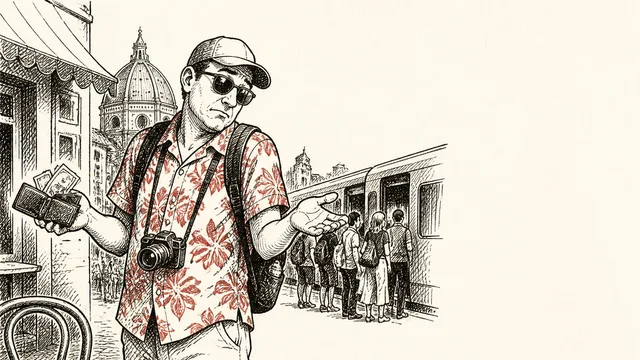
American Tourists in Europe: The Etiquette Gap
From date formats to tipping culture, the everyday customs that trip up American travelers in Europe—and what they reveal about deeper cultural differences.

Bryne, Norway and the Haaland World Cup Economy
Erling Haaland's World Cup run is drawing global attention to Bryne, Norway. What does superstar proximity actually mean for a town of 13,000?
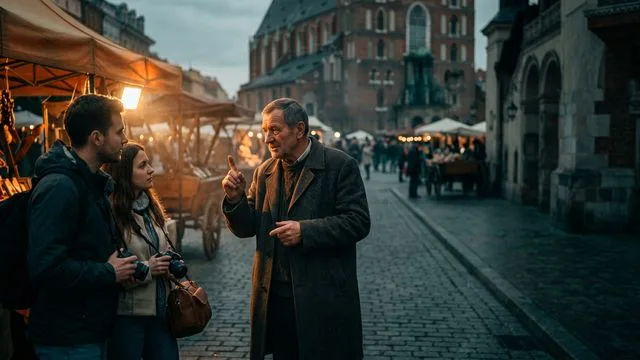
What Poles Actually Want Tourists to Know
From geography to drinking etiquette, here's what Polish locals wish visitors understood before arriving—and why it matters more than you think.
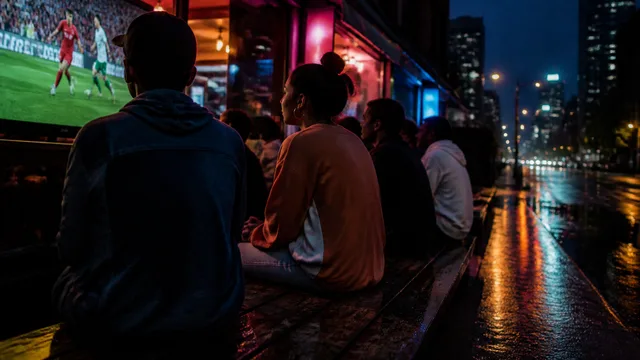
Telemundo's World Cup Ratings Win Beyond Spanish Speakers
Non-Spanish speakers are tuning into Telemundo's World Cup coverage in surprising numbers. Here's what the ratings reveal about how Americans want to watch soccer.

What to Expect When Staying in European Hotels
European hotels operate by different rules than North American ones. Here's what actually differs—room size, beds, breakfast pricing, accessibility, and more.
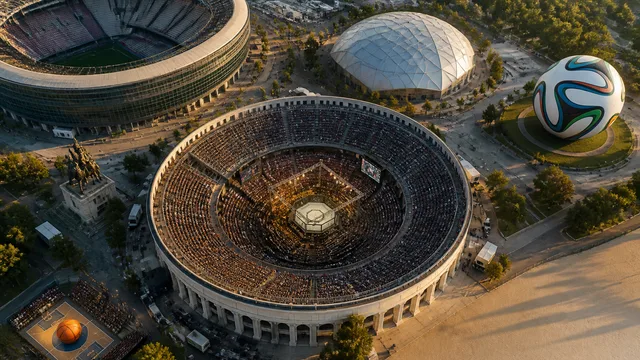
World Cup Opens a Crowded Week in Sports Business
From FIFA's water bottle reversal to a $60M UFC event at the White House, the week of June 8 captures how politics and commerce reshape live sports.
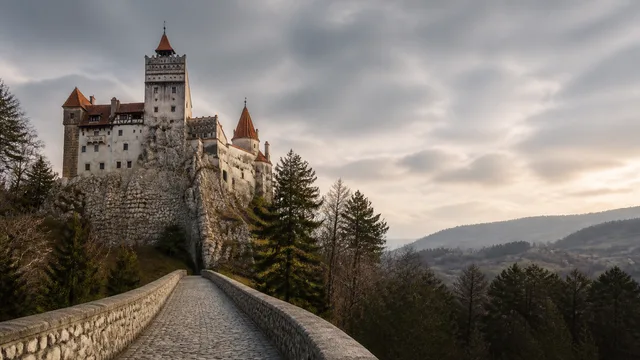
Romania Travel: What Visitors Love and Struggle With
From Carpathian forests to chaotic mountain roads, Romania rewards patient travelers. Here's an honest look at what works and what doesn't.
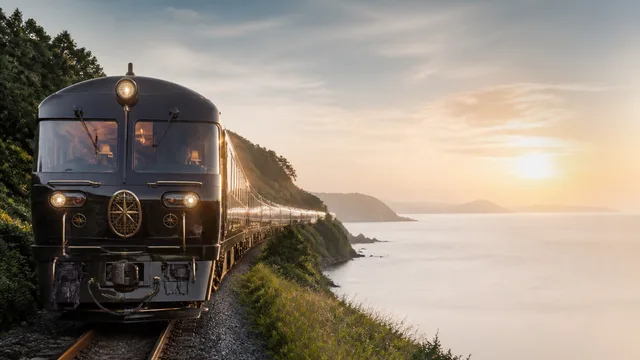
Japan's Seven Stars Train: What Riding It Actually Takes
A review of Japan's Seven Stars cruise train through Kyushu: the lottery, the cost, the food, and whether $4,300 per person holds up to scrutiny.